
Overview
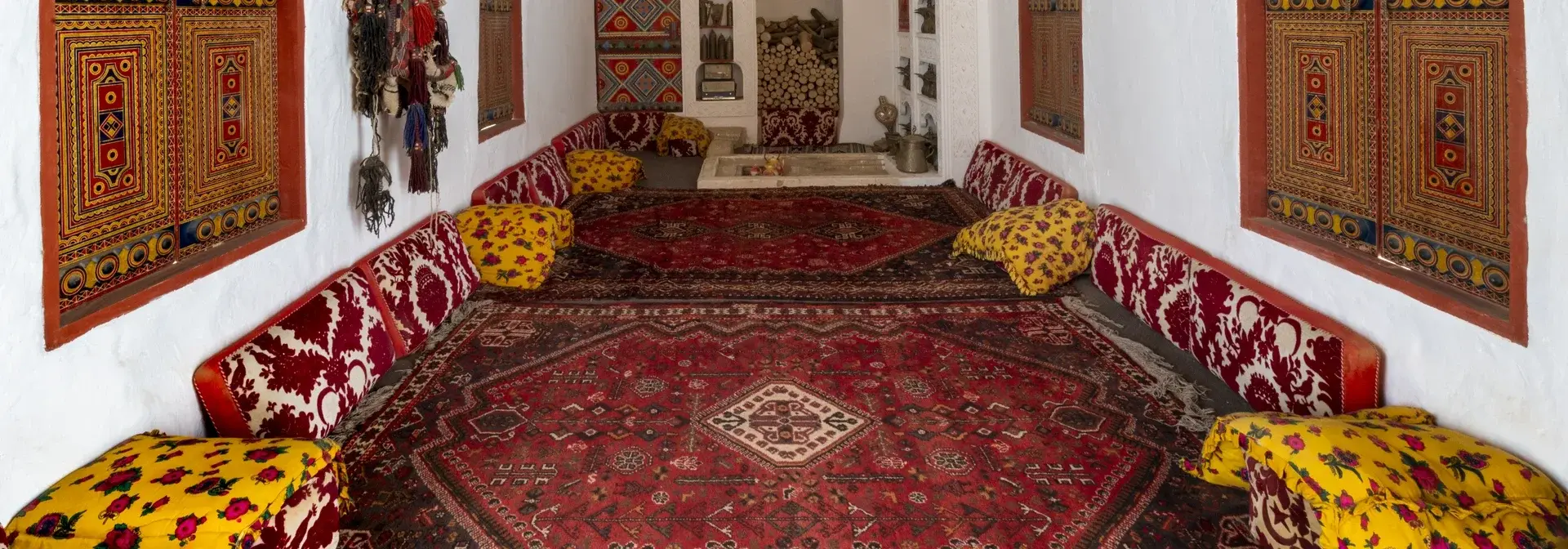
The Majlis is a principal space for receiving guests and exchanging conversation, where members of the community gather to settle disputes, offer condolences and hold wedding celebrations.[1][8]
The Majlis and Arabic coffee were inscribed on the lists of intangible cultural heritage of the United Nations Educational, Scientific and Cultural Organization (UNESCO).[1]
The Majlis is usually distinguished by its spaciousness and by a floor covered with carpets, cushions and bolsters spread through its corners, and it usually contains a hearth or fire for preparing coffee and other hot drinks.[8]
The Social Functions of the Majlis
Members of the community gather in the Majlis to discuss their affairs and settle the disputes among them; mourners are received there and wedding occasions are held there, and the Majlis at the same time plays an important role in transmitting oral heritage, such as folk or traditional stories, folk singing and Nabati poetry.[8]
Older people are considered the true bearers of this heritage and its trustees, especially those who possess wide knowledge of nature, lineages and tribal history.[8]
Judges and religious elders hold a special standing in the Majlis, because they adjudicate and settle disputes and clarify responsibilities and political, social and religious rights; women have their own majlis gatherings, and some prominent and distinguished women may attend other gatherings that are distinguished by their academic and literary character.[8]
The Majlis and Saudi Coffee
Arabic coffee in Saudi Arabia holds a prominent place in the system of hospitality, as the ceremonies of receiving a guest in many majlis begin with it; it is often associated with dates, and the customs of serving it and the quantities of its ingredients vary from one region to another.[1]
As part of celebrating it as a cultural element that expresses Saudi identity, the Ministry of Culture, in cooperation with the Ministry of Commerce, adopted the designation “Saudi coffee” for Arabic coffee in all restaurants and cafés in the Kingdom, within the joint work to serve the national objectives of the “Saudi Coffee Year” initiative.[4]
Etiquette of Serving Coffee in the Majlis
Among the customary practices in the Majlis is that coffee is served with the right hand, while the server holds the dallah (coffee pot) in the left hand and remains standing while serving it to guests.[1]
The priority in presenting the cup varies, as it may be offered to the eldest, or to the one seated at the head of the Majlis, or to the parents, and in some majlis it may begin from the right.[1]
Ramadan Majlis Gatherings
Ramadan Majlis gatherings represent the most prominent social and cultural features manifested during the blessed month of Ramadan; they reflect the depth of Islamic values and the spirit of solidarity and mutual support among members of society, and embody an inherited social legacy that strengthens the bonds of affection and communication.[2]
The roots of Ramadan Majlis gatherings go back many decades, and they were and remain a platform for friendly meetings, the exchange of conversation, the discussion of social issues and the study of public affairs in an atmosphere of respect and appreciation.[2]
With the arrival of the month of Ramadan these gatherings grow in attendance and organisation, as residents gather after the Tarawih prayer in homes or in public majlis.[2]
Coffee Majlis in the “Nuqush” Project
Saudi coffee majlis were held as part of the events of the “Nuqush” heritage assets project organised by the Heritage Commission, which launched on the fourth of March and continued for one month in Riyadh region.[3]
Within the project, the Saudi coffee majlis were distributed across two event routes: the (Al-Majma’ah–Al-Ghat) route and the (Al-Jubaylah–Sadus) route.[3]
The Majlis's Utensils and Decoration
The “najr” is a heritage utensil made of copper, often of a cylindrical or conical design decorated with artistic engravings, and it comes with the “maqbad” or “midaqq”, which is used to grind coffee, spices and seasonings such as cardamom and cloves before preparing them.[6]
The najr also has cultural significance, as its sound in the past was a symbolic call announcing the preparation of coffee and an invitation to drink it; hearing the sound of the najr meant an invitation to attend the Majlis, since preparing coffee is part of hospitality.[6]
In Asir region, Al-Qatt Al-Asiri represents a tradition of decorating the walls of houses for hundreds of years, relying on geometric motifs inspired by the surrounding culture and the colours of nature; it was inscribed on UNESCO's Representative List of the Intangible Cultural Heritage of Humanity in late 2017.[7]
Documenting Cultural Majlis
The book “Cultural Majlis in Our Country, in the Kingdom and Abroad” by the Saudi researcher Mohammed Al-Qash’ami was published during the events of the Riyadh International Book Fair; it runs to 252 pages across four chapters, the first of which covers the early literary majlis in the Kingdom.[5]
Frequently Asked Questions
Q: What is the Majlis? A: It is a principal space for receiving guests and exchanging conversation, where members of the community gather to settle disputes, offer condolences and hold wedding celebrations.
Q: Are the Majlis and Arabic coffee inscribed by UNESCO? A: Yes, they were inscribed on the lists of intangible cultural heritage of the United Nations Educational, Scientific and Cultural Organization.
Q: How is coffee served in the Majlis? A: It is served with the right hand while holding the dallah in the left hand and standing during serving, and the priority of the cup varies between the eldest, the one seated at the head of the Majlis and the parents.
Q: What is the function of the najr? A: It is a copper utensil used to grind coffee, spices and seasonings, and its sound in the past was an invitation to attend the Majlis.
Q: What distinguishes the majlis in Ramadan? A: They grow in attendance and organisation, and residents gather after the Tarawih prayer in homes or in public majlis.
Conclusion
Related topics
- Hospitality, food and drinkArabic Coffee in Saudi ArabiaArabic coffee in Saudi Arabia brings together preparation and hospitality, with roast levels, flavourings and customs varying among regions and households.
- TopicAl-Qatt Al-AsiriA traditional art of painted wall decoration in Asir homes, practised by women, added to UNESCO's Representative List of the Intangible Cultural Heritage in 2017.
- RegionAsir RegionA southwestern Saudi region administered from Abha, combining Sarawat highlands, Tihamah and the coast, with agricultural terraces, historic villages and distinctive local cultural traditions.
- RegionRiyadh RegionA central Saudi administrative region encompassing the national capital and varied Najdi governorates, with connections to Diriyah, oasis settlement, government and modern economic activity.