
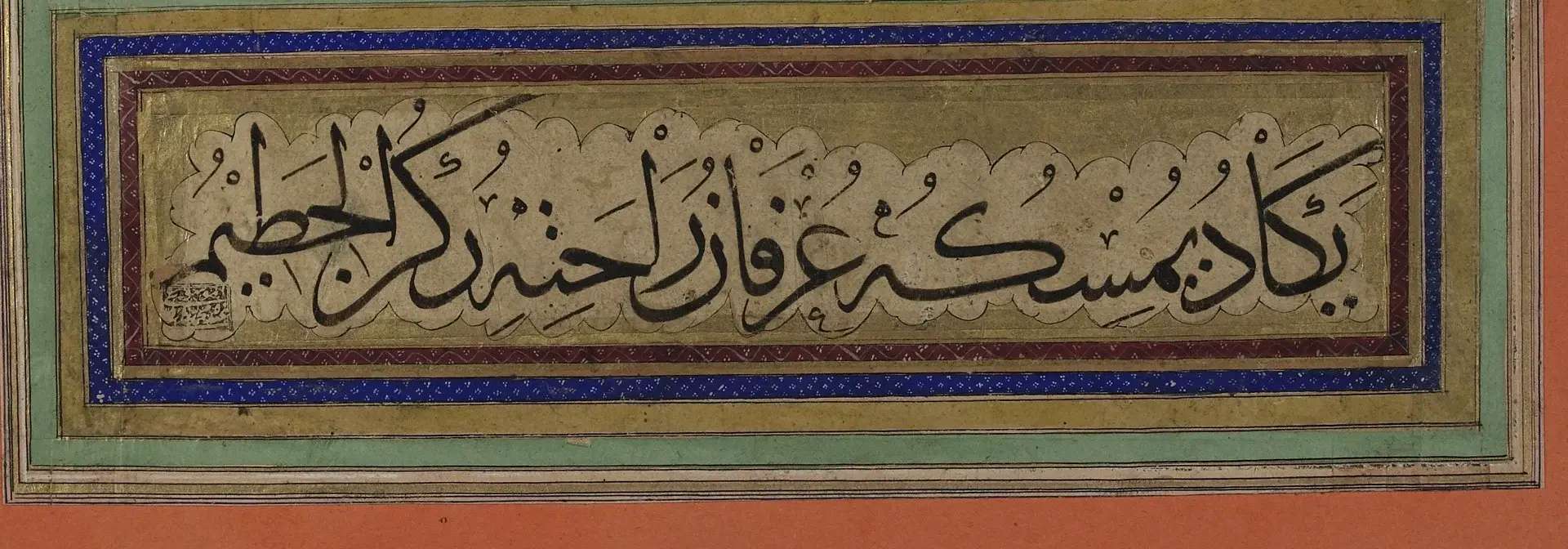
Overview
Arabic Calligraphy is the art of writing the Arabic letters, and the Kingdom of Saudi Arabia cares for it and maintains its tools; foremost among the manifestations of that care is the collection of computerised fonts produced by the King Fahd Complex for the Printing of the Holy Qur'an to support the Arabic library, serving the Qur'anic text in its various readings, the writing of research and academic theses, and book printing.[1]
The collection varies between Qur'anic fonts and others that are modern and traditional, made available for download, alongside digital programmes for the Mushaf and an international competition concerned with writing the Holy Qur'an and highlighting the creativity of calligraphers.[1][5]
The Computerised Font Collection
The King Fahd Complex for the Printing of the Holy Qur'an has produced a collection of computerised fonts that contribute to supporting the Arabic library and serve the Qur'anic text in its various readings, the writing of research and academic theses, and book printing.[1]
The collection includes Qur'anic, modern and traditional fonts, among the most prominent of which are the Naskh font, the Kufi font, the Kingdom fonts, the font of screens and smart devices, the Mudarrajat fonts and the Ten Readings font.[1]
The Naskh and Kufi Fonts
The Naskh font is the first of the computerised fonts produced by the Complex; it was designed in accordance with the Unicode standard and is available in two principal styles, regular and bold, with high precision in rendering Arabic texts and the aesthetics of traditional calligraphy.[1] The regular Naskh font carries its second release, 136 kilobytes in size, and its downloads have exceeded 55,449.[2]
The Kufi font, for its part, was developed by the Complex to include more than 800 shapes and 10 stylistic alternates, allowing wide variety in composing words and letters in multiple aesthetic styles.[1] It carries release 1.4, 96.9 kilobytes in size, with a documented SHA-256 file fingerprint, and its downloads have exceeded 16,173.[3]
Modern Fonts and Screen Fonts
Among the collection's fonts are the Kingdom fonts, a contemporary font that combines the beauty of the Naskh script with modern computerised fonts, and includes five varied styles suited to writing large headlines and bold, prominent texts.[1]
Added to them is the font of screens and smart devices, a modern digital font designed to display texts and headlines with high clarity on the screens of smartphones, television and internet sites, and it supports four varied styles.[1]
The Mudarrajat Fonts and the Ten Readings Font
The Mudarrajat fonts are a traditional font comprising a set of phrases and texts common in the books of Hadith, the Prophetic biography and Islamic heritage, and it was designed in two styles: composed and regular Naskh.[1]
The Ten Readings font is a computerised font compatible with the Unicode standard that renders the Qur'anic text in the Uthmani script with high precision, and it supports a number of Qur'anic readings, most prominently Hafs, Shu'bah, Warsh, Qalun, Al-Susi and Al-Duri.[1] The Complex has made computerised fonts for these readings available for download, beginning with the reading of Hafs from Asim Al-Kufi, with the text of the Basmalah displayed for each reading.[4]
The Digital Madinah Mushaf
The Madinah Mushaf for Computerised Publishing programme is a programme containing the two readings of Hafs and Warsh in a script matching the calligrapher's script, and it enables the user to add the Qur'anic text to documents and text files while they retain the properties and formatting of the Uthmani script.[1]
A digital version of the Madinah Mushaf was produced as a computerised font matching the Uthmani script for several readings, built in conformity with the Unicode standard, and it supports the Excel, CSV, HTML5, SQL, XML, JSON and TXT formats.[1]
The International Competition for Writing the Holy Qur'an
The Ministry of Islamic Affairs, Call and Guidance, represented by the King Fahd Complex for the Printing of the Holy Qur'an, holds the International Competition for Writing the Holy Qur'an within the series of the Complex's scholarly activities.[5]
Among the competition's goals is to highlight the efforts and creativity of contemporary calligraphers around the world in writing the Holy Qur'an, and to give creative people the opportunity to exchange expertise and cross-pollinate ideas.[5]
The competition was held at the King Salman International Conference Centre in the Madinah region with the aim of developing the capacities of participants in the science of Arabic calligraphy, and the two workshops of its accompanying programmes concluded on Wednesday, 25 Sha'ban 1445 AH (6 March 2024).[6]
His Royal Highness Prince Salman bin Sultan bin Abdulaziz, Governor of the Madinah region, patronised the closing ceremony of the competition in the presence of his deputy, His Royal Highness Prince Saud bin Khalid.[5]
Accompanying Events and Workshops
Held within the competition's events are accompanying lectures to highlight the development of Arabic calligraphy and how aesthetic forms, ornamentation, letter compositions and the harmony of decorative colours are observed, alongside an accompanying exhibition and workshops for calligraphers.[5]
The calligrapher Ali Hassan Abdulqader presented a workshop, 'The Development of Creative States in Diwani Calligraphy', in which he reviewed the factors behind the emergence of creative states in Diwani calligraphy and the development of letters, connections, letter compositions and spacing, and the calligrapher Fatimah Hashem Dhannoun presented a workshop, 'Making Marbled Paper - the Art of Ebru', in which she explained its use in decorating the covers of the noble Mushafs and panels of Islamic calligraphy, books and manuscripts.[6]
Frequently Asked Questions
Q: What is Arabic Calligraphy? A: It is the art of writing the Arabic letters, and the Kingdom of Saudi Arabia cares for it, and among the manifestations of that is the collection of computerised fonts produced by the King Fahd Complex for the Printing of the Holy Qur'an to support the Arabic library and serve the Qur'anic text in its various readings.[1]
Q: How does the King Fahd Complex for the Printing of the Holy Qur'an serve Arabic calligraphy digitally? A: Through a collection of computerised fonts that includes Qur'anic, modern and traditional fonts, among the most prominent of which are the Naskh font, the Kufi font, the Kingdom fonts, the screens font, the Mudarrajat fonts and the Ten Readings font; they are made available for download and serve the Qur'anic text, research and printing.[1][4]
Q: What are the most prominent fonts of the computerised collection? A: The Naskh font as the first of the computerised fonts produced by the Complex in two styles, regular and bold; the Kufi font, which includes more than 800 shapes and 10 stylistic alternates; the Kingdom fonts with five styles; the font of screens and smart devices with four styles; and the Mudarrajat fonts in two styles.[1]
Q: What is the Madinah Mushaf for Computerised Publishing? A: A programme containing the two readings of Hafs and Warsh in a script matching the calligrapher's script, and it enables the user to add the Qur'anic text to documents while they retain the properties of the Uthmani script, and a digital version of it was produced as a computerised font compatible with the Unicode standard and supporting multiple file formats.[1]
Q: What is the International Competition for Writing the Holy Qur'an? A: A competition held by the Ministry of Islamic Affairs, Call and Guidance, represented by the King Fahd Complex for the Printing of the Holy Qur'an, within its scholarly activities; it aims to highlight the creativity of the world's calligraphers and to exchange expertise, and it is held at the King Salman International Conference Centre in Madinah with lectures, an exhibition and workshops.[5][6]
Conclusion
Arabic calligraphy in the Kingdom of Saudi Arabia represents a field in which service to the Qur'anic text, the development of digital tools and international scholarly activities come together, through the computerised font collection of the King Fahd Complex for the Printing of the Holy Qur'an, its digital programmes, and the International Competition for Writing the Holy Qur'an and its accompanying events.[1][5][6]
Related topics on the platform include the rock art of Hail, the King Fahd National Library and Souq Okaz.
Related topics
- RegionMadinah RegionA western Saudi region combining Madinah, Yanbu, AlUla and other governorates, with Islamic landmarks, oases, archaeological sites and a Red Sea coastline.
- HistoricRock Art of HailThe Rock Art of Hail is a World Heritage property in the Hail Region of Saudi Arabia, inscribed on the UNESCO list in 2015, comprising the largest rock art complexes in the Arabian Peninsula with engravings spanning about 10,000 years.
- MuseumKing Fahd National LibraryKing Fahd National Library is the national library of the Kingdom of Saudi Arabia, based in Riyadh. It became a national library under a statute issued by Council of Ministers Resolution No. (80) of 1410 AH, and is responsible for collecting, documenting, and making available the Kingdom's intellectual output.
- HistoricSouq OkazAn archaeological site in Taif, one of the oldest Arab markets before and after Islam and a meeting place for trade, poetry and alliances, dating to about 501 CE.
Sources & references
- King Fahd Complex for the Printing of the Holy Qur'an (Ministry of Islamic Affairs, Call and Guidance) - the computerised font collection
- King Fahd Complex for the Printing of the Holy Qur'an - the Naskh font
- King Fahd Complex for the Printing of the Holy Qur'an - the Kufi font
- King Fahd Complex for the Printing of the Holy Qur'an - the Ten Readings fonts
- King Fahd Complex for the Printing of the Holy Qur'an - the International Competition for Writing the Holy Qur'an
- King Fahd Complex for the Printing of the Holy Qur'an - the workshops of the competition's accompanying programmes