
Overview
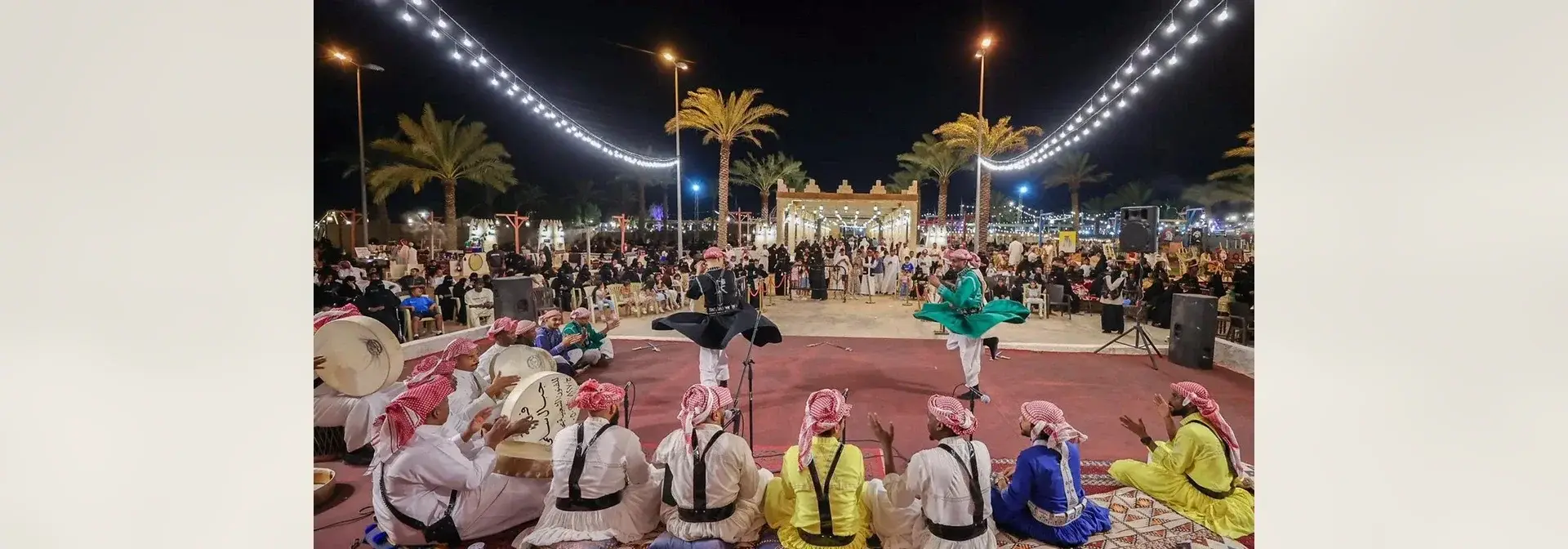
Al-Yanbaawi art is a maritime vocal genre born in the ports of the Kingdom of Saudi Arabia on the Red Sea out of the performance of the fishermen, and it later spread from the coast of Yanbu to the rest of the coasts.[1] It combines collective singing with playing the semsemia and the string instruments that accompany it, is performed at the fishermen's evening gatherings, weddings and local festivals, and was passed down through the generations until the local archives documented more than 2000 recordings of it.[1][4]
The Yanbu troupe "Al-Yanbaawi Folklore" presents it at national festivals as one of the traditional tarab arts of the Hejaz, alongside its presence in the heritage and touristic events of Yanbu city.[2][5]
Its Beginnings and First Name
It is not known precisely when Al-Yanbaawi art began, and the accounts of veteran sailors indicate that its beginnings go back centuries, when it was known as "Al-Madd" and was recited at the fishermen's evening gatherings by lamplight.[1]
The genre grew out of life at sea, for the fishermen performed it collectively at their evening gatherings after a day of work in the ports, and the Yanbu troupes carried this heritage from those gatherings to the stages of the national festivals.[1][2]
Performance and the Semsemia Instrument
The melodies of Al-Yanbaawi are sung on the semsemia accompanied by other string instruments, and its performance rests on a fast rhythm, the dawr, the Arabic muwashshahat and the musical vocal works.[1][2]
The performer usually begins with a mawwal that sets sail in the modes of Al-Rasad and Al-Sika; then the music is played and the dawr begins in a collective interaction between the performer and the group, before the performance concludes with the tabhira, and the art follows a single approach known as "Al-Daqqa Al-Yanbaawiyya".[1][2]
Its Spread Along the Red Sea Coasts
With the sea voyages and the exchange of trade, the sea carried this art beyond the borders, so it spread from the coast of Yanbu to the coasts of Egypt, Yemen and Jordan, sharing melodies and rhythms with peoples who share the sea and the memory.[1]
This heritage reached the present generations through oral preservation and the performance of the troupes, and then through the local archives, which documented more than 2000 recordings of it, reflecting its deep reach and its inherited richness.[1]
Inscription of the Making and Playing of the Semsemia at UNESCO
In December 2024, the Kingdom of Saudi Arabia announced its success in inscribing the "making and playing of the semsemia" on the Representative List of the Intangible Cultural Heritage of the United Nations Educational, Scientific and Cultural Organization (UNESCO).[4]
The Arab Republic of Egypt led the nomination file, with a prominent participation of the Kingdom represented by the Heritage Commission and in cooperation with the Saudi National Commission for Education, Culture and Science and the Permanent Delegation of the Kingdom to UNESCO.[4]
The semsemia is among the elements of traditional arts used at the social occasions and celebrations in the coastal regions, such as weddings and local festivals.[4] Alongside it, the Representative List includes inscribed Saudi elements, among them the Saudi Ardah, the Majlis and Arabic coffee, falconry, Al-Qatt Al-Asiri, the palm tree, Al-Sadu weaving, Arabic calligraphy, camel calling, Saudi Khawlani coffee, metal engraving and harees.[4]
Its Presence at Festivals and Events
The Yanbu troupe "Al-Yanbaawi Folklore" presented performances within the Bait Hail Festival in its third edition in 1446 AH / 2024 CE at Aja Park Entertainment Park, where the Hejazi folklore displayed its tarab arts before the visitors and guests of the festival.[2] At the Al-Ghada Festival in Unayzah Governorate, the Yanbu Youth Troupe took part in January 2022 with several folk colours, among them the bridal procession, the semsamiyya, the khabeeti, the badawani and Al-Yanbaawi art, alongside entertainment shows and cultural competitions.[3]
The "Bahhar" events in their second edition in Yanbu Governorate in 1446 AH / 2025 CE hosted the veteran fishermen of Yanbu, who share their experiences and their fishing voyages in the Red Sea, alongside the artistic performances and the cultural and heritage activities.[6] In January 2026, Yanbu Governorate, represented by the Yanbu Municipality and with the participation of the National Committee for Folk Arts and Handicrafts at the Federation of Saudi Chambers, organised a reception for the guests of the "Dakar Rally" and the visitors of the Saudi cruise ship in the historic area of Yanbu, which included a celebratory heritage tableau featuring colours of traditional folk arts to introduce the identity of the region.[5]
World Heritage Day in 1445 AH / 2024 CE saw the light and sound shows organised by the Heritage Commission on the historic buildings of Yanbu.[7]
Frequently Asked Questions
Q: What is Al-Yanbaawi art? A: A maritime vocal genre that arose in the ports of the Kingdom on the Red Sea, performed collectively by the fishermen on the semsemia at their evening gatherings, their weddings and their local festivals.[1][4]
Q: What are the stages of the Yanbaawi performance? A: It usually begins with a mawwal in the modes of Al-Rasad and Al-Sika, then the dawr in a collective interaction between the performer and the group, and it concludes with the tabhira following the approach of "Al-Daqqa Al-Yanbaawiyya".[1][2]
Q: How many recordings have the local archives documented for this art? A: The local archives have documented more than 2000 recordings of Al-Yanbaawi art.[1]
Q: Is the semsemia inscribed at UNESCO? A: Yes; the "making and playing of the semsemia" was inscribed on the Representative List of the Intangible Cultural Heritage in December 2024, in a file led by the Arab Republic of Egypt with a prominent participation of the Kingdom represented by the Heritage Commission.[4]
Q: Where is Al-Yanbaawi art presented today? A: The Yanbu troupe "Al-Yanbaawi Folklore" presents it at national festivals, including the Bait Hail Festival in its third edition 1446 AH / 2024 CE, and it is present in the heritage and touristic events of Yanbu Governorate.[2][5][6]
Conclusion
Al-Yanbaawi art combines the singing of the fishermen with the performance of the semsemia, and moved from the gatherings of the ports to the stages of the national festivals, with more than 2000 local recordings documenting this heritage and a global inscription of the making and playing of its instrument on the UNESCO Representative List.[1][2][4]
Related topics
- RegionYanbu CityYanbu City is a Saudi city on the Red Sea coast west of Madinah, spread across three cities: Yanbu Al-Bahr, Yanbu Al-Nakhl and Yanbu Industrial City.[1] It is known as the "Pearl of the Red Sea" for the historic heritage, industrial and service renaissance and tourism assets it brings together.[15]
- HistoricPearl DivingPearl diving is an ancient maritime profession known to the coasts and islands of the Kingdom of Saudi Arabia, linked in the Farasan Islands of the Jazan region and on the Arabian Gulf coast at Jubail; it formed a main source of livelihood and a social and economic pillar, and today it is part of the national heritage.
- Performing arts and intangible heritageSaudi ArdahA collective performing tradition, also known as Najdi ardah, combining chanted poetry, drumming and movement at social and national occasions.
- HistoricMajlisThe Majlis is a social space in Saudi society for receiving guests and exchanging conversation, where members of the community gather to settle disputes, offer condolences and hold wedding celebrations, and where Saudi coffee is served in line with long-inherited customs. The Majlis and Arabic coffee were inscribed on UNESCO's lists of intangible cultural heritage.
- HistoricAl-Sadu WeavingAl-Sadu is a handweaving craft based on weaving threads of camel hair, goat hair and sheep wool. It is known among the people of the Kingdom of Saudi Arabia, who used it to make hair houses, carpets, daily necessities and tribal clothing, and its weaving was registered on the Representative List of the Intangible Cultural Heritage at UNESCO.
- Hospitality, food and drinkArabic Coffee in Saudi ArabiaArabic coffee in Saudi Arabia brings together preparation and hospitality, with roast levels, flavourings and customs varying among regions and households.
Sources & references
- Saudi Press Agency (SPA) — Al-Yanbaawi art: the maritime genre, its instruments and its spread
- Saudi Press Agency (SPA) — "Al-Yanbaawi Folklore" at the Bait Hail Festival
- Saudi Press Agency (SPA) — the Yanbu Youth Troupe at the Al-Ghada Festival in Unayzah
- Saudi Press Agency (SPA) — the inscription of the "making and playing of the semsemia" at UNESCO
- Saudi Press Agency (SPA) — the reception of the guests of the Dakar Rally and the visitors of the Saudi cruise ship in Yanbu
- Saudi Press Agency (SPA) — the "Bahhar" events in their second edition in Yanbu
- Saudi Press Agency (SPA) — the light and sound shows on the historic buildings of Yanbu