
Overview
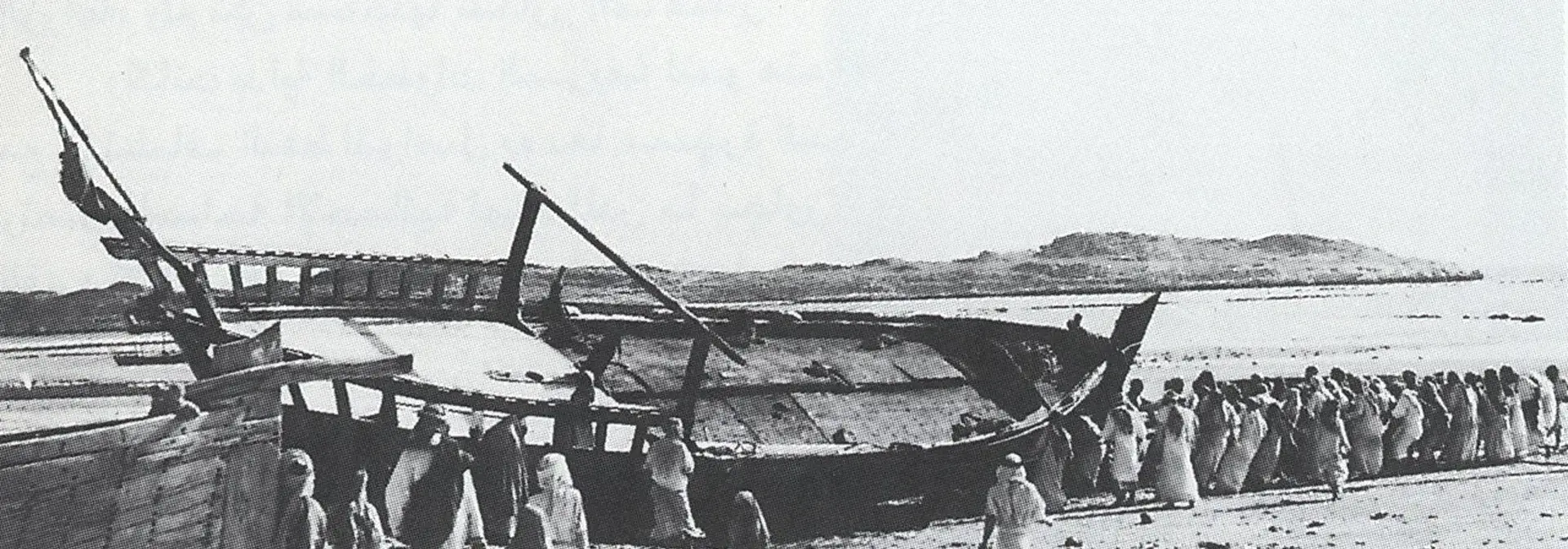
Pearl diving is an ancient maritime profession known to the coasts and islands of the Kingdom of Saudi Arabia. In Jazan region, the profession of diving and pearl extraction in the Farasan Islands formed one of the prominent social and economic pillars on which the residents of the governorate relied in the past, as it represented a main source of livelihood.[2]
Several coastal sites were associated with the profession, among them the coast of Jabal Kushkush in the Farasan Islands Governorate, which formed a mooring for the ships of pearl divers and a place for their rest and for opening oysters after their return from sea voyages.[1]
Today the Farasan Islands highlight this heritage within their national heritage and permanent exhibitions that preserve their standing in pearl extraction.[5]
Diving Sites
Jabal Kushkush lies in the village of Abu At-Tawq on the smaller Farasan Island, 'As-Saqid', about 60 kilometres from Farasan city, and its site is also known as 'Kushkush Beach'.[1]
Fishermen headed for sites known as 'Al-Maghas', the places where oyster beds gather most, or what is locally called 'Al-Balbīl', where pearls are found.[2]
On the coast of the Arabian Gulf, Al-Jabal Al-Bahri lies 300 metres northeast of Jubail city, and it was the focal point for the rise of one of the most important fishing and pearl-trading areas on this coast.[4]
The Diving Season and Its Voyages
The diving voyages began in the early days of May and extended for between three and four months during the summer.[2]
A single ship carried between 30 and 40 people, distributed among a nakhuda, a diver, a sailor and a steersman.[2]
The diving operations were divided over five days, with the yield of the first four days going to the diver while the yield of the fifth day was allocated to the ship's owner.[2]
Cultural Heritage
Sea chants accompanied the diving voyages and embodied an authentic aspect of the cultural heritage of the Farasan Islands.[2]
Among the fruits of this profession were precious pearls, including one found by the diver Othman bin Musa Ahmed Ibrahim whose value reached about 18,000 riyals.[2]
The pearl trade in the Farasan Islands declined gradually with the emergence of cultured and artificial pearls, and over time it turned into an authentic part of the island's heritage and culture.[2]
Pearl Diving on the Arabian Gulf Coast
On the coast of the Arabian Gulf, the history of pearl diving was linked to Jubail city in the Eastern Province, where the site of 'Al-Jabal Al-Bahri' was the focal point for the rise of one of the most important fishing and pearl-trading areas on this coast.[4]
The naming of Jubail is attributed to a small hill that stood inside the port.[4]
Exhibitions and Heritage Preservation
The Farasan Islands were included in the programmes of UNESCO and registered on the global Green List of protected areas.[5]
In the Farasan Islands, two permanent exhibitions for pearls and Al-Harid were inaugurated, highlighting their historical standing and their fame for pearl extraction.[5]
The Governor of Jazan region, Prince Mohammed bin Abdulaziz bin Mohammed bin Abdulaziz, visited the 'Al-Harid and Pearls' exhibition in Al-Qassar village in the Farasan Islands, as part of the 'Al-Harid Nights' events.[3]
The National Center for Wildlife organised a workshop, 'The Diver Is a Partner in Conservation and Protection', under the patronage of the Chairman of the Board of the Saudi Federation for Marine Sports and Diving.[6]
Frequently Asked Questions
Q: When did the pearl-diving voyages take place in the Farasan Islands? A: They began in the early days of May and extended for between three and four months during the summer.[2]
Q: How many members did the crew of a diving ship have? A: A single ship carried between 30 and 40 people, among a nakhuda, a diver, a sailor and a steersman.[2]
Q: How was the diving yield divided? A: Over five days, the yield of the first four days for the diver and the yield of the fifth day for the ship's owner.[2]
Q: Where is Jabal Kushkush located? A: In the village of Abu At-Tawq on the smaller Farasan Island, 'As-Saqid', about 60 kilometres from Farasan city.[1]
Q: What caused the decline of the pearl trade in the Farasan Islands? A: The emergence of cultured and artificial pearls, which over time turned the profession into part of the island's heritage.[2]
Tourism and nature
Related topics
- RegionJazan RegionA southwestern Saudi region administered from Jazan city, combining the Red Sea coast, Farasan Islands, plains and mountains with farming, fishing, commerce and industry.
- RegionJubail CityJubail City is a Saudi city on the coast of the Arabian Gulf that brings together a maritime history from which its name was derived and a modern industrial present led by the Royal Commission for Jubail and Yanbu. It contains Jubail Commercial Port and King Fahd Industrial Port, seven beaches, and the UNESCO Award for Best Learning City.
- RegionEastern ProvinceA large eastern Saudi region administered from Dammam, combining Gulf cities, the oases of Al Ahsa and Qatif, desert areas, energy industries and maritime commerce.
- HistoricFisheries in Saudi ArabiaFisheries in Saudi Arabia are a national sector concerned with managing marine fisheries and aquaculture, strengthening food security and sustaining marine resources. The Kingdom continues to develop its national fisheries management, oversight and tracking system, grow the blue economy and strengthen regional partnership in the Red Sea and the Arabian Gulf.
- HistoricCoral Reefs of Saudi ArabiaCoral reefs of Saudi Arabia are marine ecosystems that extend along the Kingdom's coasts on the Red Sea, and the Red Sea holds the world's second-longest coral reef system, stretching 2,000 kilometres.[1] The General Organization for the Conservation of Coral Reefs and Sea Turtles in the Red Sea "Shams" is responsible for their protection and sustainability.[2]
- HistoricKing Abdulaziz Foundation (Darah)The King Abdulaziz Foundation (Darah) is an official national institution in the city of Riyadh concerned with preserving the sources of national and Arab history, disseminating and refining them, and supporting national identity. It encompasses the historic Murabba Palace, the King Abdulaziz Memorial Hall and an archive of more than one million photographs, and it publishes Al-Darah magazine and runs scholarly programmes and specialised centres.
- HistoricMarine Life in Saudi ArabiaMarine life in Saudi Arabia covers the marine environments and organisms in the Kingdom's territorial waters in the Red Sea and the Arabian Gulf, foremost among them coral reefs, sea turtles and fisheries resources. The Kingdom manages these environments through a national strategy, specialised institutions and regulations for fishing and marine activities.
- HistoricAl-Yanbaawi ArtAl-Yanbaawi art is a maritime vocal genre born in the ports of the Kingdom of Saudi Arabia on the Red Sea from the performance of fishermen; it is performed on the semsemia and passed down through the generations, with more than 2000 recordings of it in the local archives.
- HistoricAl-QallafahAl-Qallafah is the craft of building wooden sailing vessels and boats in the Arabian Gulf, practised by the qallaf, who does the carpentry of the boat and determines its dimensions until it can put to sea. It is one of the authentic handicrafts known to the coasts of the Kingdom, and it has returned to the fore at national festivals in the Eastern Province and Jeddah.
Sources & references
- Saudi Press Agency (SPA) — Jabal Kushkush, a Historic Mooring for the Ships of Pearl Divers
- Saudi Press Agency (SPA) — The Diving and Pearl-Extraction Profession in the Farasan Islands
- Saudi Press Agency (SPA) — Visit to the 'Al-Harid and Pearls' Exhibition in the Farasan Islands
- Saudi Press Agency (SPA) — Al-Jabal Al-Bahri and the History of Fishing and the Pearl Trade in Jubail
- Saudi Press Agency (SPA) — Inauguration of the Permanent Pearl and Al-Harid Exhibitions and the Listing of the Farasan Islands
- Saudi Press Agency (SPA) — The Workshop 'The Diver Is a Partner in Conservation and Protection'