Heritage

Articles in this section, each with its sources.

5 topics availableSearch all sections
Image credits
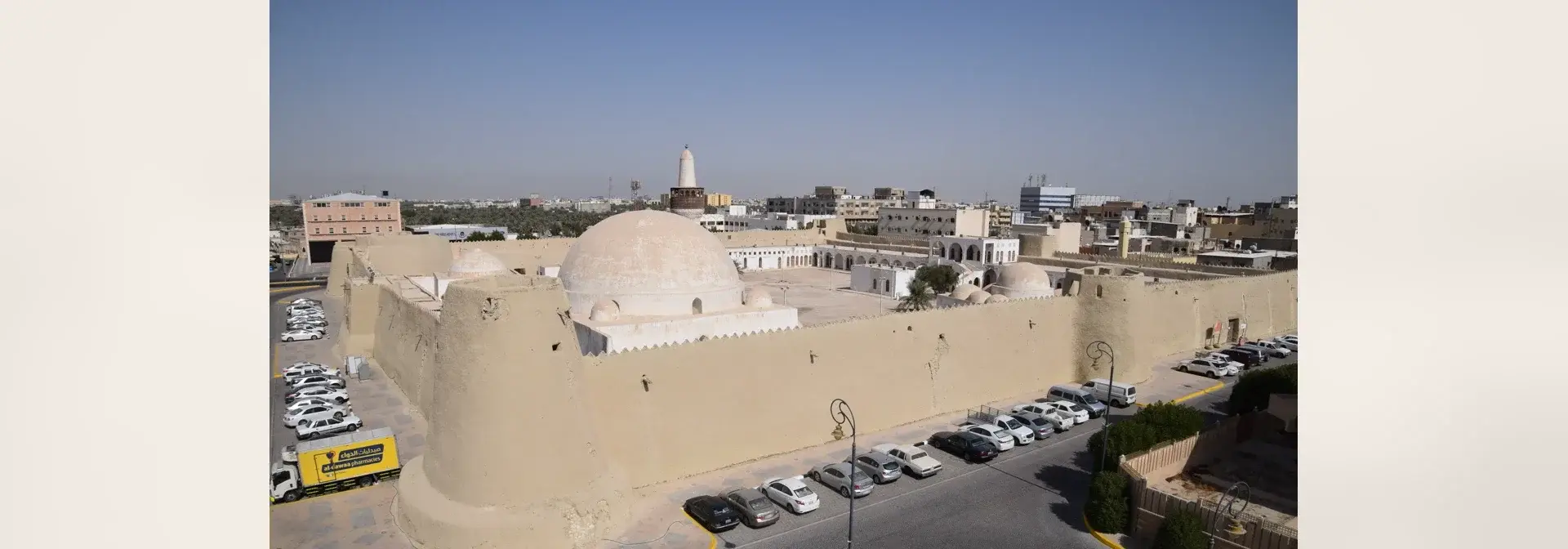
Image attribution: Masmak Castle from Thumairi — Dainomite, via Wikimedia Commons, CC BY-SA 3.0 Unported. Source: https://commons.wikimedia.org/wiki/File:Masmak_Castle_from_Thumairi.jpg ; license: https://creativecommons.org/licenses/by-sa/3.0/ . Photograph dated 24 December 2010; contextual view, not a photograph of the 1902 recovery of Riyadh. / صورة سياقية للمصمك عام 2010، لا توثق أحداث استرداد الرياض عام 1902. CMS derivative: converted to WebP at quality 85; proportionally resized within 2400 × 2400 without enlargement where needed. Card/hero display may crop to fit; original composition is not retouched. / نسخة CMS: تحويل إلى WebP بجودة 85 وتصغير تناسبي عند الحاجة ضمن 2400 × 2400 دون تكبير؛ قد يقتطع العرض داخل البطاقات أو رأس المقال أطراف الصورة، دون تنقيح محتواها. · License: CC BY-SA 3.0 Unported — https://creativecommons.org/licenses/by-sa/3.0/
Historic site

Masmak Palace

A historic earthen fortress in Al-Thumairi, central Riyadh, linked to King Abdulaziz's recovery of Riyadh in 1319 AH/1902 CE, now a museum of the Kingdom's founding.

Read article
Historic site

Souq Okaz

An archaeological site in Taif, one of the oldest Arab markets before and after Islam and a meeting place for trade, poetry and alliances, dating to about 501 CE.

Read article
Image credits
Image attribution: Saudipedia (the Saudi Encyclopedia) — image from the "قصر المربع / Murabba Palace" article page. Copyright reserved to the Ministry of Information. Source: https://saudipedia.com/قصر-المربع / سعوديبيديا (الموسوعة السعودية) — صورة صفحة «قصر المربع». حقوق النشر محفوظة لوزارة الإعلام. المصدر: https://saudipedia.com/قصر-المربع · License: © جميع الحقوق محفوظة — وزارة الإعلام (سعوديبيديا)
1355هـ–1447هـ

Murabba Palace

Murabba Palace is a historic palace in the city of Riyadh in the Kingdom of Saudi Arabia, which King Abdulaziz bin Abdulrahman Al Saud took as his residence and as a centre for administering the affairs of governance and conducting the business of the state alongside Qasr al-Hukm. Today it forms part of the King Abdulaziz Historical Centre, together with the King Abdulaziz Memorial Hall and the King Abdulaziz Private Library.

Read article
Image credits
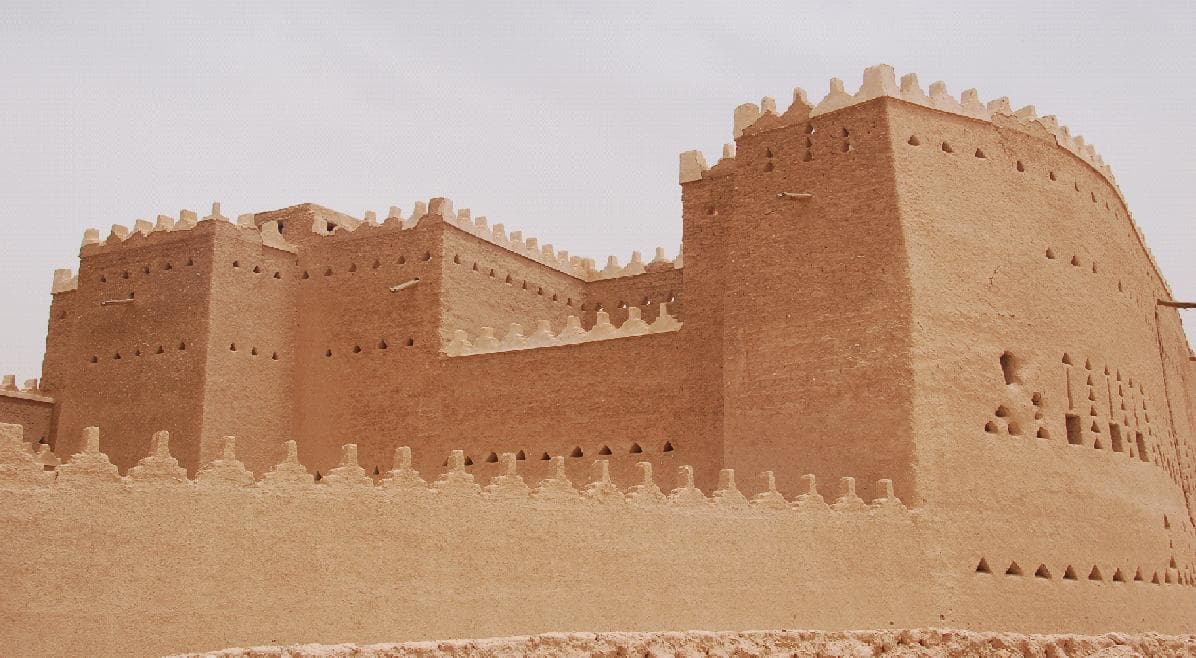
Image attribution: تصوير: هيئة التراث (Heritage Commission)، عبر ويكيميديا كومنز — ملف «قصر ابراهيم.jpg» · License: CC BY-SA 4.0
عهد الجبريين – 1331هـ/1913م

Ibrahim Palace

Ibrahim Palace is a historic palace in Hofuf in Al-Ahsa Governorate, eastern Saudi Arabia. It is one of the largest palaces of the Al-Ahsa Oasis and among the most famous historic palaces in the Kingdom. Its construction dates to the Jabrid era, its architecture was renewed in 1216 AH, corresponding to 1801 CE, and it is registered with the Heritage Commission and is one of the elements of the Al-Ahsa Oasis inscribed on the World Heritage List.

Read article
Image credits
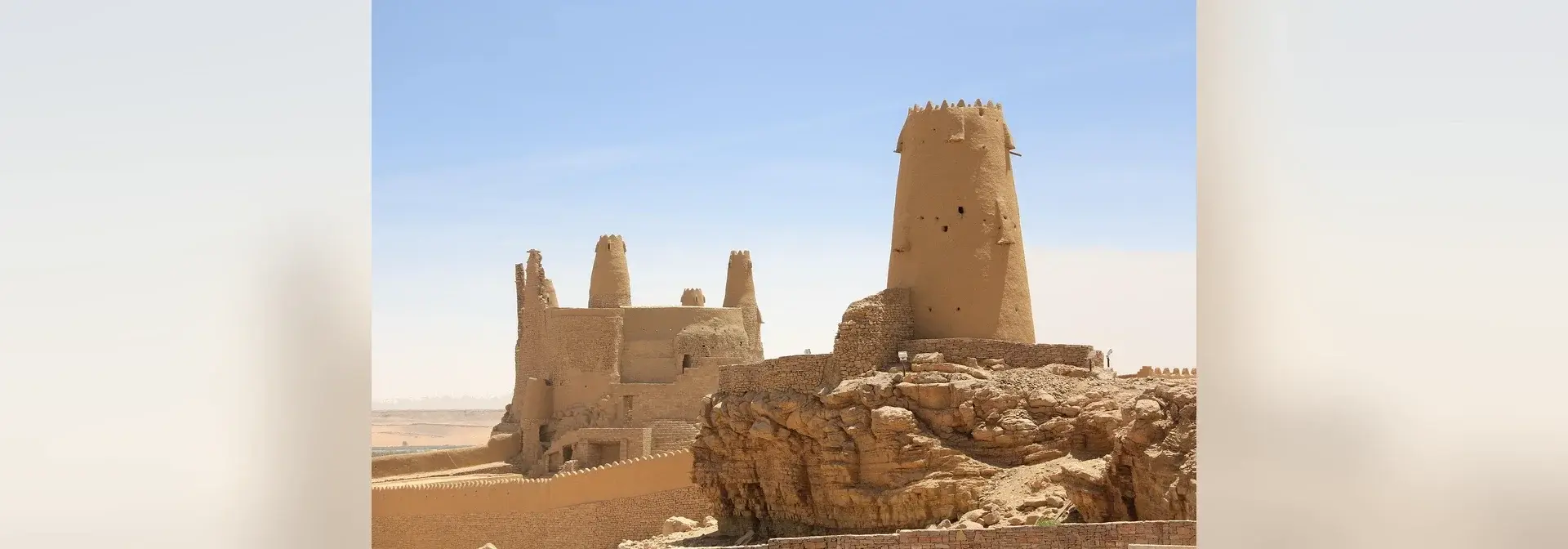
Image attribution: Photo "قلعة مارد الأثرية" (Marid Castle) by the Saudi Press Agency (SPA) via the cc.spa.gov.sa photo platform, uploaded to Wikimedia Commons as File:قلعة مارد الأثرية.jpg under the Creative Commons Attribution-ShareAlike 4.0 International licence (CC BY-SA 4.0). Modified: downscaled from 5184×3446 and shown whole at height 672 on a blurred cream canvas (#f4efe5) to form a 1920×672 cover, without cropping or upscaling. / صورة «قلعة مارد الأثرية» لوكالة الأنباء السعودية (واس) عبر منصّة الصور cc.spa.gov.sa، مرفوعة في ويكيميديا كومنز بملف File:قلعة مارد الأثرية.jpg برخصة المشاع الإبداعي نَسب المُصنَّف — الترخيص بالمثل 4.0 الدولية (CC BY-SA 4.0). التعديل: صُغِّرت من 5184×3446 وعُرضت كاملةً بارتفاع 672 على كانفس كريمي مموّه (#f4efe5) لتصبح غلافاً بمقاس 1920×672 بلا قصّ ولا تكبير. · License: CC BY-SA 4.0
من القرن الأول الميلادي إلى الوقت الحاضر

Marid Castle

Marid Castle is an archaeological castle at the southern edge of the old town of Dumat al-Jandal in the Al-Jouf region, standing on a high hill overlooking the city. Its construction goes back to the first and second centuries CE, and the earliest mention of it is in the third century CE.

Read article