
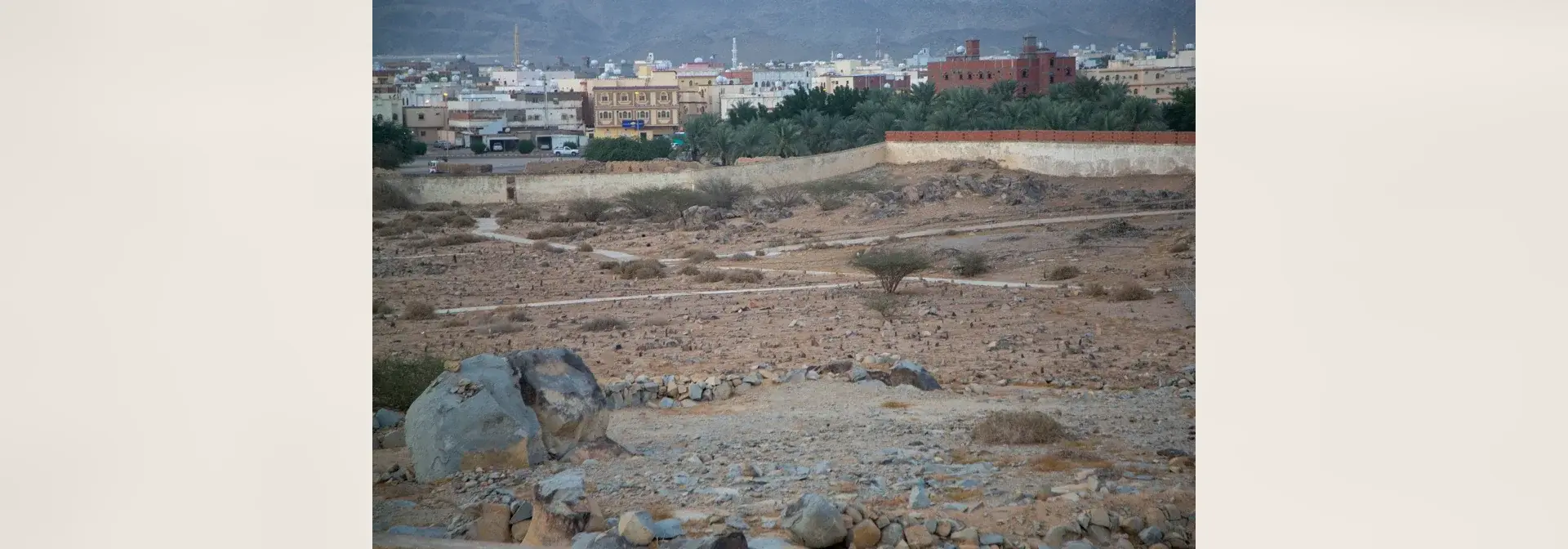

Overview
The Battle of Badr is the first decisive battle fought by the Muslims. It took place on the seventeenth of Ramadan in the second year of the Hijrah, between Makkah and Madinah, and its day was named the Day of the Criterion (Yawm al-Furqan), because God distinguished in it between truth and falsehood and truth prevailed over falsehood in it. [1]
The Prophet Muhammad, peace be upon him, took part in the battle with his noble Companions, and it is the first of the Muslims' victories in the month of Ramadan. [1]
Causes of the Battle
The causes of the battle lie in Quraysh's harsh treatment of the Muslims, after which God permitted them to emigrate from Makkah to Madinah; Quraysh, however, continued to seize the Muslims' wealth and plunder their property. [2]
When the Prophet, peace be upon him, learned that a trade caravan of Quraysh, laden with goods and wealth, was on its way back to Makkah from the Levant, he set out to intercept it. Abu Sufyan managed to escape with the caravan by changing its route and sent a messenger to Quraysh seeking its help and support; Quraysh responded and set out to fight the Muslims. [2]
The caravan consisted of a thousand camels, fifty thousand dinars and thirty men, and the Prophet's Mosque was the first stop on the army's march. [5]
Course of the Battle
The battle began when the Prophet, peace be upon him, set out with his Companions to intercept the caravan of Quraysh coming from the Levant under the leadership of Abu Sufyan. When Quraysh learned of this, it set out from Makkah in a large force exceeding a thousand men, led by its chiefs and notables. [3]
Shortly before the battle, the final consultation was held in the area of Dhafran, where Sa'd ibn Mu'adh, the chief of Banu Abd al-Ashhal and the chief of the Aws, declared his obedience and compliance; the Prophet, peace be upon him, then said: "March on with the blessing of God, and rejoice, for God has promised me one of the two parties, either the caravan or the troops." [6]
The two sides met on the seventeenth of Ramadan in the second year of the Hijrah. When the Prophet, peace be upon him, saw the great number of the polytheists and the small number of the Muslims, he turned to his Lord in humble supplication, and God supported the believers with His victory, so that the word of God remained supreme. [3]
Outcomes of the Battle
The battle ended in the defeat of the polytheists: seventy of their men were killed, including chiefs of Quraysh such as Abu Jahl, Umayyah ibn Khalaf, Utbah and Shaybah, and another seventy were taken captive. [3][1]
Fourteen Muslim men were martyred; thirteen of them were buried at Badr and one at Al-Hamra, thirty kilometres north of Badr towards Madinah, namely Abu Ubaydah ibn al-Harith, the cousin of the Prophet, peace be upon him. [1]
The Site of Badr and Its Landmarks
Among the most prominent landmarks of Badr Governorate linked to the battle is Al-Arish Mosque, which served as the command centre of the Muslims during the battle; it is the place where the Prophet, peace be upon him, prayed beneath a shelter of palm fronds, after which the mosque was built and named Al-Arish. [4]
Its landmarks also include the Martyrs' Cemetery, which holds the remains of the martyrs of Badr; Al-Udwah al-Dunya, the point from which the Muslims arrived from Madinah; Al-Udwah al-Quswa, the point from which the polytheists arrived from Makkah; and Jabal al-Mala'ikah, the Mountain of the Angels. [4]
Geography of Badr Governorate
Badr Governorate lies between four of the largest cities of the Kingdom of Saudi Arabia; its area is estimated at about 8186 square kilometres, and the population of the governorate and its centres exceeds one hundred thousand. [4]
Badr lies 310 km north-west of Makkah, 150 km south-west of Madinah, 270 km north of Jeddah and 85 km south-east of Yanbu. [4]
Badr has been renowned since the pre-Islamic era for the fame of its water, and because its strategic position on the trade caravan route made it one of the well-known markets of the Arabs, where a market was held from the first to the eighth of Dhu al-Qa'dah. [4]
The Historic Badr Route
The historic Badr route documents the landmarks of the battle along about 175 km between Madinah and the Badr area. The Madinah Research and Studies Centre organised a scientific training programme for this route, which included the study and analysis of about fifty historical landmarks along its length. [7]
The centre also released the film "Darb Masir Ghazwat Badr al-Tarikhi", which presents the historical sites of the battle, within the "Duroob" project, which aims to create a world-class tourism product. [8]
Frequently Asked Questions
Q: When did the Battle of Badr take place? A: On the seventeenth of Ramadan in the second year of the Hijrah; it is the first of the Muslims' victories in Ramadan.
Q: Why is the Battle of Badr named so? A: After the famous well of Badr located between Makkah and Madinah.
Q: Why was its day named the Day of the Criterion? A: Because God distinguished in it between truth and falsehood, and truth prevailed over falsehood in it.
Q: What were the outcomes of the Battle of Badr? A: The defeat of the polytheists, with seventy of them killed and another seventy taken captive, and the martyrdom of fourteen Muslim men.
Q: Where is the site of the Battle of Badr? A: In Badr Governorate in the Madinah region, about 150 km south-west of Madinah.
Conclusion
Related topics
- EventHistory of MadinahThe history of Madinah is the history of a city in the west of the Kingdom of Saudi Arabia, known before the Prophetic Hijrah as Yathrib and later named Madinah; it is the seat of the Prophet's Mosque and the first capital of the Islamic state. Its history extends from before Islam to the Saudi era, through the building of the Prophet's Mosque and the city's historical landmarks.
- RegionMadinah RegionA western Saudi region combining Madinah, Yanbu, AlUla and other governorates, with Islamic landmarks, oases, archaeological sites and a Red Sea coastline.
- RegionMakkah RegionA western Saudi region administered from Makkah, encompassing Jeddah, Taif and other governorates, where pilgrimage, maritime trade, coastal landscapes and uplands meet.
- HistoricThe Prophet's MosqueThe Prophet's Mosque is the mosque of the Prophet Muhammad ﷺ in Madinah, built in the first year of the Hijrah over an area of 1,050 square meters. Several constructions followed across the Islamic eras, and the mosque saw its widest expansions in the Saudi era.