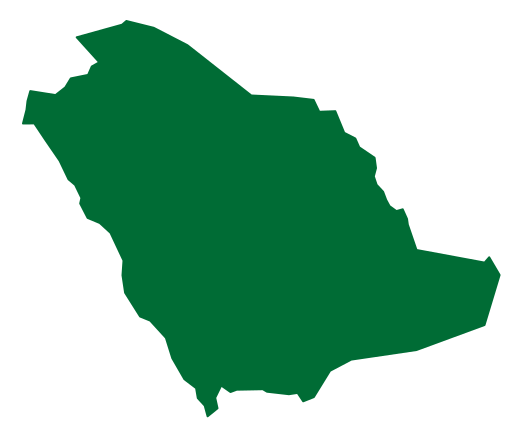

Makkah within a wider region
Makkah city is the regional administrative seat and the destination of Hajj and Umrah, but the administrative region extends to governorates with other functions and environments. Jeddah, Taif, Rabigh and Al Qunfudhah are examples. Distinguishing the holy city from the wider region is important when discussing geography, population or services: pilgrimage is central to its identity, but does not describe every regional activity. [1][2]
Coast, interior and uplands
The region faces the Red Sea and includes coastal, inland and upland environments. Jeddah stands on the coast, Makkah is inland, and Taif occupies higher terrain. Location and elevation influence local weather: maritime humidity and upland conditions affect places differently. Weather reported for one city should therefore not be treated as a complete description of conditions throughout the region. [1][2]
Pilgrimage, trade and connections
The Grand Mosque and pilgrimage sites attract Muslims from many countries, underpinning a long history of movement, services and cultural exchange. Jeddah has maritime and commercial functions, alongside economic facilities and ports elsewhere in the region. Transport networks, including the Haramain railway, connect cities and their gateways while the roles of Makkah, Jeddah and Taif remain distinct. [1][2]
Understanding landmarks in context
Historic Jeddah introduces architecture and markets associated with the port and pilgrimage routes. Taif offers another perspective on urban history, agriculture and cultural activity, complementing the study of Makkah's Islamic landmarks. Visitor arrangements, permits and transport timetables vary with seasons and official instructions. They should be checked with the responsible authorities rather than treated as permanent facts in an encyclopedia article. [1]


.jpg)