
Overview
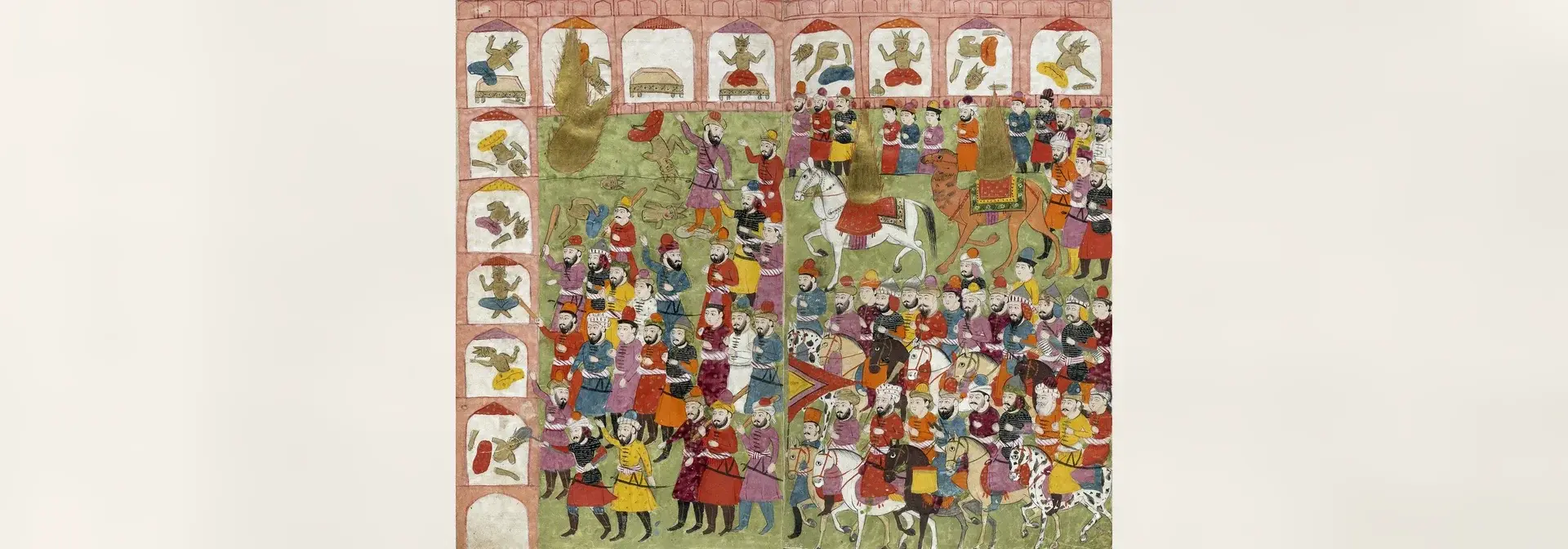
The Conquest of Makkah is one of the campaigns of the Messenger of Allah, peace be upon him. It was preceded by the Treaty of Al-Hudaybiyah, concluded in the sixth year of the Hijrah between him and the polytheists of Quraysh for a period of ten years, and written down by Ali ibn Abi Talib, may Allah be pleased with him.[1] The polytheists of Quraysh then violated the terms of the treaty after two years, and that was the cause of the hastening of the conquest of Makkah.[1][2]
A number of sites and mosques in the Makkah region are associated with the conquest, among them Wadi Tawa, where the Messenger of Allah, peace be upon him, spent the night of his entry into Makkah, Al-Rayah Mosque, Al-Fath Mosque in Al-Jumum and Al-Ji'ranah Mosque.[3][4]
Treaty of Al-Hudaybiyah
The site of Al-Hudaybiyah lies some 24 kilometers west of the Grand Mosque and about two kilometers outside the boundaries of the Sacred Precinct, at a place known today as Al-Shumaysi on the old road between Makkah and Jeddah.[2]
At this site the first peace treaty with Quraysh was concluded; it was a prelude to the conquest of Makkah, and there the Pledge of Ridwan became known in the sixth year of the Hijrah.[1][2] The terms of the treaty established a truce between the two sides for ten years, then the polytheists of Quraysh violated some of the terms of the peace after two years, and that hastened the conquest of Makkah.[2]
Route of Entry into Makkah
The Messenger of Allah, peace be upon him, spent the night in Wadi Tawa on the night of his entry into Makkah, and when morning came he washed and entered Makkah.[3]
The Messenger of Allah, peace be upon him, and his army entered Umm Al-Qura through several entrances by Jabal al-Ka'bah and Al-Hafayir, while Al-Zubayr ibn al-Awwam entered from Al-Hajun.[3] These sites remain among the landmarks of the route of the conquest that are studied today and whose locations are being determined.[3][5]
Landmarks Associated with the Conquest
Al-Rayah Mosque, known as Al-Judriyyah, is the place of the banner of the Messenger of Allah, peace be upon him, before the conquest of Makkah, and Al-Fath Mosque in Al-Jumum is where the Muslim army camped before the entry into Makkah.[3]
Al-Ji'ranah Mosque lies east of Makkah, 24 kilometers from the Grand Mosque, and from it the people of Makkah perform Umrah.[4] It was rebuilt in the modern style in the era of the Custodian of the Two Holy Mosques King Fahd ibn Abdulaziz in 1421 AH, on an area of 430 square meters with a capacity of 1,000 worshippers.[4]
The landmarks of Makkah associated with the Prophetic biography are divided into established and sound landmarks, connected to legal rulings such as the Sacred Precinct, Muzdalifah and Mina; established landmarks on which there is no disagreement, among them the Cave of Hira, the Cave of Thawr and Shi'b Banu Hashim, where the Prophet Muhammad, peace be upon him, lived; and, in contrast, a number of unestablished landmarks on which there is disagreement.[3]
After the Conquest
The Messenger of Allah, peace be upon him, stayed at Al-Ji'ranah Mosque for some ten nights, during which he did not divide the spoils while awaiting the arrival of Hawazin, then he divided what had been taken as spoils from Hawazin at the Battle of Hunayn in the year of the conquest.[4] When he had distributed them, a delegation of Hawazin came and chose the captives, and the Muslims returned them willingly.[4]
He entered ihram at Al-Ji'ranah at night, performed the Umrah and returned the same night, then ordered his army to depart for Madinah.[4]
Documentation and Care of the Route of the Conquest
The King Abdulaziz Foundation carries out the Historical Atlas of the Prophetic Biography project, in which the Makkah History Center plays the largest and most field-based role; it documents the landmarks of the history of Makkah associated with the Prophetic biography.[3]
The Custodian of the Two Holy Mosques Institute for Hajj and Umrah Research at Umm Al-Qura University is working on a study to revive the historic route of the conquest in Makkah, determine its sites and link them to the national positioning network.[5] The Ministry of Islamic Affairs, Call and Guidance counted the Conquest of Makkah among the campaigns of the Messenger of Allah, peace be upon him, that it presented to visitors of the “Jusur” Exhibition, alongside the campaigns of Al-Abwa, Safwan and the Battle of Uhud.[6]
Frequently Asked Questions
Q: What was the cause of the Conquest of Makkah? A: The violation by the polytheists of Quraysh of the terms of the Treaty of Al-Hudaybiyah after two years, which hastened the conquest of Makkah.[1][2]
Q: Where was the Treaty of Al-Hudaybiyah concluded? A: Some 24 kilometers west of the Grand Mosque and about two kilometers outside the boundaries of the Sacred Precinct, at a place known today as Al-Shumaysi on the old road between Makkah and Jeddah.[2]
Q: Through which entrances did the Messenger of Allah, peace be upon him, enter Makkah? A: He spent the night in Wadi Tawa, and when morning came he washed and entered Makkah; he and his army entered Umm Al-Qura through several entrances by Jabal al-Ka'bah and Al-Hafayir, and Al-Zubayr ibn al-Awwam entered from Al-Hajun.[3]
Q: What are the landmarks associated with the Conquest of Makkah? A: Al-Rayah Mosque (Al-Judriyyah) is the place of the banner before the conquest, Al-Fath Mosque in Al-Jumum is the camp of the Muslim army before the entry into Makkah, and Al-Ji'ranah Mosque lies east of Makkah, 24 kilometers from the Grand Mosque.[3][4]
Q: What happened after the conquest at Al-Ji'ranah? A: The Messenger of Allah, peace be upon him, stayed there for some ten nights, during which he divided the spoils of Hawazin from the Battle of Hunayn, then he entered ihram there at night, performed Umrah and returned the same night, and ordered his army to depart for Madinah.[4]
Significance of the Conquest and Its Presence in Memory
Related topics
- EventHistory of MakkahThe history of Makkah is a continuous record from the age of Ibrahim, peace be upon him, and the building of the Holy Kaaba to the Saudi era, embracing antiquities, landmarks, scholars, endowments and services for pilgrims. Its events are spread across the Mamluk era and the Ottoman period, then the educational and regulatory renaissance in the Kingdom of Saudi Arabia.
- HistoricThe Grand Mosque (Al-Masjid Al-Haram)The Grand Mosque (Al-Masjid Al-Haram) is the mosque at the centre of which stands the Kaaba in Makkah, and successive states and restorations followed upon its construction across the ages. In the Saudi era it witnessed major expansions and construction works, most notably the Third Saudi Expansion and the raising of the capacity of the Mataf and the courtyards.
- RegionMakkah RegionA western Saudi region administered from Makkah, encompassing Jeddah, Taif and other governorates, where pilgrimage, maritime trade, coastal landscapes and uplands meet.
- HistoricCave of HiraThe Cave of Hira is a rock cavity at the top of Jabal An-Noor in Makkah, northeast of the Grand Mosque, and the place where Prophet Muhammad (peace be upon him) used to retreat in worship before the Revelation, where the first verse of the Holy Quran was revealed: "Read in the name of your Lord who created."
- HistoricCave of ThawrCave of Thawr is a landmark of the Prophet's biography at the summit of Mount Thawr in the Makkah Province, 4 kilometers from the Grand Mosque. It is a prominent station of the Prophetic Migration, where the Prophet (peace be upon him) and his companion Abu Bakr Al-Siddiq stayed for three days before heading for Madinah.
- EventHistory of MadinahThe history of Madinah is the history of a city in the west of the Kingdom of Saudi Arabia, known before the Prophetic Hijrah as Yathrib and later named Madinah; it is the seat of the Prophet's Mosque and the first capital of the Islamic state. Its history extends from before Islam to the Saudi era, through the building of the Prophet's Mosque and the city's historical landmarks.
- EventBattle of UhudThe Battle of Uhud was fought in the third year of the Hijri calendar, corresponding to 625 CE, at Mount Uhud north of the Prophet's Mosque in Madinah. The Muslim army succeeded in protecting Madinah and repelling the attackers, and more than seventy Companions were martyred, among them Hamza ibn Abd al-Muttalib.
- HistoricThe Prophet's MosqueThe Prophet's Mosque is the mosque of the Prophet Muhammad ﷺ in Madinah, built in the first year of the Hijrah over an area of 1,050 square meters. Several constructions followed across the Islamic eras, and the mosque saw its widest expansions in the Saudi era.
- EventConquest of HejazThe Conquest of Hejaz is a stage in the unification of the Kingdom of Saudi Arabia, in which King Abdulaziz bin Abdulrahman Al Saud set out from Riyadh to Hejaz in 1343 AH, declaring that he was travelling to Makkah to lift grievances and apply the rulings of Sharia, and it ended with the change of the name of the state to the Kingdom of Saudi Arabia.
Sources & references
- Saudi Press Agency (SPA) — “Al-Hudaybiyah Mosque”, a witness to a site linked to the events of the Prophetic biography
- Saudi Press Agency (SPA) — “Al-Hudaybiyah”: the first peace treaty in the history of Islam
- Saudi Press Agency (SPA) — “The historic landmarks of Makkah associated with the Prophetic biography”, a symposium at the King Abdulaziz Foundation
- Saudi Press Agency (SPA) — The mosques of Makkah, fragrant breezes of the Prophetic biography
- Saudi Press Agency (SPA) — Hajj and Umrah Research Institute studies reviving the historic route of the conquest in Makkah
- Saudi Press Agency (SPA) — “Islamic Affairs” presents the history of the Prophet's campaigns to visitors of the “Jusur” Exhibition