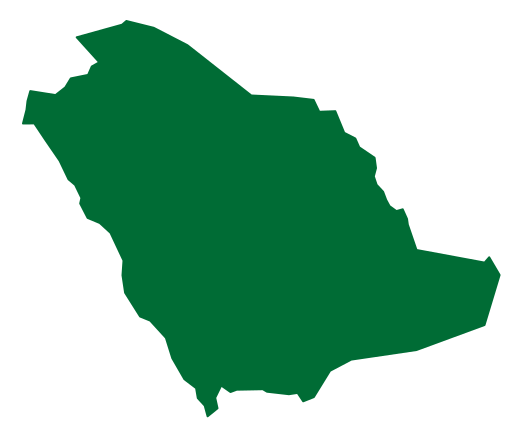

Overview
The Ikhwan Hijras of Najd are settled agricultural residential units that arose within a housing project for the Bedouin of the Arabian Peninsula in the era of King Abdulaziz bin Abdulrahman Al Saud. [1]
The project came within the march of building the third Saudi state and unifying the country, and one hundred and seventy-two hijras were established under it until the tent-dwellers became settled inhabitants. [3][4]
The Bedouin Settlement Project
The first settlement project rested on housing the Bedouin of the Arabian Peninsula in fixed hijras, and many hijras emerged that are counted as settled agricultural residential units. [1] King Abdulaziz persuaded the heads of the Bedouin tribes to come to Riyadh to receive learning in its Grand Mosque, and urged them to abandon the nomadic life for work in agriculture. [1]
The project enabled each large tribe to keep a portion of its members for agricultural work in the hijras, while the other portion remained in the desert to graze livestock. [1] The King gave those Bedouin who settled money, agricultural supplies, grants, and farmland, and persuaded the tribes to sell their camels and turn into an agricultural society instead of a pastoral one. [1]
Building the Hijras and Supporting Agriculture
The role of religious scholars and guides, who encouraged the Bedouin to build the hijras and practise agriculture, helped the settlement succeed. [1] The state established the General Directorate of Agriculture, built dams, dug wells, and laid aflaj to irrigate the farms. [3]
It distributed seeds, fertilisers, and financial support to the farmers of the hijras, enabling them to make use of the available water resources. [3]
Hijrat Al-Artawiyah
Al-Artawiyah is one of the largest hijras; it is inhabited by more than twenty thousand mujahideen, and it is headed by Faisal bin Sultan Al-Duwaish, sheikh of the Mutair tribes. [2] King Abdulaziz sent Sheikh Abdullah bin Hassan Al ash-Sheikh to Al-Artawiyah as a caller and teacher, and he stayed there a year and some months, spreading the true Islamic call among its people and teaching them the duties of Islam. [2]
Bedouin Settlement in Al-Mahmal District
Al-Mahmal district comprises five hijras, and Thadiq is its largest settlement and the administrative seat of the district. [5]
The hijras of the district were founded in two different periods: some of the old hijras arose at the beginning of the twentieth century, and the modern hijras later in it. [5]
The shortage of water for drinking and agriculture was the most serious problem facing the hijras of Al-Mahmal. [5] Across the hijras in general, the state worked to dig wells and irrigate the farms with aflaj to meet the need for water. [3]
The Social Impact of Settlement
Settlement changed the social structure of the tribes in Najd; after the Bedouin moved to the agricultural villages, effective authority over the tribes no longer rested with their sheikhs but passed to the central government in Riyadh. [1] Religious awareness spread among the settled Bedouin in the hijras. [1]
Frequently Asked Questions
Q: What are the Ikhwan Hijras of Najd? A: They are settled agricultural residential units established in Najd within the project to settle the Bedouin of the Arabian Peninsula in the era of King Abdulaziz. [1]
Q: How many hijras were established in the era of King Abdulaziz? A: One hundred and seventy-two hijras. [3]
Q: How was a tribe divided between the hijra and the desert? A: A large tribe kept a portion of its members for agriculture in the hijra, while the other portion remained in the desert to graze livestock. [1]
Q: What is the largest hijra of Najd and who heads it? A: Hijrat Al-Artawiyah, which is inhabited by more than twenty thousand mujahideen and headed by Faisal bin Sultan Al-Duwaish, sheikh of the Mutair tribes. [2]
Q: How many hijras are there in Al-Mahmal district and where is its seat? A: Five hijras, and its largest settlement is Thadiq, the administrative seat of the district. [5]
Related people
Related topics
- Saudi statesThe Third Saudi StateThe Third Saudi State began with Abdulaziz bin Abdulrahman Al Saud's recovery of Riyadh in 1902. Regional unification led to the Kingdom of Saudi Arabia proclaimed in 1932 and continuing thereafter.
- EventUnification of Saudi ArabiaKing Abdulaziz's path from the recovery of Riyadh in 1902 to the proclamation of the Kingdom of Saudi Arabia on 23 September 1932, now National Day.
- CityRiyadh (city)Capital of Saudi Arabia and seat of the Riyadh Region emirate, beside Diriyah, home to Qasr Al-Hukm and Masmak Palace.
Sources & references
- King Abdulaziz Foundation (Darah) — Al-Darah Journal (peer-reviewed study): “The First Roots of the Bedouin Settlement Projects in the Arabian Peninsula,” Abdulfattah Hassan Abu Alia, Volume 1, Issue 1
- King Abdulaziz Foundation (Darah) — Al-Darah Journal: “Sheikh Abdullah bin Hassan Al ash-Sheikh,” Volume 1, Issue 1
- King Abdulaziz Foundation (Darah) — Al-Darah Journal (peer-reviewed study): “The Economics of Agricultural Activity in the Era of King Abdulaziz,” Volume 87
- King Abdulaziz Foundation (Darah) — Al-Darah Journal (study): “King Abdulaziz and the Long Jihad in the March of Construction and the Unification of the Country,” Abdullah bin Hamad Al-Huqail, Volume 10, Issue 2
- King Abdulaziz Foundation (Darah) — Al-Darah Journal (peer-reviewed study): “The Settlement of the Bedouin in Al-Mahmal District in the Kingdom of Saudi Arabia,” Ahmed Abdulrahman Al-Shamikh, Volume 5, Issue 2