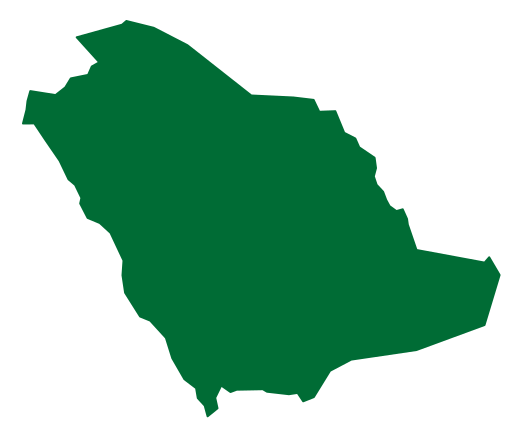
Overview
The Battle of Kanzan was an engagement fought in the vicinity of Al-Ahsa in the Eastern Province during the unification of the Kingdom of Saudi Arabia, part of the response of King Abdulaziz bin Abdulrahman Al Saud to the tribes that attacked trade and pilgrim caravans in eastern Arabia.[1]
The engagement was preceded by the capture of Riyadh on 5 Shawwal 1319 AH, corresponding to 16 January 1902, and then by the annexation of Al-Ahsa to the Saudi State in 1913.[7][1] After King Abdulaziz's meeting with the Ajman warriors, rumours were spread about his death, and he put an end to them during that period.[2]
Al-Ahsa Before the Battle
The Ottoman State extended its influence over Al-Ahsa in 1288 AH / 1871 and designated it administratively as the "Sanjak of Najd", at a time when Britain was watching the policy and measures of the Ottoman State.[1]
After the Ottoman takeover of Al-Ahsa, the taxes imposed on the population increased, and discontent and resentment spread against the financial measures of the Ottoman administration, its exploitation and its domination.[1] When Ottoman power weakened in eastern Arabia, the Bedouin tribes living there confronted trade and pilgrim caravans, and Britain supplied weapons to the tribes of the Gulf region to stir up unrest and to oppose and weaken Ottoman rule.[1]
In 1913, King Abdulaziz bin Abdulrahman Al Saud annexed Al-Ahsa to the Saudi State after his campaign against it.[1]
The Battle and the Meeting with the Ajman
During the unification of the country, King Abdulaziz confronted the tribes that attacked trade and pilgrim caravans, and among the most notable of these encounters was his meeting with the Ajman warriors.[1][2] After this meeting, rumours were spread that King Abdulaziz had been killed; he put an end to them by drawing on the media, and the media had a role in his confrontation with Ibn Rashid.[2]
His leadership during the unification was marked by his piety, his generosity, his measured courage and his strength of will, and he was known for his skill in handling both victory and defeat: he crowned his military victories with pardon, returned to people of experience and opinion for counsel, and was distinguished by his shrewdness in dealing with his opponents, especially in misleading them and concealing the movements of his forces towards them.[2]
The Ajman tribes were known for their early acquaintance with the Salafi call, for they and the Wada'a tribe accepted it in Najran in 1189 AH / 1775, when some tribes of Najd raided the Bedouin of Najran.[3]
The Battlefield: Al-Ahsa and Its Oasis
Al-Ahsa is famous for date palm cultivation in Saudi Arabia, and it contains the Al-Ahsa Oasis, the largest self-contained oasis in the world, which entered the Guinness Book of World Records under that description: it holds 2.5 million palm trees fed by a vast groundwater layer through 280 artesian wells, over an area exceeding 85.4 square kilometres, and it is one of the Kingdom's sites inscribed on the UNESCO World Heritage List.[9]
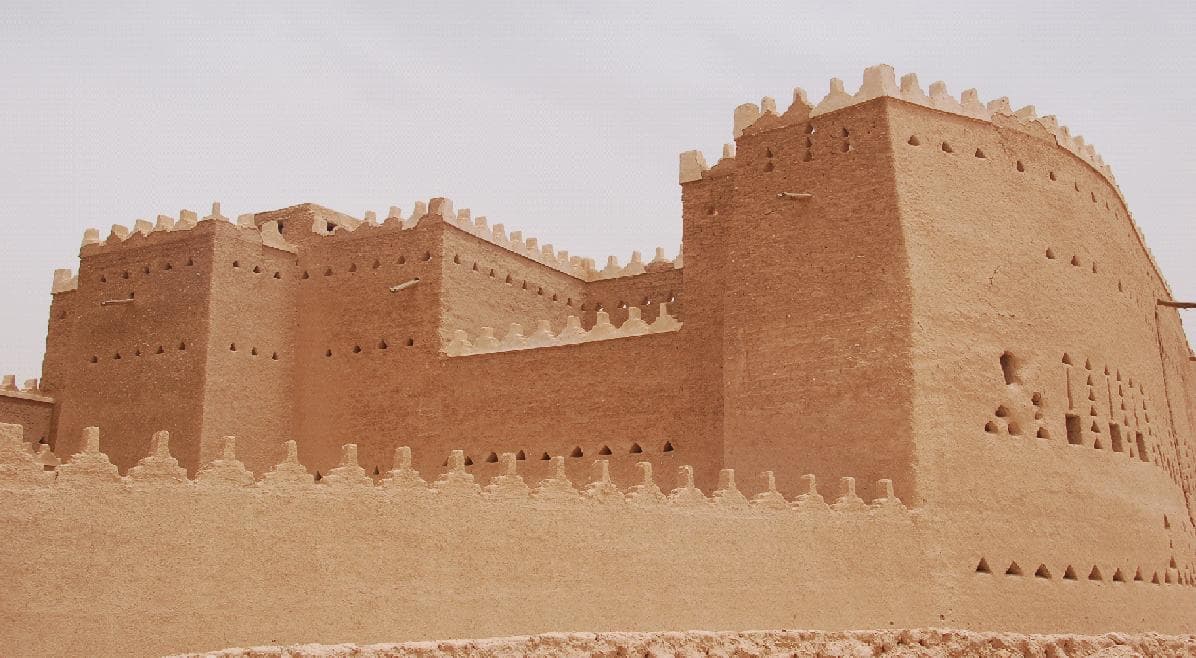
The historic centre of Al-Hofuf is regarded as a symbol of the Islamic city in the Arabian Peninsula, for its dense clusters of markets, mosques and Islamic minarets, together with palaces, forts and houses interspersed with small open spaces and narrow alleys.[10]
Regional and International Context
Before World War I, the Emirate of Hail in Jabal Shammar was bound in allegiance to the Ottomans, and when the war broke out Ibn Rashid stood with them and set out at the head of a force to the Iraqi frontier in Rabi' al-Thani 1334 AH, then returned to Hail in the latter part of Ramadan 1334 AH.[4] Kuwait was bound by a treaty of protection with Britain in 1899, and Sharif Hussein in the Hijaz was subject to the Ottoman State, which doubted his loyalty to it, while the Idrisi in the Asir region was engaged in continuous war against the Ottomans.[5]
Official documents from this period provide extensive material: the records of the Saudi State preserved in the India Office in London cover a large part of the events of 1902–1931, and the Public Records Office in London holds the correspondence, reports and bulletins of the British consulate in Jeddah, which are rich in information on the relationship between Najd, the Hijaz, the Al Rashid, the Turks and Britain.[8]
Stability and Development After the Battle
The unification of the country paved the way for the stability of the east of the Kingdom, and in King Abdulaziz's era the people of tents were transformed into settled inhabitants of the settlements, the far-flung parts of the Kingdom were linked by wireless networks and paved roads, and attention was given to establishing ports and building airports.[6]
This came within the course of the unification of the Kingdom of Saudi Arabia, which was accompanied by a policy of settling the tribes in the Ikhwan settlements of Najd.[6]
Related people
Frequently Asked Questions
Q: Where was the Battle of Kanzan fought? A: In the vicinity of Al-Ahsa in the Eastern Province of the Kingdom of Saudi Arabia, in the east of the country.[1]
Q: In which historical stage did the engagement take place? A: During the unification of the Kingdom of Saudi Arabia, after the capture of Riyadh in 1902 and the annexation of Al-Ahsa to the Saudi State in 1913.[7][1]
Q: What context preceded the engagement? A: The Ottoman State's extension of its influence over Al-Ahsa in 1871 and the increase in taxes, followed by the Bedouin tribes' confrontation of trade and pilgrim caravans in eastern Arabia.[1]
Q: How did King Abdulaziz deal with what was said about him after his meeting with the Ajman warriors? A: He put an end to the rumours that were spread about his death by drawing on the media, and the media had a role in his confrontation with his opponents.[2]
Q: What most distinguishes Al-Ahsa as the arena of the engagement? A: The Al-Ahsa Oasis is the largest self-contained oasis in the world and is inscribed on the UNESCO World Heritage List, and the historic centre of Al-Hofuf is a symbol of the Islamic city in the Arabian Peninsula.[9][10]
Conclusion
The Battle of Kanzan is part of the course of the unification of the Kingdom of Saudi Arabia and the establishment of security in its east. Related topics on the platform include the Battle of Sabilla and the Battle of Rawdat Muhanna.
Related topics
- EventUnification of Saudi ArabiaKing Abdulaziz's path from the recovery of Riyadh in 1902 to the proclamation of the Kingdom of Saudi Arabia on 23 September 1932, now National Day.
- HistoricAl-Ahsa OasisThe world's largest self-contained oasis according to Guinness World Records, inscribed on the UNESCO World Heritage List in 2018 as a cultural landscape of human interaction with the environment.
- RegionEastern ProvinceA large eastern Saudi region administered from Dammam, combining Gulf cities, the oases of Al Ahsa and Qatif, desert areas, energy industries and maritime commerce.
- EventThe Capture of RiyadhThe Capture of Riyadh was King Abdulaziz bin Abdulrahman Al Saud's recovery of the city of Riyadh and his entry into it with his men on 5 Shawwal 1319 AH, corresponding to 16 January 1902, together with his pledge of allegiance as Emir there. It was followed by the unification of Najd, the capture of Al-Ahsa, and his official recognition as ruler of Najd, Qassim, and Al-Ahsa.
- RegionHail RegionA north-central Saudi region administered from Hail, associated with the Aja and Salma mountains, the Nafud desert, historical caravan routes and varied regional activities.
- EventBattle of SabillaThe Battle of Sabilla was a confrontation that took place during the Ikhwan movement in Najd, which spanned the years from 1915 to 1929, and Rawdat Sabilla, which carries its name, lies in Zulfi Governorate in the Riyadh Region. King Abdulaziz's success in unifying the parts of the Kingdom and gathering its tribes is attributed to his qualities and leadership abilities, and to the internal and external circumstances that surrounded his course.
- EventThe Ikhwan Hijras of NajdThe Ikhwan Hijras of Najd are settled agricultural residential units established in Najd as part of the project to settle the Bedouin of the Arabian Peninsula during the era of King Abdulaziz bin Abdulrahman Al Saud (1330–1373 AH/1912–1953 CE). One hundred and seventy-two hijras were established during his era, and through them effective authority over the tribes passed to the central government in Riyadh.
- Agricultural heritage and traditional knowledgeDate Palm Cultivation in Saudi ArabiaDate palm cultivation in Saudi Arabia combines food production with knowledge of irrigation, pollination and fruit care. Al-Ahsa illustrates its links to farming heritage.
- EventBattle of Rawdat MuhannaThe Battle of Rawdat Muhanna was fought at Rawdat Muhanna in the Qassim region between the forces of King Abdulaziz bin Abdulrahman Al Saud and the forces of the Emirate of Al Rashid. It was followed by King Abdulaziz's consolidation of his authority over Qassim, the official Ottoman recognition of him as King over Najd, Qassim and Al-Ahsa, and the subsequent unification of the Kingdom of Saudi Arabia.
Sources & references
- King Abdulaziz Foundation — Al-Darah Magazine (Ottoman influence over Al-Ahsa in 1288 AH / 1871, the taxes, the tribes' confrontation of the caravans, and the annexation of Al-Ahsa in 1913)
- King Abdulaziz Foundation — Al-Darah Magazine (King Abdulaziz's qualities in unifying the country and the rumours about his death after his meeting with the Ajman warriors)
- King Abdulaziz Foundation — Al-Darah Magazine (the Ajman tribes' acceptance of the Salafi call in Najran in 1189 AH / 1775)
- King Abdulaziz Foundation — Al-Darah Magazine (the Emirate of Hail's allegiance to the Ottomans and its participation in the war in 1334 AH)
- King Abdulaziz Foundation — Al-Darah Magazine (the map of allegiances before World War I)
- King Abdulaziz Foundation — Al-Darah Magazine (King Abdulaziz's achievements in stability and development)
- King Abdulaziz Foundation — Al-Darah Magazine (the recapture of Riyadh in 1319 AH / 1902 and the differing accounts of the number of companions)
- King Abdulaziz Foundation — Al-Darah Magazine (the archive of Saudi State documents in the India Office and the Public Records Office)
- Saudi Press Agency (SPA) — Al-Ahsa Oasis as the largest self-contained oasis
- Saudi Press Agency (SPA) — The historic centre of Al-Hofuf city