

Overview
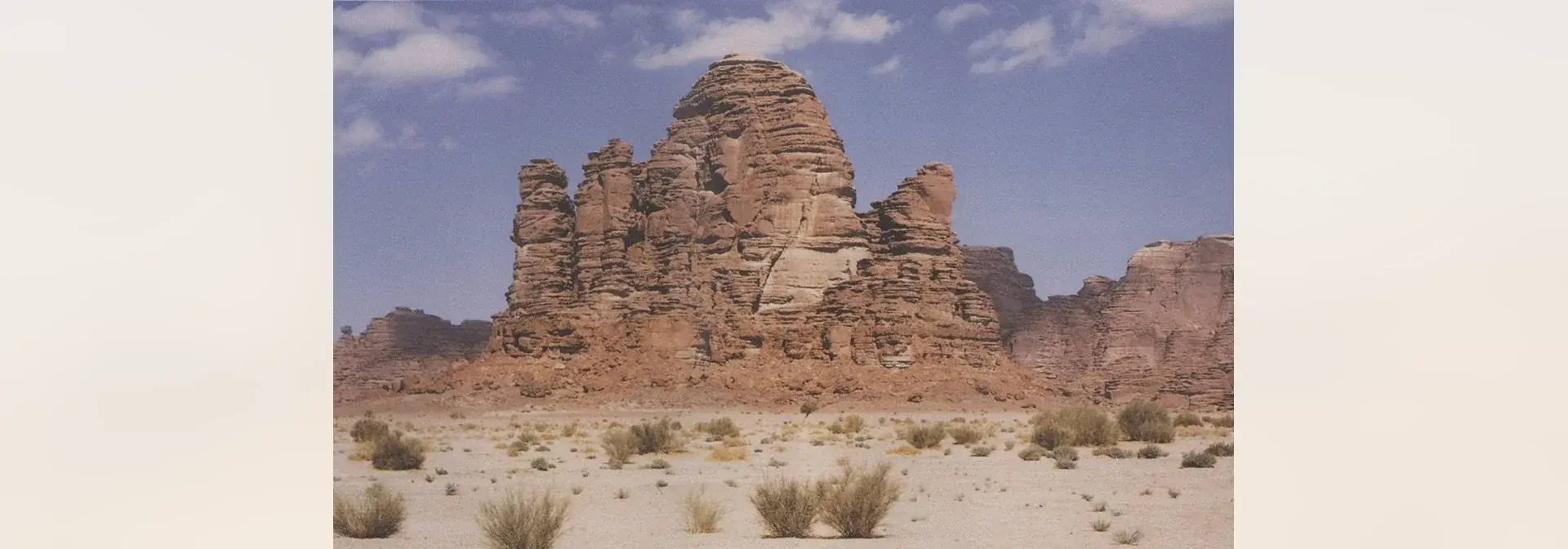
Al-Hamad Desert is a desert area in the Northern Borders Region of the Kingdom of Saudi Arabia, close to the city of Arar and Al-Uwayqilah Governorate.[6] It is one of the most prominent crossing stations for migratory birds, especially falcons, during the al-Maqnas season, which begins in October each year.[1][2]
Falconers travel to it from across the Kingdom and from the Gulf Cooperation Council states to practise al-Maqnas; each year the area records a high rate of prized falcons taken and strong sales at auction.[1]
Location and Migration Season
Al-Hamad Desert lies in the Northern Borders Region, and attention turns to it to follow the movement of falcons and to choose the sites suited to al-tarh.[6] The al-Maqnas season begins in October each year, a time when the passage of the peregrine falcon is abundant and the camps of hunting enthusiasts spread across the area in preparation for the season.[1][5]
Al-Hamad Desert is one of the most prominent stations that migratory falcons cross during their annual migration.[2] Falconers prepare for the season by equipping camps, al-tarh gear and desert journeys in anticipation of the passage of the falcons, a practice that those interested in this heritage have inherited generation after generation.[2] This migration falls within the routes of migratory birds that cross the airspace of the Kingdom.
Al-Maqnas and Falconry
The movement of the peregrine falcon is concentrated in the Al-Hamad area, which makes it a principal destination for enthusiasts of al-Maqnas.[4] The chances of al-tarh begin in the first hours of dawn and are highest before the birds feed, then resume shortly before sunset until the sun sets, with the camp and nets of every kind made ready.[4]
Falconers come to Al-Hamad from inside the Kingdom and from abroad, and auctions for the sale of falcons are held there.[1] The Saudi Falcon Club accompanies the season by organising an auction for the sale of falcons from October until the end of November.[4]
Camping and the Desert Environment
Harrat al-Harrah
Harrat al-Harrah extends across the Northern Borders and Al-Jawf regions and lies within the King Salman bin Abdulaziz Royal Reserve, with an area of 13,775 square kilometres.[7]
The surface of Harrat al-Harrah consists of a volcanic plateau in which black basalt rocks abound, together with low volcanic mountains rising between 800 and 1,150 metres above sea level; Jabal Amud al-Harrah is among its highest volcanic hollows.[7] It lies in the north of the Kingdom at the border with the Hashemite Kingdom of Jordan, east of Wadi al-Sirhan, and holds one of the largest volcanic craters in the Kingdom.[8]
Harrat al-Harrah was formerly a separate reserve, until it was merged with a number of reserves and sites within the King Salman bin Abdulaziz Royal Reserve.[8]
Vegetation and Wildlife
Harrat al-Harrah is marked by the diversity of its vegetation cover, which includes tarfah, athl, ghada, arti and awsaj trees, and shrubs among them qaysum, shih and damran.[7]
The area also contains animals, most notably the reem gazelle, the idmi gazelle, the wolf, the Arabian fox and the sand fox, alongside many species of resident and migratory birds.[7] The number of bird species recorded in the King Salman bin Abdulaziz Royal Reserve rose from 190 species to 296 species, so that it includes about 60% of all bird species recorded in the Kingdom.[10]
Protection and Regulation
Entry to the desert areas within the King Salman bin Abdulaziz Royal Reserve is regulated, and violations connected with the entry of vehicles without a permit into the fiyad and desert rawdahs are controlled, with the value of the violations ranging between 500 and 2,000 riyals.[9]
Frequently Asked Questions
Q: Where is Al-Hamad Desert located? A: In the Northern Borders Region of the Kingdom of Saudi Arabia, close to the city of Arar and Al-Uwayqilah Governorate.[6]
Q: What is the importance of Al-Hamad Desert for migratory birds? A: It is one of the most prominent stations that migratory falcons cross during their annual migration, especially the peregrine falcon.[2]
Q: When does the al-Maqnas season begin in Al-Hamad Desert? A: It begins in October each year, when the passage of the peregrine falcon is abundant and the camps of hunting enthusiasts spread across the area.[1][5]
Q: How many bird species are recorded in the King Salman bin Abdulaziz Royal Reserve? A: 296 species, about 60% of all bird species recorded in the Kingdom.[10]
Conclusion
Al-Hamad Desert brings together the al-Maqnas season, the migration of falcons and natural diversity in the Northern Borders Region.[1][2] Related topics on the platform include the Northern Borders Region, Harrat al-Harrah, King Salman bin Abdulaziz Royal Reserve and falconry.
Related topics
- RegionNorthern Borders RegionA northern Saudi region administered from Arar, including Rafha, Turaif and Al Uwayqilah, with histories of pilgrimage routes, pastoral activity, Tapline settlement and mining.
- HistoricHarrat Al-Harrah ReserveHarrat Al-Harrah Reserve is a high-conservation natural area in northwestern Saudi Arabia, extending across the Northern Borders and Al-Jawf regions within the boundaries of the King Salman bin Abdulaziz Royal Reserve. It features a volcanic plateau and plant and wildlife diversity, and is the first reserve established by the Saudi Wildlife Authority.
- HistoricKing Salman bin Abdulaziz Royal Nature ReserveKing Salman bin Abdulaziz Royal Nature Reserve is a royal nature reserve in the northwest of the Kingdom of Saudi Arabia and the largest reserve in the Middle East, with a total area of 130,700 square kilometres extending across four administrative regions. It contains broad biodiversity and rock art sites inscribed on the UNESCO World Heritage List.
- HistoricFalconryFalconry is an intangible cultural heritage of the Kingdom of Saudi Arabia, inscribed on the Representative List of the Intangible Cultural Heritage of Humanity of UNESCO since 2010. It receives official attention through the Saudi Falcons Club and the King Abdulaziz Falconry Festival, the largest gathering of falcons in the world, along with the International Falcon Breeders Auction and the AlUla Falcons Cup.
- HistoricMigratory Birds in Saudi ArabiaMigratory Birds in Saudi Arabia are a recurring seasonal phenomenon in which numbers of birds cross the Kingdom's territory along fixed routes between their habitats in the Northern Hemisphere and the African continent. The Kingdom is a passage and a safe habitat for them thanks to its strategic geographic location and its area of more than two million km², with reserves and coastal environments that receive resident and migratory species.
Sources & references
- Saudi Press Agency (SPA) — Al-Hamad Desert east of Arar and the al-Maqnas season
- Saudi Press Agency (SPA) — Al-Hamad Desert and the falcon migration station
- Saudi Press Agency (SPA) — Al-Maqnas destinations and desert camping in Al-Hamad
- Saudi Press Agency (SPA) — The movement of the peregrine falcon and the Saudi Falcon Club auction
- Saudi Press Agency (SPA) — The passage of the peregrine falcon and hunting camps in October
- Saudi Press Agency (SPA) — Following the movement of falcons in Al-Hamad and Al-Uwayqilah
- Saudi Press Agency (SPA) — Harrat al-Harrah: extent, area, formation and living cover
- Saudi Press Agency (SPA) — The location of Harrat al-Harrah, its volcanic craters and its status within the King Salman Reserve
- Saudi Press Agency (SPA) — Control of violations of entry without a permit within the King Salman Reserve
- Saudi Press Agency (SPA) — Rise in the bird species recorded in the King Salman Reserve