
Overview
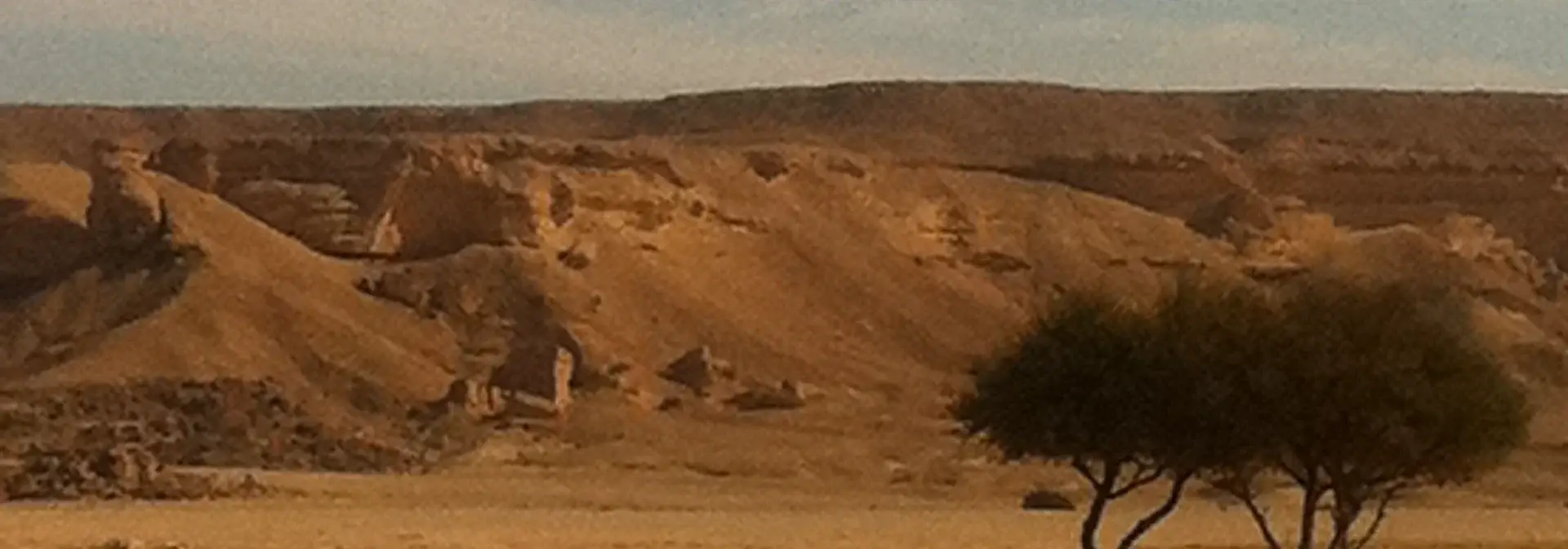
Al-Summan Plateau is a rocky plateau, part of which lies within the geographical scope of King Abdulaziz Royal Reserve, which also comprises the Khafs, Tanhah and Nurah rawdahs and part of the Al-Dahna Desert.[1]
King Abdulaziz Royal Reserve was established in 2018, and is one of the seven reserves created by royal order.[1] The reserve's development authority regulates entry to the Al-Summan area and recreation within it, and launches environmental initiatives across its geographical scope.[1][2][3]
Location and Geographical Scope
King Abdulaziz Royal Reserve comprises part of Al-Summan Plateau, alongside the Khafs, Tanhah and Nurah rawdahs.[1] The name Al-Summan is borne by a number of sites and facilities, including the Al-Summan Crushers Complex in the Eastern Region and the Wadi Al-Summan power station.[5][8]
The Al-Dahna Desert extends across the same geographical scope, as the reserve comprises part of it alongside part of Al-Summan Plateau and the Khafs, Tanhah and Nurah rawdahs.[1]
Regulating Entry and Recreation
Entry to the Al-Summan area is from 6 a.m. until 6 p.m., after obtaining an entry permit through the authority's official website.[1] On 22 June 2025 (26 Dhu al-Hijjah 1446 AH), the authority announced an update to the mechanism of entry and recreation within the Al-Summan and Al-Dahna areas, both of which lie within its geographical scope.[2]
A recreation permit requires the application to be submitted two working days before the visit, including information on the visitor, their companions and the type of vehicles used, together with a commitment to observe the environmental controls.[2]
The controls include a ban on hunting and tree cutting, on lighting fires directly on the ground, on driving over plants, on leaving waste, and on creating noise and visual disfigurement.[2]
Reviving the Khabras and Vegetation Cover
On 12 February 2024 (2 Sha'ban 1445 AH), the King Abdulaziz Royal Reserve Development Authority launched a tree-planting initiative aimed at rehabilitating and reviving the khabras of Al-Summan.[3] The initiative focuses on three khabras — Khabrat Amya Zair North, Khabrat Amya Zair South and Khabrat Zair — and includes planting 3,000 sidr tree seedlings.[3]
The initiative came within the Al-Fiyad wal-Riyadh Rehabilitation Initiative launched by the National Center for Vegetation Cover Development and Combating Desertification, and its work intersects with efforts to develop vegetation cover in Saudi Arabia across the Kingdom.[3]
In the 2026 beekeepers' season, the reserve made available 134 sites for apiaries, including new sites used for the first time in the Al-Summan area.[4]
Al-Summan Crushers Complex
The Eastern Region Emirate allocated the Al-Summan Complex for mining activity under its letter No. (8/1/57070) dated 27/11/1418 AH.[9] On 2 June 2023 (13 Dhu al-Qa'dah 1444 AH), the Minister of Industry and Mineral Resources approved, by Decision No. (3012/1/1444), the allocation of the vacant sites in the complex for competitive bidding for mining activity.[9]
On 18 May 2026, the Ministry of Industry and Mineral Resources announced that companies had won the competition for 11 mining sites in the Al-Summan Crushers Complex in the Eastern Region, designated for the extraction of gravel ore, over a total area of 9 square kilometers.[5]
The complex lies within the scope of the Eastern Region, in which the power line passing through Qaryat Al-Ulya Governorate also lies.[9][8]
Environmental and Community Initiatives
The Al-Summan Environmental Association, an environmental association in the Eastern Region chaired by Majid bin Nayef Al-Duwish, organises environmental and community activities there.[6]
The association organised the second edition of the "On the Footsteps of the Ancestors" event at Faydat Matrabah, and it concluded on 12 February 2026 (24 Sha'ban 1447 AH), under the patronage of His Royal Highness Prince Saud bin Nayef bin Abdulaziz, Governor of the Eastern Region.[7]
These activities stand alongside the initiatives of the reserve's development authority in tree planting and reviving the khabras.[3]
Energy Facilities
A 380 kV overhead line connects the Wadi Al-Summan station with the Al-Fadhili gas plant station, and on 13 August 2021 a decision of the Minister of Energy was issued to expropriate a plot of land in Qaryat Al-Ulya Governorate in the Eastern Region that overlaps the line's corridor.[8]
Frequently Asked Questions
Q: Where is Al-Summan Plateau located? A: Part of it lies within the geographical scope of King Abdulaziz Royal Reserve, which also comprises the Khafs, Tanhah and Nurah rawdahs and part of the Al-Dahna Desert.
Q: Does entering the Al-Summan area require a permit? A: Yes. The permit is issued through the official website of the reserve's development authority, and entry is from 6 a.m. until 6 p.m.
Q: How far in advance must a recreation permit be requested? A: The application is submitted two working days before the visit, with information on the visitor, their companions and the vehicles used, and a commitment to observe the environmental controls.
Q: What environmental controls apply to recreation? A: A ban on hunting and tree cutting, on lighting fires directly on the ground, on driving over plants, on leaving waste, and on creating noise and visual disfigurement.
Q: What are the most prominent environmental initiatives in Al-Summan? A: A tree-planting initiative to rehabilitate and revive three khabras and to plant 3,000 sidr tree seedlings, within the Al-Fiyad wal-Riyadh Rehabilitation Initiative.
Tourism and nature
Conclusion
Al-Summan Plateau combines a location within a royal reserve, regulation of entry and recreation, initiatives to rehabilitate the khabras and vegetation cover, and mining and environmental activities that carry its name.[1][2][3][5]
Related topics on the platform include wildlife in Saudi Arabia and King Salman bin Abdulaziz Royal Reserve.
Related topics
- RegionEastern ProvinceA large eastern Saudi region administered from Dammam, combining Gulf cities, the oases of Al Ahsa and Qatif, desert areas, energy industries and maritime commerce.
- HistoricVegetation Cover in Saudi ArabiaVegetation Cover in Saudi Arabia is the total of the native plant species and the varied ecological regions across the Kingdom, whose sites are developed, protected and monitored and whose degraded parts are rehabilitated through national programmes for afforestation, combating desertification and land rehabilitation.
- HistoricKing Salman bin Abdulaziz Royal Nature ReserveKing Salman bin Abdulaziz Royal Nature Reserve is a royal nature reserve in the northwest of the Kingdom of Saudi Arabia and the largest reserve in the Middle East, with a total area of 130,700 square kilometres extending across four administrative regions. It contains broad biodiversity and rock art sites inscribed on the UNESCO World Heritage List.
- HistoricWildlife of Saudi ArabiaWildlife in Saudi Arabia is a system of desert, sandy, valley, and plateau environments that shelter hundreds of species of mammals, birds, reptiles, and wild plants.[1][2] Nature reserves work to protect and develop it and to reintroduce endangered species into their habitats.[1][3]
Sources & references
- Saudi Press Agency (SPA) — entry and recreation mechanism in King Abdulaziz Royal Reserve
- Saudi Press Agency (SPA) — update of the entry and recreation mechanism in the Al-Summan and Al-Dahna areas
- Saudi Press Agency (SPA) — launch of a tree-planting initiative to revive the khabras of Al-Summan
- Saudi Press Agency (SPA) — the 2026 beekeepers' season in King Abdulaziz Royal Reserve
- Saudi Press Agency (SPA) — winners of the competition for mining sites in the Al-Summan Crushers Complex
- Saudi Press Agency (SPA) — the Al-Summan Environmental Association
- Saudi Press Agency (SPA) — the second "On the Footsteps of the Ancestors" event at Faydat Matrabah
- Umm Al-Qura newspaper — expropriation of land overlapping the corridor of a 380 kV overhead line
- Umm Al-Qura newspaper — reservation of the Al-Summan Complex for mining activity and allocation of its sites