
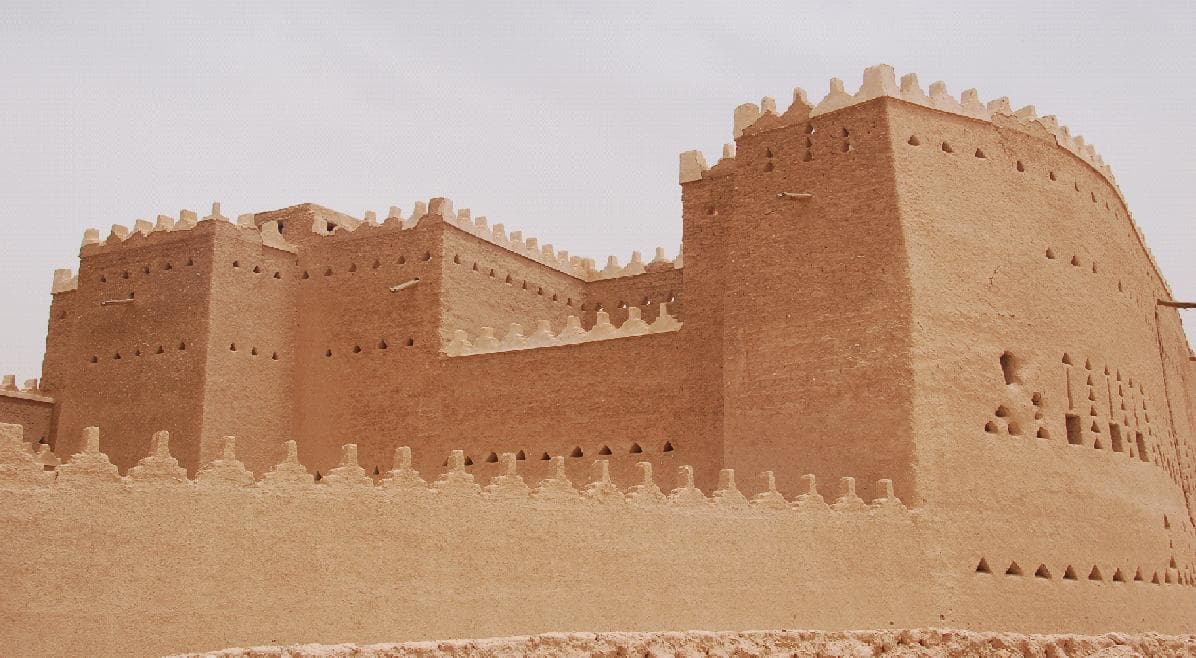
Overview
The Treaty of Al-Uqair is an agreement signed between King Abdulaziz bin Abdulrahman Al Saud and the British Government, represented by Sir Percy Cox, at Al-Uqair Port in Al-Ahsa Governorate on the coast of the Arabian Gulf, on 18 Safar 1334 AH, corresponding to 26 December 1915. [1] [2]
The treaty affirmed King Abdulaziz's standing as Emir of Najd and Al-Ahsa. It came within the course of consolidating the third Saudi state, and was later annulled under the Treaty of Jeddah of 1927. [2] [3]
Al-Uqair Port Before the Treaty
Al-Uqair Port lies in Al-Ahsa in the Eastern Province, on the coast of the Arabian Gulf, and is the first seaport in the Kingdom. [2]
The port was the main harbour of the successive civilisations of Al-Ahsa until recent times, and served as Najd's maritime gateway and the region's passage of settlement. [2]
Excavations at the Al-Uqair site and its surroundings uncovered finds dating to the Gerrha era, between 500 and 400 BCE, and an Islamic residential building dating to the third or fourth century AH that rests on the foundations of pre-Islamic structures. [2]
Signing of the Treaty and Its Content
At Al-Uqair Port, on 18 Safar 1334 AH, corresponding to 26 December 1915, the treaty was signed between King Abdulaziz bin Abdulrahman Al Saud and Sir Percy Cox, representing the British Government. [1] [2]
Under the treaty, Britain recognized Abdulaziz as Emir of Najd and Al-Ahsa and undertook to provide him with financial and military assistance, on condition that he not communicate with any other state or conclude treaties without its consent. [3]
The Treaty of Al-Uqair is also known as the Treaty of Darin and the Treaty of Qatif. [3]
The Al-Uqair Protocol and the Annulment of the Treaty
King Abdulaziz chose Al-Uqair Port as the venue for discussing the borders between Najd, eastern Jordan, and Iraq, which resulted in the signing of the Al-Uqair Protocol in 1341 AH/1922. [2]
The treaty was annulled under the Treaty of Jeddah of 1927, in which Britain recognized Abdulaziz as King of the Hijaz and Najd and his right to conclude treaties with other states. [3]
Development and Flourishing of the Port
King Abdulaziz established at the port the customs, the passports office, the wharf, the Khan building, the Emirate building, the fort, the mosque, the water spring, and the Bu Zuhmoul tower. [2]
Al-Uqair Port flourished in the early days of the Saudi state until around 1365 AH/1945. [2]
Its importance began to shrink in 1377 AH/1957, with the start of work on Dammam Port and the railway line. [4]
The port's activity declined as trade routes shifted after the discovery of oil in Baqiq and Dhahran, with paved roads and a number of modern ports built close to the oil fields and the commercial markets in the Eastern Province. [2]
Al-Uqair as a Historical and Archaeological Site
Al-Uqair Port is documented as the first seaport east of the Kingdom on the coast of the Arabian Gulf, and the economic gateway at the beginning of the state's establishment. [4]
The customs building at the port was registered in the National Antiquities Register, and the Khan, Emirate, and Emirate fort buildings were restored during 1418 AH. [2]
The Heritage Commission launched the “Historic Al-Uqair Port” event in January 2023 to celebrate its civilisational value; the port is one of the oldest in the region. [5]
Frequently Asked Questions
Q: When was the Treaty of Al-Uqair signed? A: On 18 Safar 1334 AH, corresponding to 26 December 1915. [1]
Q: Where was the treaty signed? A: At Al-Uqair Port in Al-Ahsa Governorate on the coast of the Arabian Gulf in the Eastern Province. [1] [2]
Q: Who were the parties to the treaty? A: King Abdulaziz bin Abdulrahman Al Saud and Sir Percy Cox, representing the British Government. [2]
Q: What did the treaty provide? A: Britain recognized Abdulaziz as Emir of Najd and Al-Ahsa and undertook to provide him with financial and military assistance, on condition that he not communicate with any other state or conclude treaties without its consent. [3]
Q: How did the treaty end? A: It was annulled under the Treaty of Jeddah of 1927, in which Britain recognized Abdulaziz as King of the Hijaz and Najd and his right to conclude treaties. [3]
Related people
Related topics
- EventTreaty of Jeddah (1927)The Treaty of Jeddah is an agreement signed in 1927 between King Abdulaziz bin Abdulrahman Al Saud and Britain. In it Britain recognized Abdulaziz as King of the Hijaz and Najd, affirmed his right to conclude treaties with other states, and brought the Treaty of Darin to an end.
- Saudi statesThe Third Saudi StateThe Third Saudi State began with Abdulaziz bin Abdulrahman Al Saud's recovery of Riyadh in 1902. Regional unification led to the Kingdom of Saudi Arabia proclaimed in 1932 and continuing thereafter.
- HistoricAl-Ahsa OasisThe world's largest self-contained oasis according to Guinness World Records, inscribed on the UNESCO World Heritage List in 2018 as a cultural landscape of human interaction with the environment.
- RegionEastern ProvinceA large eastern Saudi region administered from Dammam, combining Gulf cities, the oases of Al Ahsa and Qatif, desert areas, energy industries and maritime commerce.
- EventBattle of Rawdat MuhannaThe Battle of Rawdat Muhanna was fought at Rawdat Muhanna in the Qassim region between the forces of King Abdulaziz bin Abdulrahman Al Saud and the forces of the Emirate of Al Rashid. It was followed by King Abdulaziz's consolidation of his authority over Qassim, the official Ottoman recognition of him as King over Najd, Qassim and Al-Ahsa, and the subsequent unification of the Kingdom of Saudi Arabia.
- EventBattle of TurabahThe Battle of Turabah was a confrontation that took place around the town of Turabah in the southwest of the Kingdom of Saudi Arabia, a town belonging to the Makkah Region and holding a strategic position on the trade and pilgrimage caravan routes between Najd and Hejaz. The battle came at a stage in which relations between Najd and Hejaz were marked by tension between King Abdulaziz bin Abdulrahman Al Saud and Sharif Hussein bin Ali.
- EventBattle of JarrabThe Battle of Jarrab is among the events of the confrontation between Najd and Hail at the outset of World War I, and it was connected with developments in the region, including the military plan of the Ottoman authorities in 1914 and Britain's efforts to make contact with King Abdulaziz; the events of the unification of the Kingdom of Saudi Arabia then continued until the proclamation of the Kingdom in 1351 AH / 1932.
- EventTreaty of DarinThe Treaty of Darin is a treaty signed by King Abdulaziz bin Abdulrahman bin Faisal Al Saud with Britain, in which Britain recognised Abdulaziz as Emir of Najd and Al-Ahsa. It is also known as the Treaty of Qatif and the Treaty of Al-Uqair, and it was annulled in the Treaty of Jeddah of 1927.
- EventEmirate of Jabal ShammarThe Emirate of Jabal Shammar is an emirate that arose in the Hail region, and it came to govern the region after the Emirate of Al Ali that preceded it. In its last years it was linked to its position towards the Ottoman State during the First World War, and then its era ended with the annexation of Hail to the Saudi State in the reign of King Abdulaziz in 1340 AH.
- EventTreaty of TaifThe Treaty of Taif is a treaty concluded in 1353 AH between the Kingdom of Saudi Arabia and Yemen, and it formed the foundation on which the Saudi-Yemeni border demarcation was based, and was relied upon in the work of the joint Saudi-Yemeni committees until the completion of the land border demarcation between the two countries.
- EventFall of HailThe fall of Hail was an event in the unification of the Kingdom of Saudi Arabia, in which King Abdulaziz took Hail in 1340 AH after stages that began with his entry into Riyadh and his pledge of allegiance as Emir on the fifth of Shawwal 1319 AH, then the unification of Najd, the conquest of Al-Ahsa and the Treaty of Al-Uqair in 1334 AH/1915. Qishlah Palace was later built in the city of Hail as a military and administrative headquarters in 1360 AH/1941.
- EventHistory of Al-AhsaThe history of Al-Ahsa extends from ancient human settlement at the site of Jawatha, through its presence in the early Islamic era, to its annexation to the Saudi state in 1913 and the inscription of its oasis on the World Heritage List. Al-Ahsa Governorate in the Eastern Province of the Kingdom of Saudi Arabia contains a palm oasis among the largest in the world, the archaeological site of Jawatha, and the historic Al-Uqair Port.
Sources & references
- Saudi Press Agency (SPA) — date of signing of the Treaty of Al-Uqair
- Saudi Press Agency (SPA) — historic Al-Uqair Port and the site of the treaty
- King Abdulaziz Foundation (Darah) — Al-Darah Journal (peer-reviewed study): “Britain's Relationship with King Abdulaziz Al Saud”
- Saudi Press Agency (SPA) — the King Abdulaziz Foundation's documentation of the port's history
- Saudi Press Agency (SPA) — the “Historic Al-Uqair Port” event 2023