
Overview
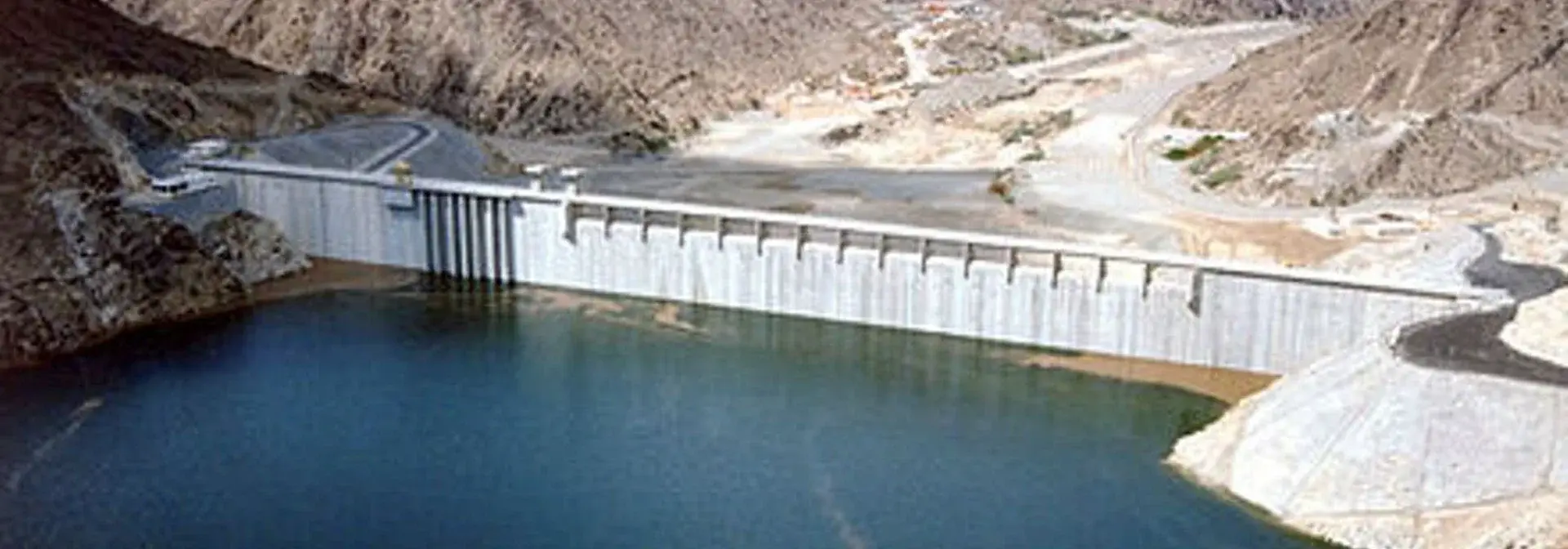
Dams in Saudi Arabia are water structures built across valleys to intercept rainwater and floodwater, store it and regulate its discharge, contributing to the conservation of water resources and protection from the dangers of floods. The Makkah Region alone contains more than 71 dams with a storage capacity of about 816 million cubic meters.[9]
The dams sector in the Kingdom is governed by an institutional framework that keeps pace with the expansion of dam construction and operation; the transfer of dam responsibilities from the Ministry of Environment, Water and Agriculture to the General Irrigation Corporation has been completed, a step aimed at strengthening water security.[1]
Regulation and Management of Dams
Cabinet Decision No. (794) dated 17/11/1444 AH provided for the transfer of responsibilities for the design, construction, development, operation and maintenance of dams in all regions of the Kingdom from the Ministry of Environment, Water and Agriculture to the General Irrigation Corporation.[2] The Corporation's main headquarters is in Al-Ahsa Governorate.[3]
The Saudi Building Code for Water Sources and Their Uses devoted a dedicated chapter to the regulation of dam safety and the legislation governing it.[4] A contract was also concluded for the first phase of a project to supply and install automatic monitoring devices on dams and transmit their data to the control centre.[14]
The Most Prominent Dams in the Kingdom
King Fahd Dam in Bisha Governorate is among the largest dams in the Kingdom in terms of size and storage capacity; it stands 103 meters high and has a storage capacity of 325 million cubic meters.[5] The dam is located on Wadi Bisha, whose length at the dam site exceeds 250 kilometers, with a flood catchment area of about 7,600 square kilometers.[5]
Wadi Hali Dam in Al-Qunfudhah Governorate stands 57 meters high and has a storage capacity of 254 million cubic meters.[6] In Rabigh City, Wadi Rabigh Dam is about 380 meters long and 80 meters high, and its storage capacity exceeds 220 million cubic meters.[11]
In Jazan Region, Wadi Bish Dam is 340 meters long and 106 meters high and was inaugurated in 2009,[7] and its lake holds 117.7 million cubic meters.[8]
Purification Plants and Water Supply
Dam water is used to provide drinking water through purification plants; a purification plant was established on Wadi Hali Dam to supply the cities of Makkah, Al-Qunfudhah, Al-Lith and Muhayil Asir with a production capacity of up to 100,000 cubic meters per day.[6]
A total of 139 purification plants for dam water and groundwater have been listed, with a combined production capacity of up to 4 million cubic meters per day.[13]
The Kingdom's dams stored more than 63 million cubic meters of water during April 2021 as a result of the rainfall at that time.[10] In the dam operation plan for 2025, the western sector in Madinah Region discharged 724,000 cubic meters of water through six main dams, including the Wadi Al-Fara, Baydan, Al-Juraysiyah, Al-Miqran, Ahamir and Umm Talhah dams.[12]
Frequently Asked Questions
Q: What are dams? A: Water structures built across valleys to intercept rainwater and floodwater, store it and regulate its discharge, thereby conserving water resources and preventing the dangers of floods.
Q: How many dams are there in the Makkah Region? A: The Makkah Region contains more than 71 dams to prevent the dangers of floods, with a storage capacity of about 816 million cubic meters.
Q: What are the most prominent dams in the Kingdom? A: They include King Fahd Dam in Bisha, 103 meters high with a storage capacity of 325 million cubic meters; Wadi Bish Dam in Jazan, 106 meters high; and Wadi Hali Dam in Al-Qunfudhah, with a capacity of 254 million cubic meters.
Q: Which body is responsible for dams in the Kingdom? A: The General Irrigation Corporation is responsible for the design, construction, development, operation and maintenance of dams in all regions of the Kingdom, and its main headquarters is in Al-Ahsa Governorate.
Conclusion
Dams in Saudi Arabia combine the conservation of rainwater and floodwater and protection from their dangers with the supply of purification plants that serve cities and regions, within a framework in which operation and maintenance responsibilities are integrated with the regulation of dam safety and the automatic monitoring of water levels.[4][13][14]
Related topics on the platform include the Hijaz Mountains and Vegetation Cover in Saudi Arabia.
Related topics
- HistoricWadi BishaWadi Bisha is a wadi among the largest of the Arabian Peninsula, in Bisha Governorate in the Asir Region, and its length exceeds 450 kilometres. King Fahd Dam stands on its course with a storage capacity of 325 million cubic metres, and along its banks are date-palm cultivation, the 'Al-Sifri' dates, and rock carvings numbering more than 10,000.
- RegionBisha GovernorateBisha Governorate is a Saudi governorate in the Asir Region of southern Saudi Arabia, centered on Wadi Bisha, one of the largest valleys of the Arabian Peninsula. It is known for King Fahd Dam, the largest concrete dam in the Middle East, for date cultivation, and for its rock-art sites and the historic Tabalah center.
- RegionAl Qunfudhah GovernorateAl Qunfudhah Governorate is one of the governorates of Makkah Region, and Wadi Hali lies in its southern part with its environmental and agricultural potential. The governorate holds historic and heritage landmarks, among them the historic mill on its coast and the Bani Isa popular market, and it is among the highest-producing governorates of the Kingdom for mangoes.
- RegionMakkah RegionA western Saudi region administered from Makkah, encompassing Jeddah, Taif and other governorates, where pilgrimage, maritime trade, coastal landscapes and uplands meet.
- HistoricWadi FatimahWadi Fatimah is one of the most important wadis in the west of the Kingdom of Saudi Arabia, and it belongs to the Makkah Region, with a length of up to 210 kilometres. It contains human settlement sites from the Stone Age and a dam that serves agriculture and farmers, and on its two banks stand governorates, centres and villages, most notably Al-Jumum and Bahrah.
- HistoricHijaz MountainsThe Hijaz Mountains are a mountain range in the Kingdom of Saudi Arabia that embraces a number of peaks and natural landmarks, and its range takes in Jabal an-Nur in Makkah. They are cut through by volcanic lava fields and granite peaks, and among their most prominent landmarks are Jabal Shada in the Al-Bahah region, Jabal al-Lawz in the Tabuk region and Jabal Fifa in the Jazan region.
- HistoricVegetation Cover in Saudi ArabiaVegetation Cover in Saudi Arabia is the total of the native plant species and the varied ecological regions across the Kingdom, whose sites are developed, protected and monitored and whose degraded parts are rehabilitated through national programmes for afforestation, combating desertification and land rehabilitation.
- RegionAl-Ahsa GovernorateAl-Ahsa Governorate is a governorate in the Kingdom of Saudi Arabia. Within it lies the Al-Ahsa Oasis, the largest self-contained palm oasis in the world, with more than 2.5 million palm trees; it was inscribed on the World Heritage List in 2018 CE.
- RegionJazan RegionA southwestern Saudi region administered from Jazan city, combining the Red Sea coast, Farasan Islands, plains and mountains with farming, fishing, commerce and industry.
- RegionMadinah RegionA western Saudi region combining Madinah, Yanbu, AlUla and other governorates, with Islamic landmarks, oases, archaeological sites and a Red Sea coastline.
- RegionRabigh CityRabigh City is a coastal city in the Makkah Region on the Red Sea, and it contains King Abdullah Economic City, the King Abdullah Port and a station on the Haramain High Speed Railway.
Sources & references
- Saudi Press Agency (SPA) — completion of the transfer of dam tasks and responsibilities to the General Irrigation Corporation
- Umm Al-Qura newspaper — Cabinet Decision No. (794) transferring dam responsibilities
- Umm Al-Qura newspaper — the organisation of the General Irrigation Corporation and its headquarters
- Umm Al-Qura newspaper — the Saudi Building Code for Water Sources and Their Uses
- Saudi Press Agency (SPA) — opening the gates of King Fahd Dam to discharge the dam's reserves
- Saudi Press Agency (SPA) — opening the gates of Wadi Hali Dam in Al-Qunfudhah Governorate
- Saudi Press Agency (SPA) — opening the gates of Wadi Bish Dam
- Saudi Press Agency (SPA) — opening the gates of Wadi Bish Dam to accommodate incoming water
- Saudi Press Agency (SPA) — readiness of the dams of the Makkah Region to prevent flood risks
- Saudi Press Agency (SPA) — the Kingdom's dams store 63 million cubic meters during April
- Saudi Press Agency (SPA) — water landmarks and dams in Rabigh Governorate
- Saudi Press Agency (SPA) — the dam operation plan for 2025 in the western sector
- Saudi Press Agency (SPA) — listing purification plants for dam water and groundwater
- Saudi Press Agency (SPA) — the contract for the first phase of the automatic dam monitoring project