
Overview
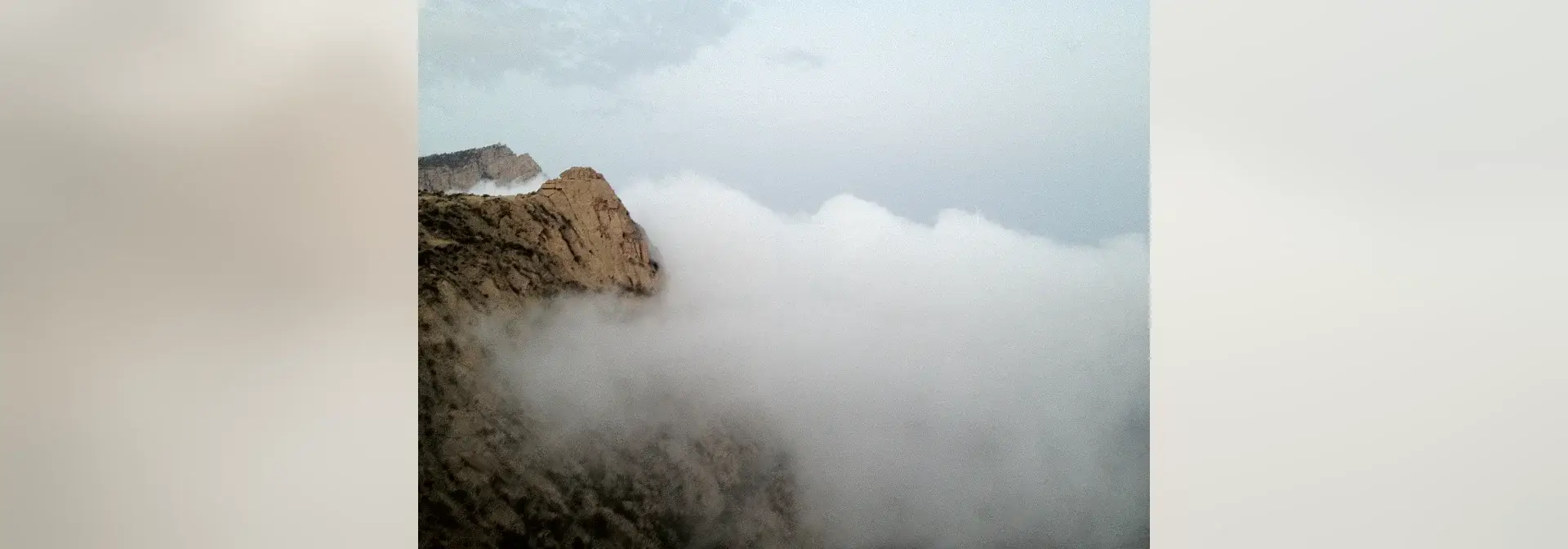
The Hijaz Mountains are a mountain range in the Kingdom of Saudi Arabia that embraces a number of peaks and natural landmarks, and its range takes in Jabal an-Nur in the Makkah region, about five kilometres from the Grand Mosque of Makkah.[1]
Stones from Jabal an-Nur were the first stones used to build the Holy Kaaba, which gave the mountain a special standing in the surroundings of the Grand Mosque of Makkah.[1]
Geological Formation and Volcanic Lava Fields
The Arabian Shield, which extends along the western part of the Kingdom, is one of the oldest geological formations in the world; its formation goes back to between 500 and 900 million years ago as a result of a series of volcanic processes.[2]
The lava fields cover large areas of the western part of the Arabian continental shelf, estimated at about 180,000 square kilometres, and they extend in a broad, broken belt from Yemen in the south to Syria in the north.[3]
The lava fields of Uwayrid, Hutaymah, Khaybar and Rahat are spread along a single axis running from north to south, the Makkah–Madinah volcanic line, and they align with the direction of the North-West Najd fault.[3]
Prominent Peaks and Mountain Landmarks
Jabal Shada is among the most important landmarks in the Tihamah sector of the Al-Bahah region, and it is divided into two parts: Jabal Shada al-A'la, 2,200 metres above sea level and the highest mountain in the Tihamah plain, and Jabal Shada al-Asfal, 1,700 metres above sea level.[4]
The Jabal Shada al-A'la Reserve is regarded as an extension of the Sarawat Mountains, reaching at its heights about 2,200 metres above sea level at Musalla Ibrahim and dropping to about 500 metres at Wadi Malil, rising as a giant granite mass whose geological formation goes back hundreds of millions of years.[5]
Jabal al-Lawz lies to the north-west of the Tabuk region, and its height above sea level reaches about 2,600 metres; it takes its name from the abundance of almond shrubs on it, and it is among the granite peaks, landforms and plateaus of the Kingdom.[6]
In the south, Jabal Fifa, which lies about 100 kilometres east of the Jazan region and rises more than 2,000 metres above sea level, sees a rainy season that clothes its terraces in green and draws visitors from within the region and beyond.[7]
Mountain and Tihamah Landmarks
Several natural landmarks stand out in the Tihamah areas south-east of the Makkah region, among them Wadi al-Kharar, Wadi Rahjan, Wadi Nu'man, the Dhara'a Mountains, Ri' ar-Rahil and Ri' at-Takhdishin, whose varied terrain forms an extension of the Tihamah landscape.[8]
Al-Hada occupies an area of 210 square kilometres, bounded on the west by the escarpment of the Sarawat Mountains and Al-Kur, on the east by the city of Taif and the Al-Hawiyah suburb, on the north by the As-Sail al-Kabir centre, and on the south by the Ash-Shafa tourist centre.[9]
Wildlife in the Highlands
The Jabal Shada al-A'la Reserve is distinguished as the natural and historic habitat of a group of wildlife species, among them the Arabian leopard, the mountain ibex, the Arabian wolf, the caracal, the Egyptian mongoose, the fox, the hyena, the porcupine, the rock hyrax, the baboon and hedgehogs, which makes it an important home for biological diversity.[5]
Tourism and nature
Mountain Passes and Roads
The Haznah pass in the Al-Bahah region is one of the most important roads linking Baljurashi governorate with Al-Makhwah governorate, and it forms a link between the Sarat mountains and the Tihamah plains; it is about 28 kilometres long and lies 29 kilometres from the city of Al-Bahah.[10]
The Barmah pass in the Asir region is the easiest of the region's passes, shortening the distance between the Sarat mountains and the Tihamah plains and strengthening tourist and commercial movement between the Tihamah of Asir and its Sarat.[11]
Stone Architecture in the Highlands
Stone buildings in Taif vary with the nature of the terrain: they stand out in the highlands of Ash-Shafa, Al-Hada and the Sarawat Mountains, and they are also found in the historic villages along the valleys and mountain slopes, where they were built from local stone in precise geometric forms, with wood used for roofs and windows.[12]
Averting Geological Hazards
A technical team of geological engineers and specialists from the Geological Hazards Centre of the Saudi Geological Survey began work in Jabal Fifa in the Jazan region to identify the locations of rockfalls and avert their hazards.[13]
Frequently Asked Questions
Q: Where are the Hijaz Mountains located? A: They are a mountain range in the Kingdom of Saudi Arabia, and its range takes in Jabal an-Nur in Makkah about five kilometres from the Grand Mosque of Makkah.
Q: What are the volcanic lava fields associated with these highlands? A: Volcanic formations covering about 180,000 square kilometres of the western part of the Arabian continental shelf, extending in a broad, broken belt from Yemen in the south to Syria in the north; they include the lava fields of Uwayrid, Hutaymah, Khaybar and Rahat along the Makkah–Madinah volcanic line.
Q: What are the most prominent peaks and mountain landmarks of the range? A: Jabal Shada al-A'la, 2,200 metres high and the highest mountain in the Tihamah plain; Jabal al-Lawz north-west of the Tabuk region at about 2,600 metres; and Jabal Fifa east of the Jazan region at more than 2,000 metres.
Q: Which wildlife species live in the Jabal Shada al-A'la Reserve? A: The Arabian leopard, the mountain ibex, the Arabian wolf, the caracal, the Egyptian mongoose, the fox, the hyena, the porcupine, the rock hyrax, the baboon and hedgehogs.
Q: How are the Sarat mountains linked to the Tihamah plains? A: Through mountain passes, the most prominent being the Haznah pass in the Al-Bahah region at about 28 kilometres long, and the Barmah pass in the Asir region, which is the easiest of the region's passes.
Conclusion
The Hijaz Mountains in the west of the Kingdom bring together granite peaks, volcanic lava fields, valleys and mountain passes that link the highlands to the Tihamah plains; they embrace notable biological diversity, and official efforts are under way to study them and avert geological hazards.[5][7][13]
Related topics
- HistoricJabal Shada Al-A'laJabal Shada Al-A'la is a rocky mountain in the northwestern part of Al-Makhwah Governorate in Al-Bahah Region, rising 2,200 meters above sea level and standing as the highest mountain in the Tihama plain. A nature reserve bearing its name stands on it, holding one of the Kingdom's highest levels of plant diversity, with more than 500 plant species recorded there, alongside inscriptions, archaeological sites and old villages.
- HistoricMount RadwaMount Radwa is a mountain in the northwest of the Kingdom, located in Yanbu governorate. It is recorded in tradition as one of the three mountains that lie at Madinah, alongside Mount Uhud and Mount Warqan, and it hosted the first meeting between King Abdulaziz bin Abdulrahman Al Saud and King Farouk of Egypt at Radwa Bay in 1364 AH, corresponding to 1945.
- HistoricJabal Al-LawzJabal Al-Lawz is a mountain peak in north-western Saudi Arabia, located within the Madyan Mountains in the Tabuk region and rising 2,580 metres above sea level. It is known for the snow that settles on its summit in winter, and it contains rock carvings dating back more than ten thousand years.
- HistoricHarrat RahatHarrat Rahat is a vast volcanic field in the Kingdom of Saudi Arabia whose lava flows extend from the north of Makkah to Madinah, and it contains lavas formed over widely separated periods, running from millions of years ago to the last volcanic eruption in 654 AH. Its recent volcanic activity is concentrated in its northern part, along the southern and eastern edges of Madinah.
- HistoricJabal FifaJabal Fifa is a mountain in Fifa Governorate, east of the Jazan Region in south-western Saudi Arabia. It consists of a chain of peaks of varying elevation rising more than two thousand metres above sea level, the highest of them Al-Absiyah Peak, and it holds cylindrical stone houses and agricultural terraces, is known for coffee and honey, and has seen successive development works and roads since 1398 AH.
- HistoricCave of HiraThe Cave of Hira is a rock cavity at the top of Jabal An-Noor in Makkah, northeast of the Grand Mosque, and the place where Prophet Muhammad (peace be upon him) used to retreat in worship before the Revelation, where the first verse of the Holy Quran was revealed: "Read in the name of your Lord who created."
- HistoricThe Grand Mosque (Al-Masjid Al-Haram)The Grand Mosque (Al-Masjid Al-Haram) is the mosque at the centre of which stands the Kaaba in Makkah, and successive states and restorations followed upon its construction across the ages. In the Saudi era it witnessed major expansions and construction works, most notably the Third Saudi Expansion and the raising of the capacity of the Mataf and the courtyards.
- HistoricArabian LeopardThe Arabian Leopard is a subspecies of the endangered leopard, known scientifically as Panthera pardus nimr, and is one of the smallest and rarest leopard subspecies. The International Union for Conservation of Nature has classified it as Critically Endangered since 1996, and efforts to conserve it in the Kingdom of Saudi Arabia are tied to the Sharaan Nature Reserve and the Arabian Leopard Breeding and Conservation Centre in AlUla.
- HistoricKhaybar Lava FieldKhaybar Lava Field is a volcanic field in the Madinah Region of the Kingdom of Saudi Arabia and the largest harrat in the Kingdom by area, estimated at about 21,500 square kilometers. It contains Jabal Al-Qidr, listed among the world's top 100 geological sites, three rare volcanoes, and lava tubes among the longest in the Arab world.
- HistoricMountain IbexThe Mountain Ibex, known in the Kingdom of Saudi Arabia as the Nubian Ibex, is a wild mountain animal and a symbol of the Kingdom's wildlife. The National Center for Wildlife works to breed and reintroduce it in reserves and national parks under the National Program for the Release and Reintroduction of Endangered Wild Animals.
- RegionAsir RegionA southwestern Saudi region administered from Abha, combining Sarawat highlands, Tihamah and the coast, with agricultural terraces, historic villages and distinctive local cultural traditions.
- RegionBahah RegionA southwestern Saudi region administered from Al Bahah, combining Sarawat uplands and Tihamah, with historic villages, agricultural terraces and vegetation in its mountain landscapes.
- RegionJazan RegionA southwestern Saudi region administered from Jazan city, combining the Red Sea coast, Farasan Islands, plains and mountains with farming, fishing, commerce and industry.
- RegionMakkah RegionA western Saudi region administered from Makkah, encompassing Jeddah, Taif and other governorates, where pilgrimage, maritime trade, coastal landscapes and uplands meet.
- RegionTabuk RegionA northwestern Saudi region administered from Tabuk city, combining Red Sea and Gulf of Aqaba coasts with inland centres such as Tayma and a history of trade and pilgrimage routes.
Sources & references
- Saudi Press Agency (SPA)
- Saudi Press Agency (SPA)
- Saudi Press Agency (SPA)
- Saudi Press Agency (SPA)
- Saudi Press Agency (SPA)
- Saudi Press Agency (SPA)
- Saudi Press Agency (SPA)
- Saudi Press Agency (SPA)
- Saudi Press Agency (SPA)
- Saudi Press Agency (SPA)
- Saudi Press Agency (SPA)
- Saudi Press Agency (SPA)
- Saudi Press Agency (SPA)