
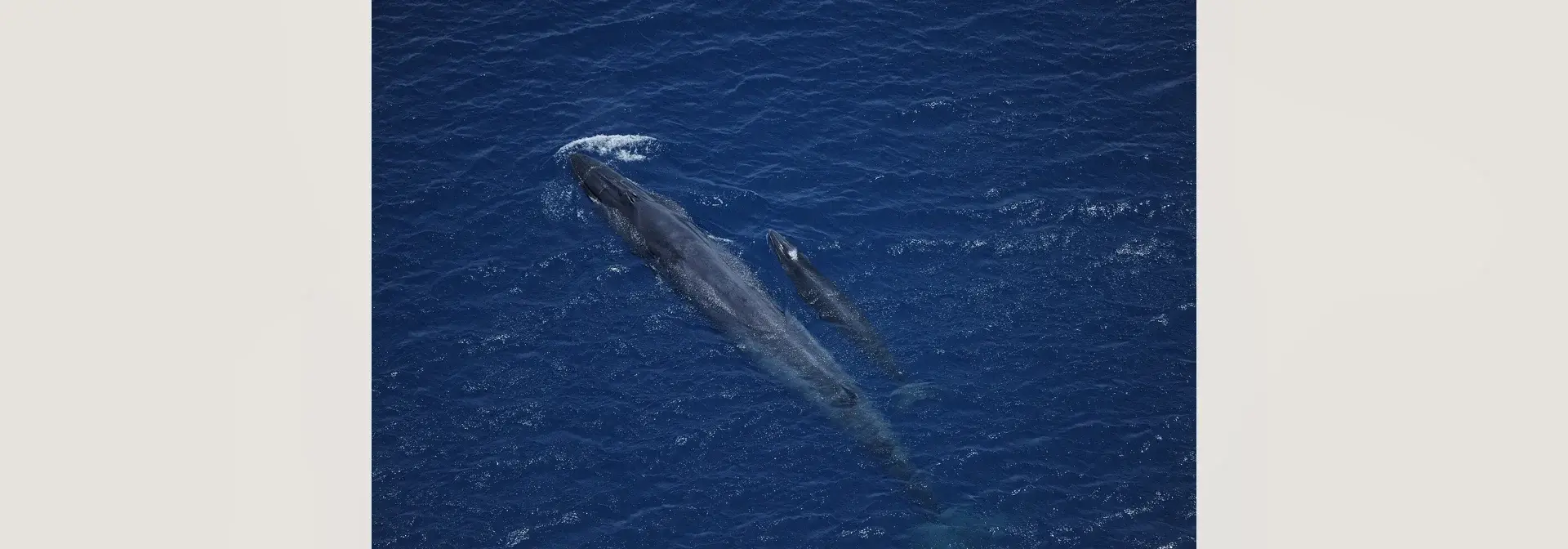
Overview
Marine life in Saudi Arabia covers the marine environments and organisms in the Kingdom's territorial waters in the Red Sea and the Arabian Gulf, foremost among them coral reefs, sea turtles and fisheries resources. The Kingdom manages these environments through a national strategy, regulations for fishing and marine activities, specialised institutions and nature reserves.
On 4 December 2024, His Royal Highness the Crown Prince and Prime Minister launched the National Strategy for Red Sea Sustainability, to protect the Red Sea ecosystem, strengthen cooperation frameworks for its sustainability, empower society and support the transition to a sustainable blue economy.[1]
Coral Reefs and Marine Habitats
Coral reefs are defined as marine environments based on reef-building coral that forms hard reef structures on the seabed, in which diverse species of fish, vertebrates, invertebrates and plants live and are linked in a precise balance.[5]
These reefs form one of the components of the marine environment in Saudi waters, and other environmental topics on the platform are connected to them, among them Coral Reefs of Saudi Arabia and Mangrove Forests in Saudi Arabia.
Protection of Sea Turtles and Coral Reefs
The Public Corporation for the Conservation of Coral Reefs and Sea Turtles in the Red Sea (Shams) is responsible for the conservation of these environments; it is organisationally linked to the Minister, enjoys legal personality and financial and administrative independence, has its main headquarters in Jeddah Governorate, and its geographical scope of work covers the Red Sea coast and the Kingdom's territorial waters in the Red Sea.[3]
The discovery of the largest sea turtle nesting site recorded in Saudi waters in the Red Sea was announced in the Four Sisters Islands, where more than 2,500 sea turtle nests have been recorded to date.[2]
Collecting or extracting products or derivatives of endangered or prohibited marine wildlife is subject to a fine of up to SAR 500,000 as a maximum.[4]
Fisheries and Aquaculture
The history of aquaculture industry activities in the Kingdom dates back to the last years of 1970.[11] The fisheries sector is a further part of this, and the platform has devoted an independent topic to it: Fisheries in Saudi Arabia.
Under the Regional Convention for the Conservation of the Red Sea and Gulf of Aden Environment, concluded in Jeddah on 14 February 1982, a protocol for regional cooperation in the management of fisheries and aquaculture was concluded. The protocol aims to manage fisheries and the sustainable aquaculture industry in a way that supports the conservation of the quality, diversity and abundance of fisheries resources.[8]
National Initiatives for the Protection of the Marine Environment
The Saudi Green Initiative includes increasing vegetation cover, reducing carbon emissions, combating pollution and land degradation, and conserving marine life.[6] The (30×30) target is linked to this, aiming to protect 30% of the Kingdom's land and marine area by 2030.[7]
These initiatives complement other routes on the platform, such as Vegetation Cover in Saudi Arabia.
Marine Tourism Activities
The Saudi Red Sea Authority regulates marine tourism activities, among them the controls and procedures for cruise ships No. 4 T-2024.[9] This regulation comes within the context of tourism expansion on the Red Sea coast, which is reflected in the topic The Red Sea Project.
A leisure boat means a marine craft used for tourist and recreational outings, with a total load not exceeding ten tons and a length not exceeding eleven metres, and it is not permitted to sail outside the Kingdom's territorial waters.[10] Topics such as Jeddah Waterfront and Pearl Diving are connected to this activity.
Tourism and nature
Frequently Asked Questions
Q: What is the National Strategy for Red Sea Sustainability? A: A strategy launched on 4 December 2024 to protect the Red Sea ecosystem, strengthen cooperation for its sustainability, empower society and support the transition to a sustainable blue economy.
Q: Where is the headquarters of the Public Corporation for the Conservation of Coral Reefs and Sea Turtles in the Red Sea? A: Its main headquarters is in Jeddah Governorate, and its geographical scope of work covers the Red Sea coast and the Kingdom's territorial waters.
Q: Where is the largest sea turtle nesting site in Saudi waters? A: In the Four Sisters Islands in the Red Sea, where more than 2,500 sea turtle nests have been recorded.
Q: What is the penalty for collecting endangered marine wildlife? A: A fine of up to SAR 500,000 as a maximum for collecting it or extracting its products or derivatives.
Q: What is the target for protecting the Kingdom's land and marine areas? A: The (30×30) target of protecting 30% of the Kingdom's land and marine area by 2030.
Conclusion
Protection and regulation efforts are integrated in marine life in Saudi Arabia, from the National Strategy for Red Sea Sustainability and the Shams corporation to fishing regulations, controls on tourism activities and protocols for regional cooperation in fisheries. Related topics on the platform include Coral Reefs of Saudi Arabia, Fisheries in Saudi Arabia and Mangrove Forests in Saudi Arabia.
Related topics
- HistoricCoral Reefs of Saudi ArabiaCoral reefs of Saudi Arabia are marine ecosystems that extend along the Kingdom's coasts on the Red Sea, and the Red Sea holds the world's second-longest coral reef system, stretching 2,000 kilometres.[1] The General Organization for the Conservation of Coral Reefs and Sea Turtles in the Red Sea "Shams" is responsible for their protection and sustainability.[2]
- HistoricFisheries in Saudi ArabiaFisheries in Saudi Arabia are a national sector concerned with managing marine fisheries and aquaculture, strengthening food security and sustaining marine resources. The Kingdom continues to develop its national fisheries management, oversight and tracking system, grow the blue economy and strengthen regional partnership in the Red Sea and the Arabian Gulf.
- HistoricMangrove Forests in Saudi ArabiaMangrove forests in Saudi Arabia are coastal plants that grow in the intertidal zone along the Kingdom's coasts on the Red Sea and the Arabian Gulf. Their total area reaches 60 million square metres, equivalent to about 400 million trees, and they are the subject of continuous national efforts to protect and develop them.
- HistoricThe Red Sea ProjectThe Red Sea Project is a global tourism destination on the Red Sea coast in northwestern Saudi Arabia, developed by Red Sea Global within the Public Investment Fund's giga-projects. It spans more than 28,000 square kilometres, includes the world's fourth-largest flourishing coral reef, and aims to welcome one million visitors by 2030.
- HistoricPearl DivingPearl diving is an ancient maritime profession known to the coasts and islands of the Kingdom of Saudi Arabia, linked in the Farasan Islands of the Jazan region and on the Arabian Gulf coast at Jubail; it formed a main source of livelihood and a social and economic pillar, and today it is part of the national heritage.
- HistoricVegetation Cover in Saudi ArabiaVegetation Cover in Saudi Arabia is the total of the native plant species and the varied ecological regions across the Kingdom, whose sites are developed, protected and monitored and whose degraded parts are rehabilitated through national programmes for afforestation, combating desertification and land rehabilitation.
- HistoricJeddah WaterfrontJeddah Waterfront is a tourist destination on the Red Sea coast in Jeddah Governorate, made up of seven varied plazas extending 4500 metres from An-Nawras Roundabout to Jaber bin Al-Harith Street over an area of about 730,000 square metres. It opened in 2017 and took the name "Roshn Waterfront" in 2022, and more than 55 million visitors come to it each year.
Sources & references
- Umm Al-Qura newspaper (SPA) — launch of the National Strategy for Red Sea Sustainability
- Umm Al-Qura newspaper (SPA) — discovery of the largest sea turtle nesting site in Saudi waters
- Umm Al-Qura newspaper — the organisational arrangements of the Public Corporation for the Conservation of Coral Reefs and Sea Turtles in the Red Sea
- Umm Al-Qura newspaper — the executive regulation on fines for endangered marine wildlife
- Umm Al-Qura newspaper — the executive regulation for the sustainable management of the marine and coastal environment
- Umm Al-Qura newspaper (SPA) — the Saudi Green Initiative
- Umm Al-Qura newspaper (SPA) — the 30×30 target for protecting land and marine areas
- Umm Al-Qura newspaper — the protocol for regional cooperation in the management of fisheries and aquaculture
- Umm Al-Qura newspaper — controls and procedures for cruise ships
- Umm Al-Qura newspaper — requirements and conditions for the leisure boat rental activity
- Umm Al-Qura newspaper — a national guide to aquaculture