
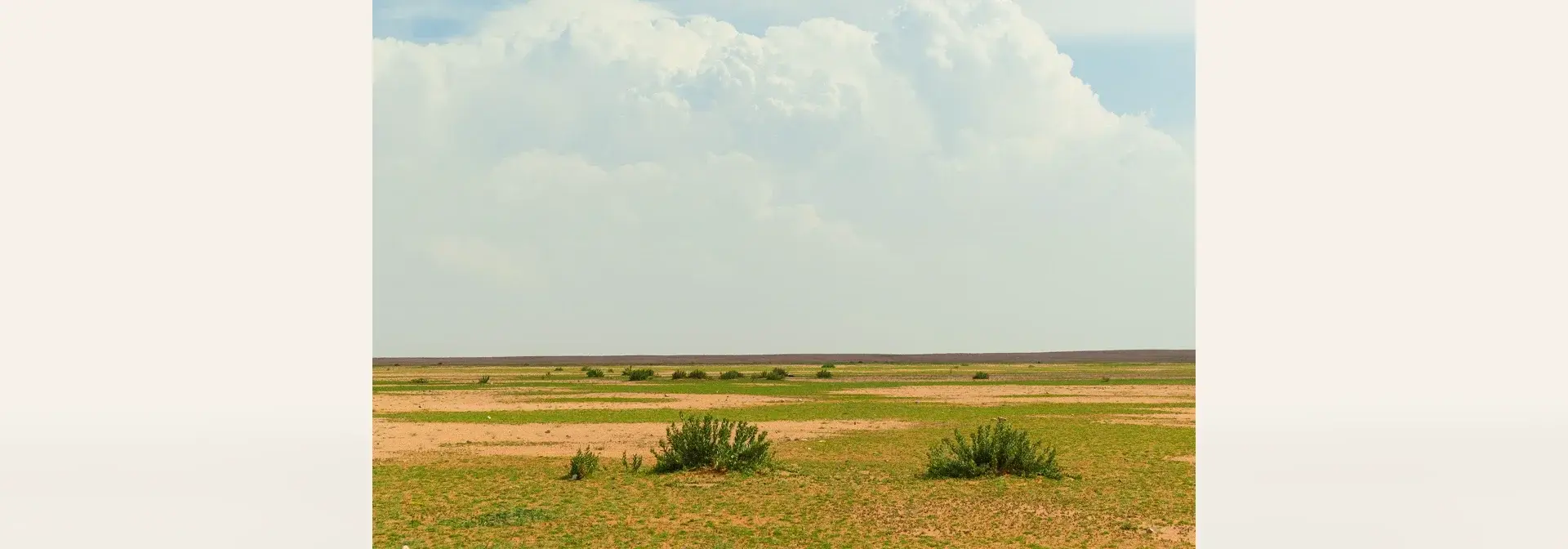
Overview
The Imam Abdulaziz bin Mohammed Royal Reserve is a royal reserve in the Kingdom of Saudi Arabia located northeast of the capital Riyadh and northwest of the Ad-Dahna crescent. It is supervised by the Imam Abdulaziz bin Mohammed Royal Reserve Development Authority, which was established in 1439 AH under the umbrella of the Council of Royal Reserves, chaired by His Royal Highness the Crown Prince and Prime Minister [2].
The Authority contributes to the goals of Saudi Vision 2030 by protecting biodiversity, strengthening environmental services, safeguarding heritage and activating ecotourism in the Imam Abdulaziz bin Mohammed and King Khalid royal reserves [2].
Establishment and supervision
A royal order established a Council of Royal Reserves chaired by His Royal Highness the Crown Prince and Prime Minister, announced by the Minister of Environment, Water and Agriculture on 17 Ramadan 1439 AH, corresponding to 2 June 2018, within the care of the government of the Custodian of the Two Holy Mosques for the Kingdom's environment and biodiversity and for limiting excessive hunting and grazing and preventing the felling of trees [4].
Under the umbrella of the Council of Royal Reserves, the Imam Abdulaziz bin Mohammed Royal Reserve Development Authority was established in 1439 AH, and its board of directors is chaired by His Royal Highness Prince Turki bin Mohammed bin Fahd bin Abdulaziz Al Saud [2].
On 1 Muharram 1446 AH, corresponding to 7 July 2024, Prince Turki bin Mohammed bin Fahd chaired the first meeting of the second term of the Authority's board of directors, following the royal order reconstituting the board [8].
Location and area
Located northeast of the capital Riyadh and northwest of the crescent of the Ad-Dahna Desert, the reserve is bordered to the south by the Riyadh–Dammam expressway, which allows passers-by to view it from the road [1].
Its area is 11,300 km², and it contains 213 plant species, six natural habitats and two archaeological sites [1].
Natural landmarks and wildlife
Rawdat Khuraim lies within the reserve in the heart of the Kingdom, and the Uruq Ad-Dahna, with its red sands and rock formations, runs through it and expresses the desert landscape [1].
In the east of the reserve a group of sinkholes is scattered, the best known of which is Dahl Al-Murabba', with its wide mouth and rock formations [1]. The reserve is a safe passage for migratory birds, and the red-necked ostrich, the Arabian oryx, Al-Reem gazelles and a range of reptiles, mammals and birds live within it [1].
Reintroduction and plant cover
The Authority's office has planted more than one million native trees and shrubs and has reinforced more than 240 native wild animals, with more than five monitoring programmes and 60 environmental observers [1].
More than 220 native wild animals listed in the Red List of threatened species have been reintroduced since the beginning of 2021 over five successive seasons until the end of 2023, including the Al-Reem gazelle, the Al-Adam gazelle, the Arabian oryx, the Nubian ibex and the houbara bustard, and more than 40 newborn animals were recorded during that period [9].
During the third quarter of 2026, the Authority recorded the birth of 19 new wild animals in the Imam Abdulaziz bin Mohammed and King Khalid reserves, comprising 16 Al-Reem gazelle births, two Arabian oryx births and one Al-Adam gazelle birth [3].
Strategic targets and international recognition
On 14 Safar 1445 AH, corresponding to 30 August 2023, the Council of Royal Reserves, chaired by His Royal Highness the Crown Prince and Prime Minister, approved the 2030 strategic targets for the royal reserves [5].
The targets include protecting 30% of the terrestrial and marine areas in the Kingdom by 2030, the seven reserves accounting for 13.5% of the total area of Saudi Arabia, planting more than 80 million trees, attracting more than 2.3 million visitors annually, and protecting and reintroducing more than 30 threatened species [5].
In the World Database on Protected Areas (WDPA), the Imam Abdulaziz bin Mohammed and King Khalid Royal Reserve reserves were registered on 9 Sha'ban 1444 AH, corresponding to 1 March 2023, in cooperation with the National Center for Wildlife as the body responsible for inventorying protected areas in the Kingdom [6].
Heritage and antiquities
The Authority signed a memorandum of understanding with the Heritage Commission on 15 Rabi' al-Awwal 1444 AH, corresponding to 11 October 2022, to serve the shared objectives relating to the preservation, rehabilitation and protection of archaeological sites [7].
The memorandum covered cooperation in the field of cultural heritage and the initiatives, programmes and projects relating to it, as well as research, survey and archaeological excavation work and the rehabilitation, protection and registration of archaeological sites in the Imam Abdulaziz bin Mohammed and King Khalid reserves in the National Antiquities Register [7].
Ecotourism
The Authority concluded the Al-Urmah winter season for ecotourism in the Imam Abdulaziz bin Mohammed and King Khalid reserves in the presence of a number of representatives of the Ministry of Tourism and the Saudi Tourism Authority, releasing 40 wild animals, among them the Al-Reem gazelle and the Arabian oryx [12].
Tourism and nature
Environmental control and resource conservation
The Authority has stressed the prohibition of hunting within the Imam Abdulaziz bin Mohammed and King Khalid reserves, as part of its efforts to preserve the natural environment and protect wildlife from the risk of extinction, and its environmental control teams have recorded more than 290 environmental violations in the two reserves since the beginning of 2024 [10].
Since the beginning of 2025, the environmental control teams have recorded more than 220 grazing violations in the reserve in cooperation with the Special Forces for Environmental Security, while prohibiting and organising grazing in proportion to the grazing capacity [11].
Frequently asked questions
Q: Where is the Imam Abdulaziz bin Mohammed Royal Reserve located? A: It is located northeast of the capital Riyadh and northwest of the Ad-Dahna crescent, and it is bordered to the south by the Riyadh–Dammam expressway.
Q: What is the area of the reserve and what are its main components? A: It covers an area of 11,300 km² and contains 213 plant species, six natural habitats and two archaeological sites.
Q: Who supervises the reserve? A: It is supervised by the Imam Abdulaziz bin Mohammed Royal Reserve Development Authority, which operates under the Council of Royal Reserves chaired by His Royal Highness the Crown Prince and Prime Minister.
Q: What are the most prominent wild animals in the reserve? A: The red-necked ostrich, the Arabian oryx and Al-Reem gazelles live within it, along with a range of reptiles, mammals and birds, in addition to reintroduced threatened species.
Q: Is hunting or grazing permitted inside the reserve? A: The Authority prohibits hunting and grazing within the reserve and records violations in cooperation with the competent authorities.
Conclusion
The Imam Abdulaziz bin Mohammed Royal Reserve Development Authority continues its work in protecting wildlife, reintroducing threatened species, environmental control and promoting ecotourism within the system of royal reserves in the Kingdom [1][9]. Related topics on the platform include the Prince Mohammed bin Salman Royal Reserve and the Arabian gazelle.
Related topics
- HistoricKing Khalid Royal ReserveKing Khalid Royal Reserve is a royal nature reserve located northeast of Riyadh on an area of 1,162 square kilometres, and its development is overseen by the Imam Abdulaziz bin Muhammad Royal Reserve Development Authority. It encompasses the Al-Urmah mountain range, geological and archaeological landmarks, and programmes for wildlife reintroduction and vegetation protection.
- HistoricPrince Mohammed bin Salman Royal ReservePrince Mohammed bin Salman Royal Reserve is a royal reserve in the northwest of the Kingdom of Saudi Arabia. It extends over an area of 24,500 square kilometers and encompasses 15 ecosystems, containing more than 50% of the Kingdom's wildlife species. Established by royal decree and overseen by the Council of Royal Reserves chaired by His Royal Highness the Crown Prince and Prime Minister, it combines wildlife reintroduction, ecological tourism and biodiversity conservation.
- HistoricArabian OryxThe Arabian Oryx, also known as the wadhi oryx, is a species of wild mammal and the largest wild mammal in the Arabian Peninsula. It was absent from its natural habitat in northern Saudi Arabia for about ninety years, then was resettled in protected reserves and released in Uruq Bani Ma'arid Reserve and King Salman bin Abdulaziz Royal Reserve.
- HistoricArabian GazelleThe Arabian Gazelle is among the wildlife species that receive sustained protection in the Kingdom of Saudi Arabia through extensive nature reserves, breeding programmes and reintroduction into natural habitats. Imam Turki bin Abdullah Royal Reserve recorded three newborn Arabian Gazelles in the At-Taysiyah area during the second quarter of 2026.
- National visions and programmesSaudi Vision 2030: A Framework for TransformationAn introduction to Saudi Vision 2030, its social, economic and institutional themes, and the relationship between implementation programmes, long-term targets and measured results.
- HistoricHoubara BustardThe houbara bustard is a desert bird and one of the most prominent birds of the Arabian Peninsula, with an environmental and cultural value linked to the desert environment and the history of falconry, and it plays a role in preserving ecological balance in arid and semi-arid environments. The Kingdom's efforts to protect it span breeding centres and reintroduction in the royal reserves.
- CityRiyadh (city)Capital of Saudi Arabia and seat of the Riyadh Region emirate, beside Diriyah, home to Qasr Al-Hukm and Masmak Palace.
Sources & references
- Imam Abdulaziz bin Mohammed Royal Reserve Development Authority (IARDA) — Homepage
- Imam Abdulaziz bin Mohammed Royal Reserve Development Authority (IARDA) — About the Authority
- Imam Abdulaziz bin Mohammed Royal Reserve Development Authority (IARDA) — Media Center
- Saudi Press Agency (SPA) — The Minister of Environment, Water and Agriculture commends the royal order establishing a Council of Royal Reserves
- Saudi Press Agency (SPA) — The Council of Royal Reserves approves the long-term targets for the royal reserves
- Saudi Press Agency (SPA) — Registration of the Authority's reserves in the World Database on Protected Areas (WDPA)
- Saudi Press Agency (SPA) — The Imam Abdulaziz bin Mohammed Royal Reserve Development Authority signs a memorandum of understanding with the Heritage Commission
- Saudi Press Agency (SPA) — Prince Turki bin Mohammed bin Fahd chairs the meeting of the Authority's board of directors
- Saudi Press Agency (SPA) — Reintroduction of endangered species in the Imam Abdulaziz Royal Reserve
- Saudi Press Agency (SPA) — The Authority stresses the prohibition of hunting in the reserves under its supervision
- Saudi Press Agency (SPA) — The Authority stresses that grazing is not permitted within the reserve
- Saudi Press Agency (SPA) — The Authority concludes the Al-Urmah winter season for ecotourism