
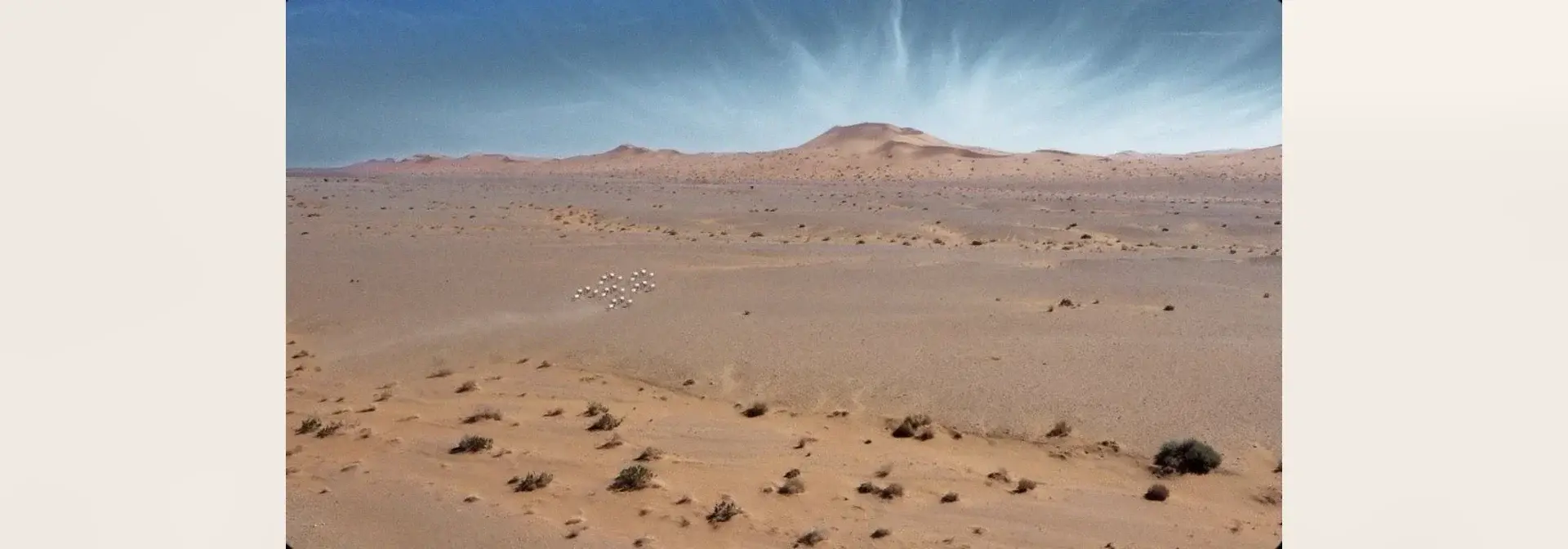
Overview
Saja and Umm Ar-Rimth Reserve is a nature reserve in the central-western region of the Kingdom of Saudi Arabia, north-east of Taif, extending over an area of 6528,2 square kilometres.[1][3] It was established primarily to reintroduce the Asian houbara bustard, the Arabian oryx and the ostrich.[1]
The reserve was known in the past as King Faisal's hima, where he used to camp on his journeys from Riyadh to Makkah.[3]
Location and Area
Terrain and Vegetation Cover
The reserve is a gently undulating sandy plain with clay, rocky and sandy hills.[3]
Its environment varies between low, gently undulating hills, open plains and valleys dominated by thamam plants, talh and samar trees and colocynth and harmal plants.[1]
The reserve holds a good plant group, the most widespread of which are the rimth, sirh, thamam and harmal plants and the talh and salam trees,[3] with a moderate vegetation cover that helps preserve the genetic assets of some of the endemic and rare mammals, birds and reptiles in it.[1]
Temperatures in the region range between 9 and 23 degrees Celsius in winter.[2]
Wildlife
The reserve is home to Rueppell's fox, the red fox, the sand cat and the hedgehog, many rodents such as jerboas, some reptiles such as the spiny-tailed lizard and the desert monitor, and many species of resident and migratory birds.[3]
Reintroduction of the Houbara Bustard, the Arabian Oryx and the Ostrich
The reserve was established primarily to reintroduce the Asian houbara bustard, the Arabian oryx and the ostrich.[1]
A limited number of houbara bustards were released in it, as it is a natural extension of their distribution between Mahazat As-Sayd Reserve and their other breeding grounds.[1]
In a celebration presided over by the Governor of Taif and attended by the Secretary-General of the National Commission for Wildlife Conservation, 30 houbara bustards were released in Saja and Umm Ar-Rimth Reserve.[4]
Supervision and International Classification
Tourism and Access
The reserve can be reached by land via the Riyadh–Makkah Expressway, and its nearest airport is Taif International Airport.[2]
The reserve offers visitors 12 tourist experiences.[2]
The Saudi Tourism Authority, in cooperation with the National Center for Wildlife, announced the launch of new tourism packages to visit three nature reserves: Uruq Bani Ma'arid Reserve, Saja and Umm Ar-Rimth, and Farasan Islands Reserve.[2]
Tourism and nature
Frequently Asked Questions
Q: Where is Saja and Umm Ar-Rimth Reserve located and what is its area? A: It lies in the central-western region of the Kingdom, north-east of Taif, and extends over an area of 6528,2 square kilometres.[1][3]
Q: Why was the reserve established? A: It was established primarily to reintroduce the Asian houbara bustard, the Arabian oryx and the ostrich.[1]
Q: What are the most prominent plants and animals in the reserve? A: Among its most prominent plants are the rimth, sirh, thamam and harmal and the talh and salam trees, and among its animals are Rueppell's fox, the red fox, the sand cat, the hedgehog, the spiny-tailed lizard and the desert monitor.[1][3]
Q: How can the reserve be reached? A: By land via the Riyadh–Makkah Expressway, and its nearest airport is Taif International Airport.[2]
Q: How many tourist experiences are available in the reserve? A: 12 tourist experiences.[2]
Conclusion
Saja and Umm Ar-Rimth Reserve brings together its location in the central-western region north-east of Taif and its area of 6528,2 square kilometres, its plant and animal diversity, and its programmes for reintroducing the houbara bustard, the Arabian oryx and the ostrich.[1][3] Related topics on the platform include King Faisal bin Abdulaziz Al Saud, King Salman bin Abdulaziz Royal Reserve and Taif City.
Related people
Related topics
- HistoricHoubara BustardThe houbara bustard is a desert bird and one of the most prominent birds of the Arabian Peninsula, with an environmental and cultural value linked to the desert environment and the history of falconry, and it plays a role in preserving ecological balance in arid and semi-arid environments. The Kingdom's efforts to protect it span breeding centres and reintroduction in the royal reserves.
- HistoricArabian OryxThe Arabian Oryx, also known as the wadhi oryx, is a species of wild mammal and the largest wild mammal in the Arabian Peninsula. It was absent from its natural habitat in northern Saudi Arabia for about ninety years, then was resettled in protected reserves and released in Uruq Bani Ma'arid Reserve and King Salman bin Abdulaziz Royal Reserve.
- Reserves and biodiversityUruq Bani Maarid: Conserving Life in the Empty QuarterExplore the dunes and habitats of Uruq Bani Maarid, its wildlife reintroduction programmes, and the significance of its inscription as a natural World Heritage property in 2023.
- HistoricKing Salman bin Abdulaziz Royal Nature ReserveKing Salman bin Abdulaziz Royal Nature Reserve is a royal nature reserve in the northwest of the Kingdom of Saudi Arabia and the largest reserve in the Middle East, with a total area of 130,700 square kilometres extending across four administrative regions. It contains broad biodiversity and rock art sites inscribed on the UNESCO World Heritage List.
- HistoricImam Abdulaziz bin Mohammed Royal ReserveThe Imam Abdulaziz bin Mohammed Royal Reserve is a royal reserve in the Kingdom of Saudi Arabia located northeast of the capital Riyadh. It is supervised by the Imam Abdulaziz bin Mohammed Royal Reserve Development Authority, which operates under the Council of Royal Reserves. The reserve covers an area of 11,300 km² and contains 213 plant species, six natural habitats and two archaeological sites.
- RegionTaif CityTaif City is a Saudi city in the west of the Kingdom, known as the “City of Roses and Bride of Saudi Summer Resorts” for its moderate summer climate and its natural views in Al-Shafa and Al-Hada. It contains more than 700 rose farms, farms of seasonal fruits, and cultural and historical landmarks including Souq Okaz and Shubra Palace.
- RegionMakkah RegionA western Saudi region administered from Makkah, encompassing Jeddah, Taif and other governorates, where pilgrimage, maritime trade, coastal landscapes and uplands meet.
- HistoricMigratory Birds in Saudi ArabiaMigratory Birds in Saudi Arabia are a recurring seasonal phenomenon in which numbers of birds cross the Kingdom's territory along fixed routes between their habitats in the Northern Hemisphere and the African continent. The Kingdom is a passage and a safe habitat for them thanks to its strategic geographic location and its area of more than two million km², with reserves and coastal environments that receive resident and migratory species.
Sources & references
- Saudi Press Agency (SPA) — Saja and Umm Ar-Rimth Reserve: location, area, vegetation cover and reintroduction
- Saudi Press Agency (SPA) — tourism packages for three nature reserves in the Saudi Winter season
- Saudi Press Agency (SPA) — Saja and Umm Ar-Rimth Reserve: location, vegetation cover and wildlife
- Saudi Press Agency (SPA) — release of the Arabian oryx and the houbara bustard in Mahazat As-Sayd and Saja and Umm Ar-Rimth Reserves