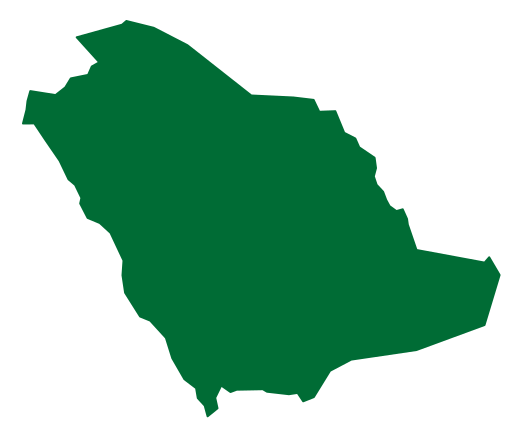


Extent and name
The Rub al Khali is the Kingdom's largest sand body and the world's largest continuous sand sea, about 430,000 km² within Saudi Arabia, covering the south-east across the Eastern Province, Riyadh and Najran. [1]
It is called the Empty Quarter because it forms roughly a quarter of the Arabian Peninsula and has no permanent settlement beyond a few nomads; it is the hottest and driest part of the Kingdom. Some sources call its southern part al-Ahqaf. [1]
Reserves and landmarks
Two protected areas lie within it: the Shaybah reserve and Uruq Bani Maarid in the south-west. The Shaybah oil field, discovered in 1968, lies on its south-eastern edge, and the Rub al Khali border crossing is the only land crossing with Oman. [1]
Tourism and nature
Related topics
- RegionEastern ProvinceA large eastern Saudi region administered from Dammam, combining Gulf cities, the oases of Al Ahsa and Qatif, desert areas, energy industries and maritime commerce.
- RegionRiyadh RegionA central Saudi administrative region encompassing the national capital and varied Najdi governorates, with connections to Diriyah, oasis settlement, government and modern economic activity.
- RegionNajran RegionA southern Saudi region administered from Najran, extending from settled wadis towards the Empty Quarter and containing Al Ukhdud, Hima and traditions of local architecture and crafts.
- Reserves and biodiversityUruq Bani Maarid: Conserving Life in the Empty QuarterExplore the dunes and habitats of Uruq Bani Maarid, its wildlife reintroduction programmes, and the significance of its inscription as a natural World Heritage property in 2023.