
Najran and its wider territory
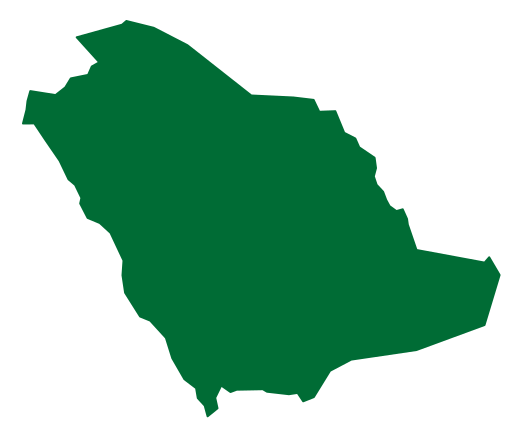
Najran city is the administrative seat of a region that includes governorates such as Sharurah, Hubuna, Badr Al Janub, Yadamah, Thar and Khabash. The region spans different environments in southern Saudi Arabia, so the urban landscape around its capital cannot represent the whole territory. Distinguishing the city, wadi and administrative region is important when reading news, maps and historical accounts. [1][2]
The wadi and the desert
Wadi Najran passes through the city area and is associated with cultivation and settlement, while other parts of the region extend towards the Empty Quarter. Wadis, dry inland areas and sandy expanses support different environments and activities. Describing the region as desert does not rule out farming, just as the presence of a wadi does not imply identical water resources or climate across every governorate. [1][2]
Al Ukhdud, Hima and local architecture
Al Ukhdud and Hima Cultural Area preserve archaeological evidence and inscriptions relevant to settlement and movement in southern Arabia. Najran also retains earthen buildings, palaces and historic structures that demonstrate the use of local materials. Each site should be interpreted through its own evidence and chronology rather than placing all landmarks in one period or confusing a modern celebration with a site's original history. [1]
Crafts, economic activity and connections
Commercial, agricultural, mining and industrial activities operate in the region. Local markets are also associated with heritage crafts and products, including weaving, pottery and daggers. These activities contribute to understanding communities and routes rather than functioning only as tourist details. Najran University and transport and public-service facilities illustrate contemporary urban functions alongside the region's architectural and cultural heritage. [1][2]


.jpg)