
A stop in the caravan network
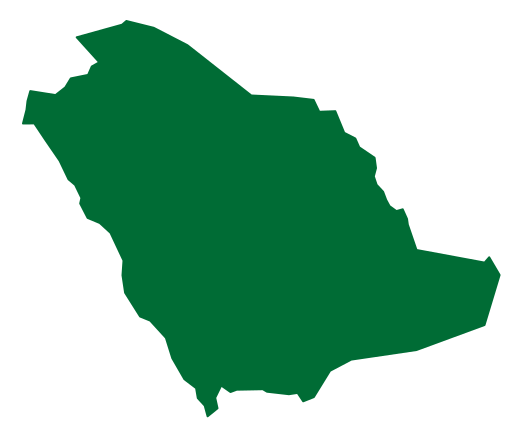
Hegra lies in AlUla Governorate in northwestern Saudi Arabia and is also known as Mada'in Salih. It flourished as a Nabataean centre on overland routes connecting Arabia with other regions. The route's role outlasted the ancient city: caravans and later pilgrims continued to use it before the railway arrived in the early twentieth century.
Tombs as an architectural record
The tombs were cut directly into sandstone outcrops. UNESCO dates their decorated facades to the first century BCE and the first century CE. Their ornament draws on several artistic traditions, including Egyptian and Hellenistic ones. Inscriptions, alongside building forms, help researchers study languages and cultural connections.
Water and evidence beyond the facades
Hegra's evidence extends beyond its tombs. Wells sunk into rocky ground demonstrate techniques for supplying agriculture with water. The site also preserves inscriptions older than its Nabataean phase, broadening its chronological scope. In 2008 it became Saudi Arabia's first World Heritage property, recognised for its evidence of architecture, cultural exchange and water management.


