
Overview
Imam Muhammad bin Abdul Wahhab was a Saudi reformer who lived, taught and died in the city of Diriyah, and called for the oneness of God and a return to what the Prophet, peace be upon him, brought. [2][11]
His call rested on the oneness of God. It was not a new religion: its source is the Qur'an and the Sunnah, and a number of impartial travellers and Orientalists acknowledged as much. [2]
His name is tied to the Saudi family through a pledge of allegiance made between the two imams, Muhammad bin Saud and Muhammad bin Abdul Wahhab. After his firm alliance with the Saudi family in the mid-eighteenth century, the influence of the First Saudi State spread from Diriyah, and his teachings strengthened the standing of the historic At-Turaif District. [2][11]
The Reformist Call
Imam Muhammad bin Abdul Wahhab called people to the oneness of God and to a return to what the Prophet, peace be upon him, brought, and made clear that his call was not a new religion but drew on the Qur'an and the Sunnah; a number of impartial travellers and Orientalists affirmed this. [2]
He had a teaching station in Al-Qassim Region, where he stayed at the Mosque of Sheikh Muhammad bin Abdul Wahhab in the Al-Hilaliyah centre while travelling between Madinah and Al-Uyaynah, teaching people the affairs of their religion. The mud-built mosque is historically linked to the First Saudi State. [1]
His Relationship with the Saudi Family and Diriyah
A pledge of allegiance took place between the two imams, Muhammad bin Saud and Muhammad bin Abdul Wahhab. Diriyah became a centre of the reformist call, and after the firm alliance between them in the mid-eighteenth century the influence of the First Saudi State spread from Diriyah. [2][11]
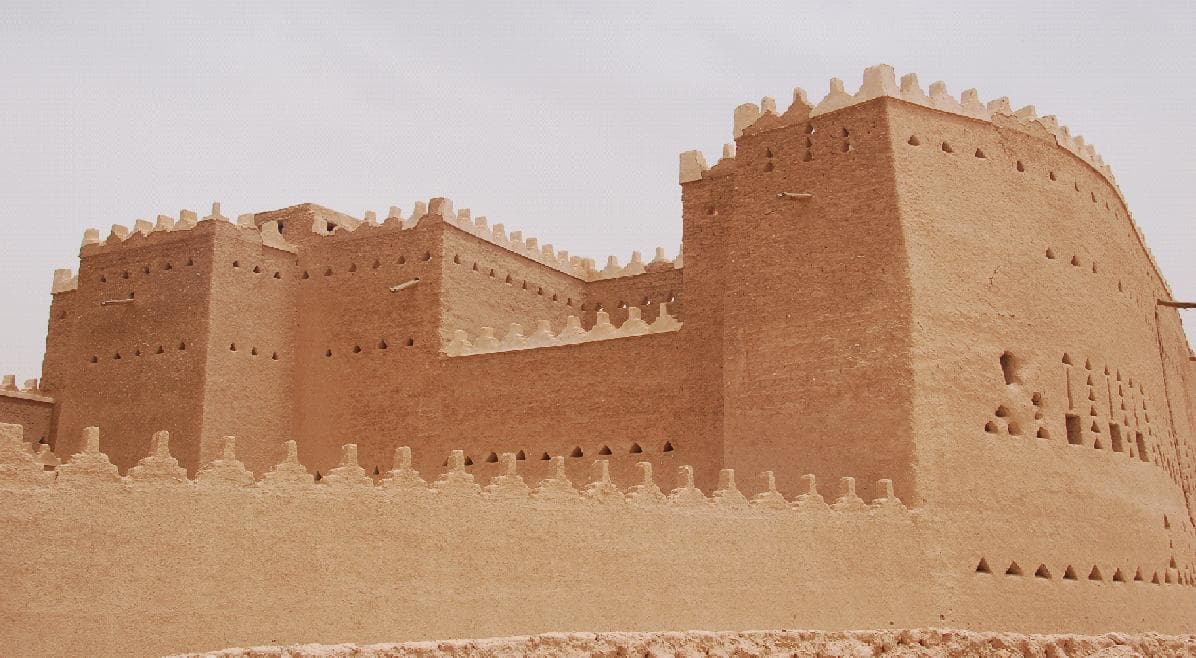
Diriyah was the base of the First Saudi State. Mani' Al-Muraydi founded it on the banks of Wadi Hanifah about six centuries ago, and it later became the capital of the First Saudi State and a centre of important phases in the history of the Saudi State. [10] The historic At-Turaif District in Diriyah recounts the history of Diriyah as the starting point of the Saudi State in 1727. [9] Imam Abdulaziz bin Muhammad bin Saud chose At-Turaif in 1766 as the seat of government and the residence of the ruling family, and it extends over about 235,000 square metres. [7]
Diriyah, represented by the historic At-Turaif District, is recorded among six Saudi sites on the UNESCO World Heritage List, alongside Historic Jeddah, Hegra, the Rock Art of Hail, the Hima Cultural Area and the Al-Ahsa Oasis. [8]
Related people
The Al-Hilaliyah Mosque
The Mosque of Sheikh Muhammad bin Abdul Wahhab stands in the Al-Hilaliyah centre of Al-Qassim Region. Its historical value lies in its having been a teaching station for the Sheikh on his route between Madinah and Al-Uyaynah, and in its link to the First Saudi State. [1]
The mosque received the Prince Sultan bin Salman Award for Architectural Heritage, in the category of care for historic mosques, in 1436 AH, corresponding to December 2014. [1]
The Grand Mosques That Bear His Name
The Imam Muhammad bin Abdul Wahhab Grand Mosque was built in Dumat Al-Jandal Governorate in Al-Jawf Region in 1373 AH, during the reign of King Saud. It is one of the oldest congregational mosques in the governorate, with an area of 2,000 m² and parking of 2,500 m². [5]
In Turaif Governorate in the Northern Borders Region, the Imam Muhammad bin Abdul Wahhab Grand Mosque is among the largest congregational mosques in the governorate, with a total land area of 13,168 m². [6]
The Imam Muhammad bin Abdul Wahhab Chair for Moderation
The Imam Muhammad bin Abdul Wahhab Chair for Moderation and its studies, at the Islamic University of Madinah, works to spread the principle of moderation, to defend the call of Sheikh Muhammad bin Abdul Wahhab and to refute the doubts raised about it. [3]
The chair's output has included three academic studies and 13 research papers, which drew a strong response from specialists across Saudi universities. [3]
Academic and Preaching Events
The Centre for Call and Guidance in Jazan Region organised a preaching lecture titled "The Call of Sheikh Muhammad bin Abdul Wahhab" at the Grand Mosque of the Custodian of the Two Holy Mosques in Ad-Dair Bani Malik Governorate, as part of the Sheikh Muhammad bin Abdul Wahhab academic course in Muharram 1436 AH, corresponding to November 2014. [4]
Frequently Asked Questions
Q: What did Imam Muhammad bin Abdul Wahhab call for? A: He called for the oneness of God and a return to what the Prophet, peace be upon him, brought; his call was not a new religion but drew on the Qur'an and the Sunnah. [2]
Q: Where did Imam Muhammad bin Abdul Wahhab live and teach? A: He lived, taught and died in Diriyah, and he had a teaching station at the Al-Hilaliyah Mosque in Al-Qassim Region. [1][11]
Q: What relationship linked Imam Muhammad bin Abdul Wahhab to the Saudi family? A: A pledge of allegiance took place between the two imams, Muhammad bin Saud and Muhammad bin Abdul Wahhab, and after it the influence of the First Saudi State spread from Diriyah. [2][11]
Q: What are the most prominent places that bear his name today? A: The Al-Hilaliyah Mosque in Al-Qassim; the Imam Muhammad bin Abdul Wahhab Grand Mosques in Dumat Al-Jandal and Turaif; and the Imam Muhammad bin Abdul Wahhab Chair for Moderation at the Islamic University of Madinah. [1][3][5][6]
Q: When did the Al-Hilaliyah Mosque receive the Prince Sultan bin Salman Award for Architectural Heritage? A: In 1436 AH, corresponding to December 2014, in the category of care for historic mosques. [1]
Related topics
- Urban historyHistory of DiriyahDiriyah developed beside Wadi Hanifah and became the First Saudi State's capital. At-Turaif preserves evidence of its political history and Najdi architecture.
- HistoricAt-Turaif DistrictA historic district at the heart of Diriyah, built in the mid-eighteenth century CE, seat of the First Saudi State and a UNESCO World Heritage site since 2010.
- GovernorateDiriyah GovernorateA governorate north-west of Riyadh on Wadi Hanifah, founded in 850 AH/1446 CE, capital of the First Saudi State and home to the World Heritage site of At-Turaif.
- Saudi statesThe First Saudi StateA state centred on Diriyah under Imam Muhammad bin Saud, officially dated in Saudi chronology to 1727. It expanded across Najd and other regions before its capital fell in 1818.
- HistoricAl-Ahsa OasisThe world's largest self-contained oasis according to Guinness World Records, inscribed on the UNESCO World Heritage List in 2018 as a cultural landscape of human interaction with the environment.
- HistoricHima Cultural AreaOne of the world's largest rock-art complexes, in Thar governorate north of Najran city, inscribed on the UNESCO World Heritage List in 2021.
- HistoricRock Art of HailThe Rock Art of Hail is a World Heritage property in the Hail Region of Saudi Arabia, inscribed on the UNESCO list in 2015, comprising the largest rock art complexes in the Arabian Peninsula with engravings spanning about 10,000 years.
- Archaeological sitesHistory of HegraHegra, also called Mada'in Salih, is an archaeological site in AlUla Governorate whose tombs, wells and inscriptions illuminate Nabataean life and caravan routes.
- GovernorateDumat Al-Jandal GovernorateA governorate in Al-Jawf west of Sakaka and one of northern Arabia's oldest towns, with Marid Castle, the Mosque of Umar ibn al-Khattab and Dumat Al-Jandal Lake.
- RegionJawf RegionA northern Saudi region administered from Sakaka, encompassing Dumat Al Jandal, Al Qurayyat and Tabarjal, with farming, historical landmarks and solar and wind energy projects.
- RegionJazan RegionA southwestern Saudi region administered from Jazan city, combining the Red Sea coast, Farasan Islands, plains and mountains with farming, fishing, commerce and industry.
- RegionMadinah RegionA western Saudi region combining Madinah, Yanbu, AlUla and other governorates, with Islamic landmarks, oases, archaeological sites and a Red Sea coastline.
- RegionNorthern Borders RegionA northern Saudi region administered from Arar, including Rafha, Turaif and Al Uwayqilah, with histories of pilgrimage routes, pastoral activity, Tapline settlement and mining.
- RegionQassim RegionAn inland Najdi region administered from Buraydah, associated with trading towns, date cultivation and markets, and the geographical corridor of Wadi Al Rummah.
Sources & references
- Saudi Press Agency (SPA) — The Mosque of Sheikh Muhammad bin Abdul Wahhab in the Al-Hilaliyah centre
- Saudi Press Agency (SPA) — The call of Sheikh Muhammad bin Abdul Wahhab and European writing about it
- Saudi Press Agency (SPA) — The Imam Muhammad bin Abdul Wahhab Chair for Moderation and its studies
- Saudi Press Agency (SPA) — The Sheikh Muhammad bin Abdul Wahhab academic course in Jazan
- Saudi Press Agency (SPA) — The Imam Muhammad bin Abdul Wahhab Grand Mosque in Dumat Al-Jandal
- Saudi Press Agency (SPA) — The Imam Muhammad bin Abdul Wahhab Grand Mosque in Turaif
- Saudi Press Agency (SPA) — The At-Turaif District in Diriyah
- Saudi Press Agency (SPA) — Saudi sites on the UNESCO World Heritage List
- Saudi Press Agency (SPA) — Diriyah and the At-Turaif District
- Saudi Press Agency (SPA) — The founding of Diriyah
- United Nations Educational, Scientific and Cultural Organization (UNESCO) — World Heritage List: Diriyah (At-Turaif District)