
History

Articles in this section, each with its sources.

42 topics availableSearch all sections
Image credits
Image attribution: Richard Mortel — CC BY 2.0, via Wikimedia Commons (original on Flickr). Contextual image: documents the Najd mud-brick village setting, not the Ikhwan hijras specifically. Modified: cropped to a horizontal band and resized to 1920×672, no retouching. / «Richard Mortel» — رخصة CC BY 2.0، عبر ويكيميديا كومنز (الأصل على فليكر). صورة سياقية: توثّق بيئة القرية النجدية الطينية لا هجر الإخوان تحديداً. عُدّلت بقصّ شريط أفقي وتغيير المقاس إلى 1920×672 دون تنقيح. · License: CC BY 2.0
1912–1930

The Ikhwan Hijras of Najd

The Ikhwan Hijras of Najd are settled agricultural residential units established in Najd as part of the project to settle the Bedouin of the Arabian Peninsula during the era of King Abdulaziz bin Abdulrahman Al Saud (1330–1373 AH/1912–1953 CE). One hundred and seventy-two hijras were established during his era, and through them effective authority over the tribes passed to the central government in Riyadh.

Read article
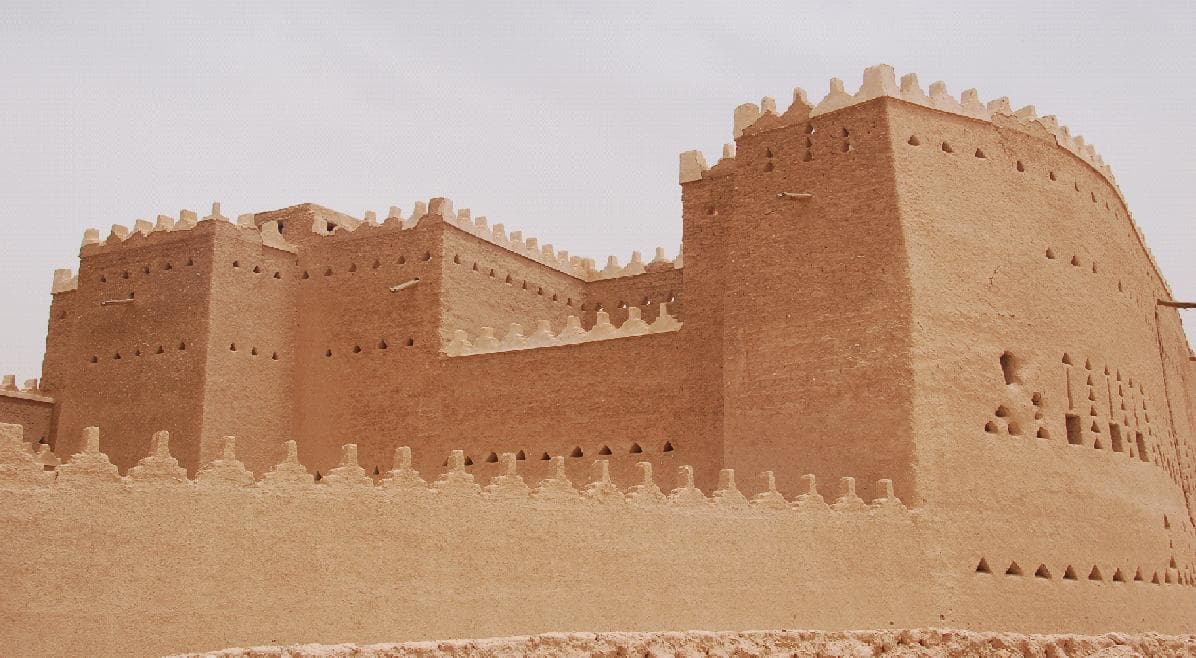
Image credits
Image attribution: Heritage Commission — Own work, CC BY-SA 4.0, via Wikimedia Commons. Modified: cropped and resized to 1920×672 (horizontal band cropped from the centre of the original) to fit the article cover. / «هيئة التراث» (Heritage Commission) — عمل شخصي، رخصة CC BY-SA 4.0، عبر ويكيميديا كومنز. عُدِّلت الصورة بقصّها وتغيير مقاسها إلى 1920×672 (شريط أفقي من منتصف الصورة الأصلية) لتناسب غلاف المقالة. · License: CC BY-SA 4.0
منتصف الألفية الأولى قبل الميلاد – القرن الخامس الميلادي

Qaryat al-Faw

Qaryat al-Faw is an archaeological site in Wadi ad-Dawasir Governorate, south of the Riyadh Region, also known as Dhat Kahil, and served as the capital of the Kingdom of Kindah from the fourth century BCE until the early fourth century CE. The Cultural Landscape of Al-Faw Archaeological Area was inscribed on the World Heritage List in 2024.

Read article
1915–1927م

Treaty of Al-Uqair

The Treaty of Al-Uqair is a treaty signed on 18 Safar 1334 AH, corresponding to 26 December 1915, between King Abdulaziz bin Abdulrahman Al Saud and the British Government represented by Sir Percy Cox, at Al-Uqair Port in Al-Ahsa Governorate. In it Britain recognized Abdulaziz as Emir of Najd and Al-Ahsa, and it was later annulled under the Treaty of Jeddah of 1927.

Read article
Image credits
Image attribution: 'King Abdulaziz's raiders on their way to recapture Riyadh' — original photographer unknown; from the collections of the National Museum of Saudi Arabia, Riyadh; public domain (PD-old) via Wikimedia Commons; adapted by placing the full photograph (3008×2000) without cropping or enlargement on a blurred cream #f4efe5 background at 1920×672 to fit the article cover. / «King Abdulaziz's raiders on their way to recapture Riyadh» — مصوّرها الأصلي غير معروف، صورة من مقتنيات المتحف الوطني السعودي بالرياض، رخصة ملكية عامة (PD-old) عبر ويكيميديا كومنز؛ عُدِّلت بوضع الصورة كاملةً (3008×2000) دون قص ولا تكبير وسط خلفية مموّهة كريمية بلون #f4efe5 على قماش 1920×672 لتناسب غلاف المقالة. · License: Public domain (PD-old)
1319هـ / 1902م

The Capture of Riyadh

The Capture of Riyadh was King Abdulaziz bin Abdulrahman Al Saud's recovery of the city of Riyadh and his entry into it with his men on 5 Shawwal 1319 AH, corresponding to 16 January 1902, together with his pledge of allegiance as Emir there. It was followed by the unification of Najd, the capture of Al-Ahsa, and his official recognition as ruler of Najd, Qassim, and Al-Ahsa.

Read article
Image credits
Image attribution: Ibrahim Al-Yahya, 'Documents of the attendees of the Battle of Sabilla' — CC0 (public domain dedication) via Wikimedia Commons; adapted by placing the document on a cream #f4efe5 background to fit the article cover, without cropping or enlargement. / إبراهيم اليحيى، «وثائق حاضرين معركة السبلة» — رخصة CC0 (إهداء إلى الملك العام) عبر ويكيميديا كومنز؛ عُدِّلت بإحاطة الوثيقة بخلفية كريمية #f4efe5 لتناسب غلاف المقالة دون قص أو تكبير. · License: CC0
1915–1929م

Battle of Sabilla

The Battle of Sabilla was a confrontation that took place during the Ikhwan movement in Najd, which spanned the years from 1915 to 1929, and Rawdat Sabilla, which carries its name, lies in Zulfi Governorate in the Riyadh Region. King Abdulaziz's success in unifying the parts of the Kingdom and gathering its tribes is attributed to his qualities and leadership abilities, and to the internal and external circumstances that surrounded his course.

Read article
1902–1932

Battle of Rawdat Muhanna

The Battle of Rawdat Muhanna was fought at Rawdat Muhanna in the Qassim region between the forces of King Abdulaziz bin Abdulrahman Al Saud and the forces of the Emirate of Al Rashid. It was followed by King Abdulaziz's consolidation of his authority over Qassim, the official Ottoman recognition of him as King over Najd, Qassim and Al-Ahsa, and the subsequent unification of the Kingdom of Saudi Arabia.

Read article
Image credits
Image attribution: Map of the Battle of Turabah — file "معركة تربة.JPG" on Arabic Wikipedia, Public domain, uploaded by user Immortal 1404; placed whole, uncropped, on a cream 1920×672 canvas. / خريطة معركة تربة — ملف «معركة تربة.JPG» على ويكيبيديا العربية، رخصة الملكية العامة (Public domain)، رفعها المستخدم Immortal 1404؛ أُدرجت كاملة دون قص على خلفية كريمية 1920×672. · License: Public domain (PD)
1902–1932

Battle of Turabah

The Battle of Turabah was a confrontation that took place around the town of Turabah in the southwest of the Kingdom of Saudi Arabia, a town belonging to the Makkah Region and holding a strategic position on the trade and pilgrimage caravan routes between Najd and Hejaz. The battle came at a stage in which relations between Najd and Hejaz were marked by tension between King Abdulaziz bin Abdulrahman Al Saud and Sharif Hussein bin Ali.

Read article
1902–1932

Battle of Kanzan

The Battle of Kanzan was an engagement fought in the vicinity of Al-Ahsa in the Eastern Province during the unification of the Kingdom of Saudi Arabia, part of King Abdulaziz bin Abdulrahman Al Saud's response to the tribes that attacked trade and pilgrim caravans in eastern Arabia. It came after the capture of Riyadh in 1902 and the annexation of Al-Ahsa to the Saudi State in 1913, and was followed by his confrontation of the rumours spread about his death after his meeting with the Ajman warriors.

Read article
Image credits
Image attribution: Prof. Mortel — 'Site of al-Ukhdud, Najran, Saudi Arabia', CC BY 2.0, via Wikimedia Commons. Modified: cropped to 1920×672 to fit the article cover (no upscaling). / Prof. Mortel — «موقع الأخدود الأثري بنجران»، رخصة CC BY 2.0، عبر ويكيميديا كومنز. عُدِّلت: قُصّت إلى 1920×672 لتلائم غلاف المقالة دون تكبير. · License: CC BY 2.0
الألف الأول قبل الميلاد–القرن الرابع الميلادي

Al-Akhdood

Al-Akhdood is an archaeological site in the Najran Region of south-western Saudi Arabia. It represents the ancient city of Najran and its commercial market on the caravan route, is associated with the story of the Companions of the Trench mentioned in the Holy Quran, and today stands as a living open-air museum welcoming visitors.

Read article