
Sakaka and the name Jawf
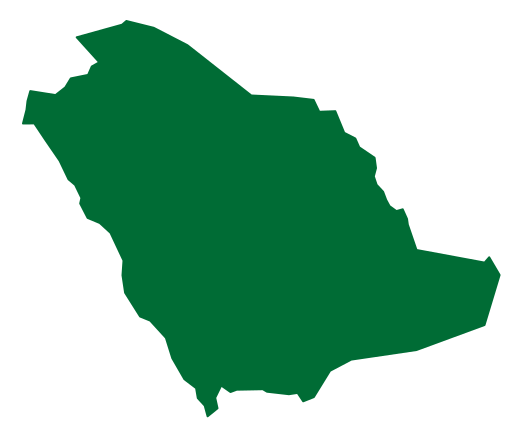
Sakaka is Jawf's administrative seat, while Jawf names the wider territory rather than the capital itself. Governorates include Dumat Al Jandal, Al Qurayyat and Tabarjal. The region occupies northern Saudi Arabia, in an area associated with population movement and exchange between Arabia and the north. Its cities and oases are therefore different centres within a shared administrative region. [1][2]
Farming in an inland environment
Agriculture is prominent in Jawf, with olives among its well-known crops and farms contributing to food production. The broad climate is inland desert, with summer heat and winter cold. Understanding its farming requires attention to water management, irrigation and local resources rather than assuming that extensive cultivation means identical conditions or abundant water at every location. [1][2]
Castles, routes and built heritage
Historic places include Zaabal Castle in Sakaka, Marid Castle and the Mosque of Omar ibn Al Khattab in Dumat Al Jandal, and Kaf Palace. They contribute to understanding settlement, architecture and connections between communities. Each landmark has its own context and function, so buildings, inscriptions and routes should be studied within their particular histories rather than reduced to a single regional story. [1][2]
Renewable energy and services
The Sakaka solar facility and Dumat Al Jandal wind project add a contemporary dimension to Jawf's agricultural and historical profile. Educational, commercial and transport services also serve the region, including Al Jouf University. This introduction does not provide output totals or investment forecasts; it explains the diversity of activities, while current reports remain necessary for studying project performance and economic indicators. [1]


.jpg)