
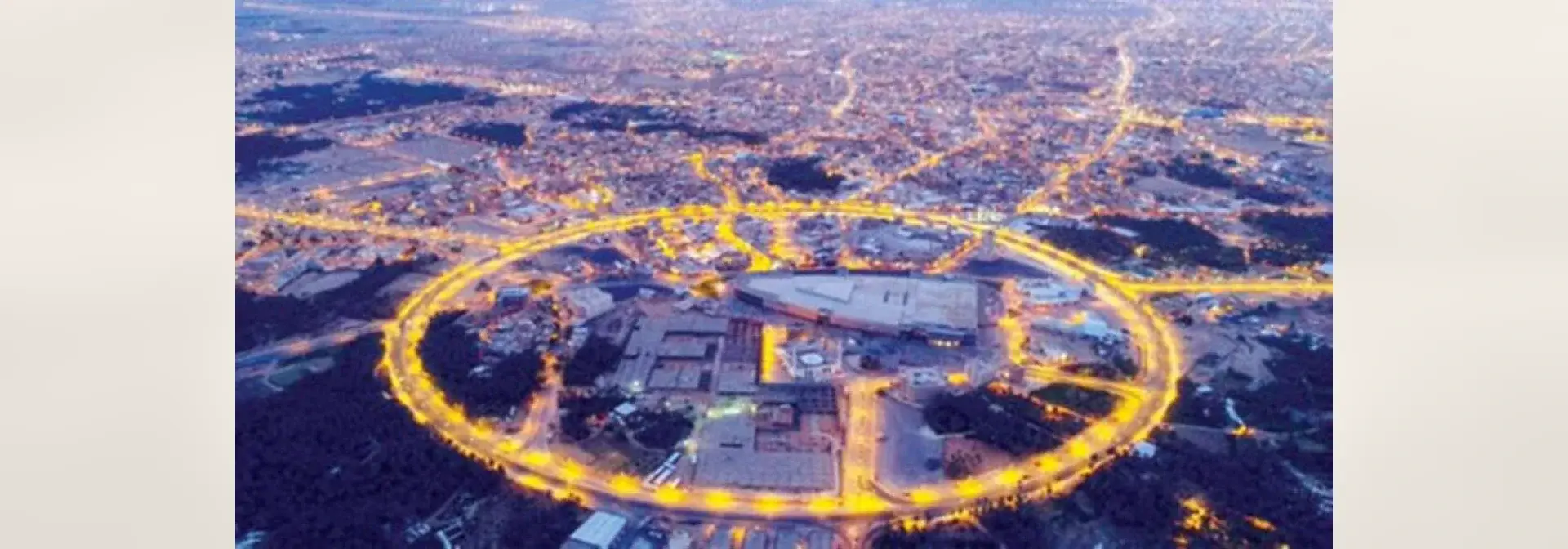
Overview
Unaizah City is one of the historic towns of Qassim Province, and its history is bound up with commercial, agricultural, and scholarly activity that helped shape its local identity.[1] The city holds prominent heritage and scholarly landmarks, among them the Al-Bassam Heritage House, the Al-Musawkaf traditional market, and the Sheikh Muhammad ibn Salih al-Uthaymeen Mosque.[1]
The traditional urban fabric of Unaizah combines houses built in the Najdi style and Najdi architecture, traditional markets, and historic walls, alongside agricultural activity based on date palm cultivation and date production.[1][2]
Heritage Landmarks
The Al-Bassam Heritage House is one of the landmarks of traditional architecture in Najd, and it stands near the western gate of old Unaizah, known as Bab Al-Khala, beside the Al-Musawkaf traditional market, on an area of about 3,500 square metres.[1] Its construction dates to 1374 AH, and it was built in the Najdi style using clay.[3]
The Al-Bassam Heritage House was reopened in Unaizah Governorate in Qassim Province to visitors and tourists on 7 November 2022 CE.[3] The project to activate the house provides 150 job opportunities for both sexes, and the house contains 14 varied halls where periodic events and activities are held that contribute to preserving the heritage and presenting it.[4]
Markets and Commercial Activity
The Al-Musawkaf traditional market is one of the witnesses to the commercial history of Unaizah, and it lies west of the Sheikh Muhammad ibn Salih al-Uthaymeen Mosque in the centre of the governorate.[1] The market took its name from the old market that comprised about 200 commercial shops, and it was rebuilt in 1430 AH in the traditional style to contain 52 commercial shops.[1]
Scholarly and Religious Life
The Sheikh Muhammad ibn Salih al-Uthaymeen Mosque stands out as one of the landmarks associated with the scholarly and religious life of Unaizah, as its name is linked to Sheikh Muhammad ibn Salih al-Uthaymeen, who served as its imam.[1]
Historic Walls
Unaizah contains historic walls that are among the features of traditional agriculture and the old urban fabric of the city, the most prominent of which are the walls of Hirkan, Al-Badi, Al-Amir, Mulayhan, Qalib Thabit, Al-Salimiyyah, Al-Awja, Al-Duraibat, Al-Mazadah, and Al-Raddamah.[2]
Agriculture and Dates
Agricultural activity forms an economic pillar in Unaizah, as the number of palms in the governorate exceeds one million and 50,000 palm trees, producing more than 90,000 tons of dates annually, within 2,850 producing date farms.[1]
The Unaizah International Dates Season, "Nuqwat Unaizah", celebrates this sector, as the closing ceremony of its 2026 season was held in the Food City in Unaizah Governorate under the patronage of the Emir of Qassim Province.[8]
Natural Resources
Unaizah contains Al-Awshaziyyah Lake, which is one of the best-known lakes of the region, with an area of about 50 square kilometres, and it is a destination for families and young people.[5] The town of Al-Awshaziyyah has been known as the "Salt Village" or the "White Gold Mine" for the extraction of salt from its lake.[5]
The governorate also contains Wadi Al-Rummah, where the Qassim Province Municipality, represented by the Unaizah Governorate Municipality, carried out field work in its channel that included surveying, cleaning, and rehabilitating the channel to drain torrents.[9]
Events and Festivals
The Al-Ghada Festival sets off in Unaizah Governorate, organised by the Tourism Cooperative Association; it runs for 12 days and includes more than 20 activities offering an integrated winter tourism and leisure experience that brings together authenticity, heritage, and the arts.[6]
The Al-Hanini and Popular Dishes Festival is held in the Al-Musawkaf heritage market in Unaizah, and its tenth edition includes more than 80 pavilions for popular products, organised by the Chamber of Commerce in Unaizah.[7]
Tourism and nature
Services and Administration
Frequently Asked Questions
Q: Where is Unaizah City located and what most distinguishes it? A: It is one of the historic towns of Qassim Province, and its history is bound up with commercial, agricultural, and scholarly activity that helped shape its local identity.[1]
Q: What are the most prominent heritage and scholarly landmarks of Unaizah? A: The Al-Bassam Heritage House, with an area of about 3,500 square metres, the Al-Musawkaf traditional market, and the Sheikh Muhammad ibn Salih al-Uthaymeen Mosque.[1][3]
Q: What is the agriculture of Unaizah known for? A: More than one million and 50,000 palm trees producing more than 90,000 tons of dates annually, within 2,850 producing date farms.[1]
Q: What are the most prominent seasonal events in Unaizah? A: The Al-Ghada Festival, which runs for 12 days and includes more than 20 activities, and the Al-Hanini and Popular Dishes Festival, whose tenth edition includes more than 80 pavilions.[6][7]
Q: What are the most prominent natural landmarks in Unaizah? A: Al-Awshaziyyah Lake, with an area of about 50 square kilometres, and Wadi Al-Rummah, whose channel was rehabilitated to drain torrents.[5][9]
Conclusion
Unaizah City brings together a commercial, scholarly, and agricultural legacy, heritage landmarks led by the Al-Bassam Heritage House, the Al-Musawkaf traditional market, and the Sheikh Muhammad ibn Salih al-Uthaymeen Mosque, historic walls, activity based on palms and dates, and seasonal events.[1][2][5][6][7][8]
Related topics on the platform include Qassim Province, Buraydah, and the Agricultural Development Fund.
Related topics
- RegionQassim RegionAn inland Najdi region administered from Buraydah, associated with trading towns, date cultivation and markets, and the geographical corridor of Wadi Al Rummah.
- RegionBuraydah CityBuraydah is a Saudi city in Qassim Province, known for a dates economy in which Qassim's production reaches more than 390,000 tons annually and its dates are exported to more than 100 countries. The city is home to the water tower registered in the National Register of Modern Urban Heritage and to the Aqilat Museum, and it has been included in the UNESCO Creative Cities Network for gastronomy.
- HistoricNajdi ArchitectureNajdi Architecture is a Saudi architectural style that expresses the urban identity of the Najd region, and it draws on local construction materials in a design adapted to the desert climate. Its applications continue in modern urban projects, competitions and cultural events inside the Kingdom and abroad.
- Agricultural heritage and traditional knowledgeDate Palm Cultivation in Saudi ArabiaDate palm cultivation in Saudi Arabia combines food production with knowledge of irrigation, pollination and fruit care. Al-Ahsa illustrates its links to farming heritage.
- TopicAgricultural Development FundThe Agricultural Development Fund is a Saudi government institution with an independent legal personality and financial and administrative autonomy. It is organizationally affiliated with the National Development Fund and headquartered in Riyadh. The Fund supports sustainable agricultural development and food security through concessional loans and credit facilities, and it originated from the Saudi Arabian Agricultural Bank, established in 1382 AH (1963).
Sources & references
- Saudi Press Agency (SPA) — Unaizah: a historic town of Qassim and its landmarks
- Saudi Press Agency (SPA) — The historic walls of Unaizah
- Saudi Press Agency (SPA) — Reopening of the Al-Bassam Heritage House in Unaizah
- Saudi Press Agency (SPA) — The project to activate the Al-Bassam Heritage House in Unaizah
- Saudi Press Agency (SPA) — Al-Awshaziyyah Lake in Unaizah
- Saudi Press Agency (SPA) — Launch of the Al-Ghada Festival in Unaizah
- Saudi Press Agency (SPA) — The Al-Hanini and Popular Dishes Festival in Unaizah
- Saudi Press Agency (SPA) — Conclusion of the Unaizah International Dates Season 2026
- Saudi Press Agency (SPA) — Field work in the channel of Wadi Al-Rummah in Unaizah
- Saudi Press Agency (SPA) — The Emir of Qassim Province receiving citizens in Unaizah